





By Carolyn Bick
NORTHWEST ASIAN WEEKLY
When Lila Shahani thinks about her husband, Vicente Rafael, the first thing that springs to mind are his feet. As others who knew Rafael do, Shahani calls him by his nickname, “Vince.”
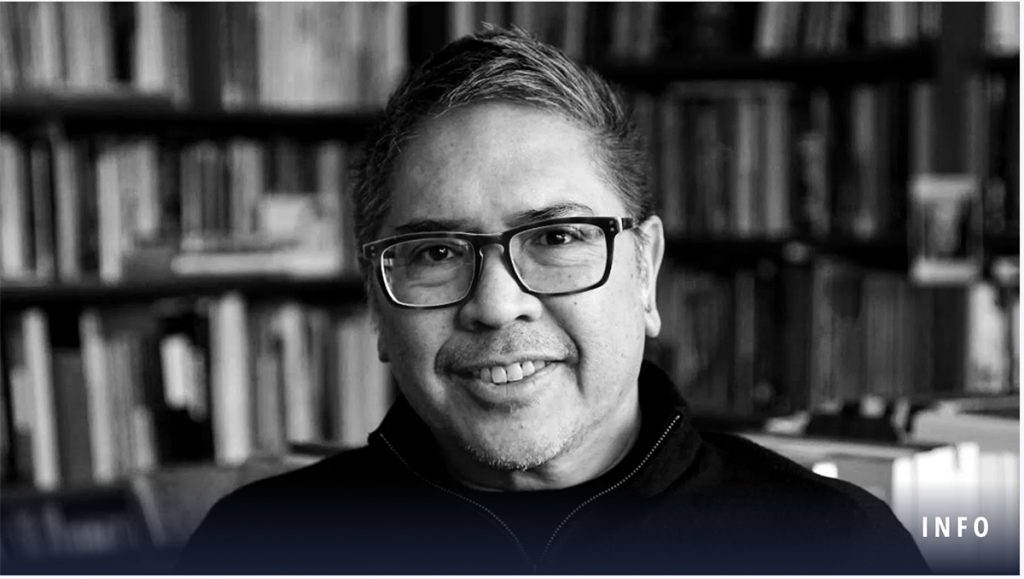
Credit: Lila Ramos Shahani
“Vince had very beautiful feet, and we used to joke that he had Jesus feet. … I have an autoimmune disease, so my feet are always very, very cold. When we would sleep next to each other, I would always put my feet under his legs to keep warm,” she said, speaking to the Northwest Asian Weekly on the first day in April. “And we would end up sleeping feet-to-feet. I miss that. I mean, in a physical way—like, it’s hard to sleep. Because like, the past 15 years have been like that. And then suddenly it’s not.”
Sleeping is no longer familiar to Shahani, because Vince, a renowned Filipino scholar and University of Washington professor whose work crossed and married disciplines, died just five days after his 70th birthday in February from multiple myeloma. It’s why the second thing Shahani remembers about him are his hands—his hands, clasping one of hers, and giving it a kiss.
“The last thing that Vince did was kiss my hand and say thank you,” Shahani continued. “So I remember that, too.”
Life and laughter in the age of Rafael
Shahani is a force in her own right. She worked for the Philippines government for 13 years—including under Duterte, whose policies she opposed and against which she has vehemently spoken out—serving as an assistant secretary for multiple areas of the government. She is also a sitting expert and associate member of two International Scientific Committees of the International Council on Monuments and Sites.
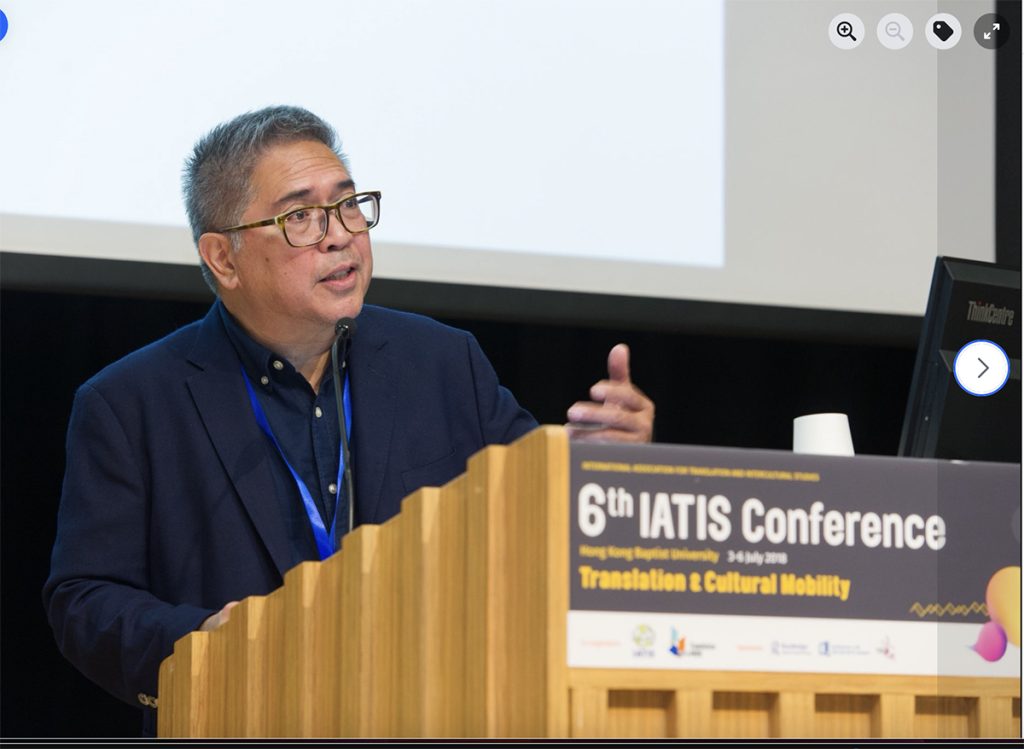
Credit: Lila Ramos Shahani
But, as she—and, she says, the salt-and-pepper-haired Vince—will be quick to tell you, titles don’t matter that much. It’s one of the many things she and Vince appreciated about each other, particularly when their social and work circles overlapped.
“There are so many hierarchies in every particular discipline in every particular profession. In my world of government, he wasn’t anybody important … for the people that I worked with. And then in his world of academics, I wasn’t really anyone important because I had decided to shift from an academic life to a different life,” Shahani recalled. “But the thing about him and the thing about me is that we don’t really care about all those hierarchies and all those rather pompous definitions of expression and achievement. We were just both really interested in raw intelligence, and so, we would appreciate people—I mean, the strangest kind of encounters would delight us.”
Shahani and Vince first met in the course of defending Philippine literature online, either in late 2011 or early 2012, she said. She was then teaching a graduate class, in addition to serving as an assistant secretary in the Philippines government. A teaching assistant of hers had written a post about “a very sweeping article in an online magazine about how Philippine literature is crap and Philippine literary criticism is crap. And coming from a graduate student, I was really kind of disappointed. Not that I entirely disagreed with her, but it was just sweeping.”
In the midst of the “explosion” on her Facebook wall, wherein Shahani tried to mediate and navigate the different viewpoints from journalists, academics, and more, Shahani got a message from Vince asking if she would like to co-host a conference on the topic. While she felt frustrated with the way the conversation on her Facebook wall was going— “it just felt like they’re all fighting, and they’re not listening to each other”—Vince told her later that he was impressed by how she managed to keep it so balanced.
So, the two met. And that was that.
“I was delighted to meet someone intelligent. And he thought it was refreshing to talk to someone who was … not a politician, but in government, so his whole knee-jerk, anti-state position was interrogated because there’s so many different stakeholders inside government,” Shahani said. “It’s very heterogeneous, and you can be self-righteous from the outside, but you have to know what’s going on on the inside before you do that. And I think it was a point that he took very well.”
The next day constituted what Vince later called their “first date,” but for Shahani was simply work. She brought him to Congress, where she and others were engaged in fighting for reproductive health rights for women.
“I said, ‘I’m going to be in Congress because the Catholic Church really does not want women to have any contraception. And these women are dying from maternal mortality after childbirth from sepsis. And so I’ve got to go,’” Shahani recalled. “So he’s like, ‘Okay, can I tag along? I said, ‘Sure.’ And that session ended up being six hours long.”
The two stood on the sidelines, amidst “grandstanding and a lot of filibustering,” Shahani explaining different things about each person speaking—“‘Well, that person stole that island. And this person has been responsible for human trafficking, but has never actually been caught.’”
“And I think it just opened up a non-academic world for him that forced him to put his money where his mouth was in terms of talking about Philippine politics in a contemporary context,” Shahani continued. “So after that, you know, we just stayed in touch.”
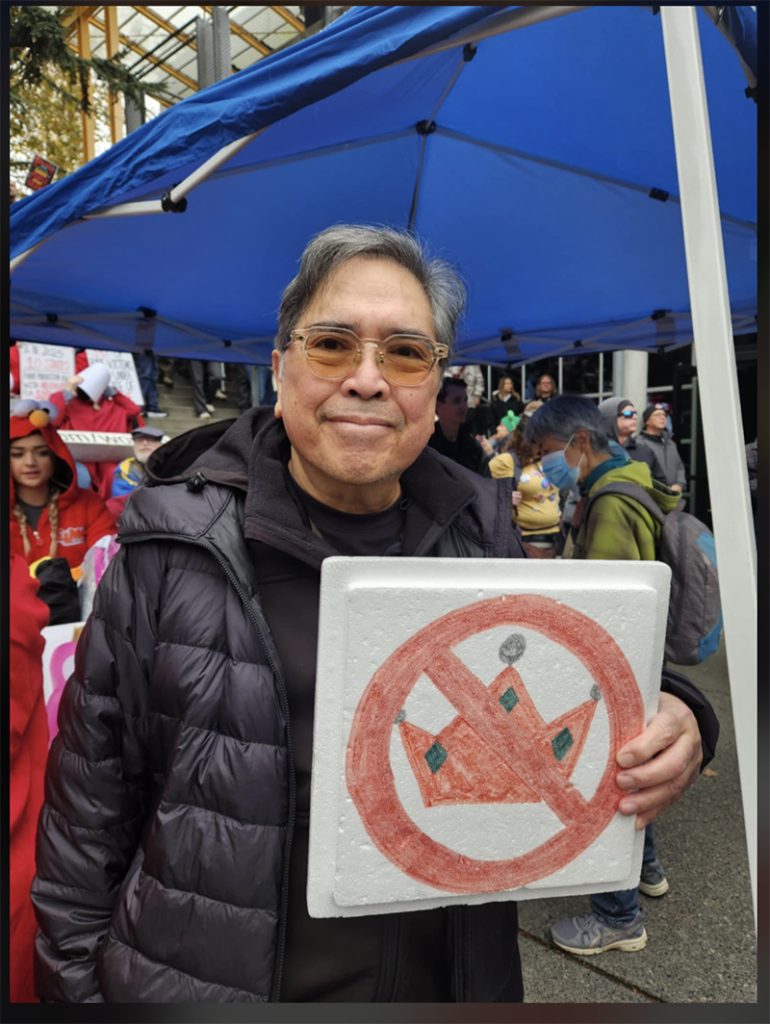
Credit: Lila Ramos Shahani
Though the pair had become smitten with each other, Shahani said, “it was a non-issue.” Vince was married, and she was in a relationship. But after he got divorced, and she stopped seeing her partner, they started dating. They married on Nov. 11, 2021.
They had a profound influence on each other’s work, too. It was because of his relationship with Shahani that Vince eventually wrote “The Sovereign Trickster: Death and Laughter in the Age of Duterte.” It was because of Vince that Shahani started to dig more deeply into her writing, which the Duterte administration had so sharply pruned and censored during her time in government.
“My staff in the Philippines would censor every clause I wrote … and so it was like, at the end, where’s the trill in my song? Where’s the play? Where’s the fun in my prose, if everything is hamstrung?” Shahani remembered. “I was only supposed to be here [in Seattle] for two months, after I quit the Duterte administration. What was really nice when I got here was that he just encouraged me to write. And I did. I just wrote—a lot.”
Of her influence on Vince’s work, Shahani said that Vince would be the first to “tell you that I’m his harshest critic.”
“And I would say that he has always been my harshest critic. But we were loving interlocutors,” she continued. “We were each other’s best friends. We just talked about everything. We’re constantly talking, like, 15 times a day by text.”
Every night was date night for the couple, Shahani said. For Vince and Shahani, 10 p.m. until midnight was “sacrosanct.” They would faithfully wrap up whatever they were doing to spend that time together, choosing sometimes to watch a film or a series together, or, other times, read poetry or a chapter of a book aloud.
The last book they were in the middle of reading together was “The Wretched of the Earth,” by Frantz Fanon.
“He was reading it in English, I was reading it in French,” Shahani recalled. “And I was telling him why I didn’t agree with the English translation. It’s hard [emotionally], because we did it every night. We were very, very happy.”
Vince’s taste in media famously ran the gamut, from the solemn to the silly, and included shows like 90 Day Fiance, the Philippine drama, Maria Clara at Ibarra, and the award-winning show, Shōgun. Shahani also further opened up Vince’s world, introducing him to the arts outside that created in the Philippines, Southeast Asia, or United States.
“We both brought different film repertoires to the table. I was a little bit allergic to what we call the ‘classical Hollywood text,’ … whereas he, you know, he enjoyed some of the American classics,” Shahani said. “Because I was an official for the United Nations for a long time, and because my mother had been a diplomat, I had lived in so many different countries. So, I would be like, ‘There is this Romanian performer that you’ve got to see,’ and ‘I love this Rwandan singer!’”
“He never spoke down to me or made me feel small”
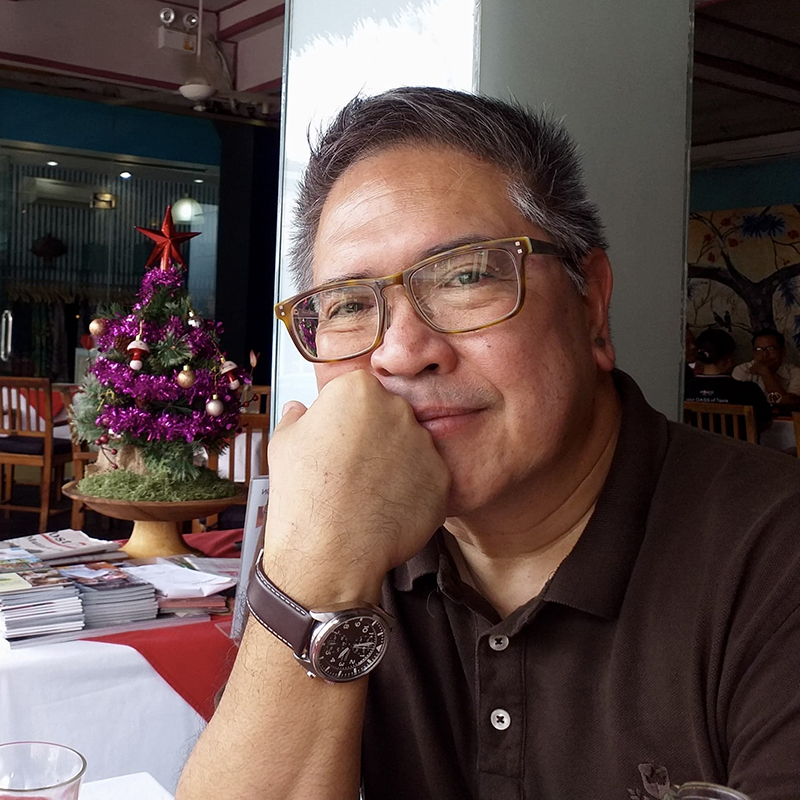
Credit: Lila Ramos Shahani
Since Vince’s passing, Shahani has received letters, tributes, and eulogies to him, and has read other scholars’ writings honoring his work. His class enrollment rate speaks to his impact, too. At the time of his death, Shahani said, Vince had 250 students in his classes, the highest enrollment rate in his department.
But it’s the smaller things that stick with her, like when she invited Vince’s graduate students and teaching assistants over to the house.
“We just talked, and over wine and cheese, we just went around and they just shared what Vince meant to them,” Shahani said. “I was really blown away, because it was the first glimpse I had of what Vince was like as a teacher and as a mentor. He’s taught me a lot and he was always my mentor in many ways, but I had only sat in one or two of his classes and his big lectures. They were all crying and [said], ‘He changed my life,’ and ‘I had this problem with my sister and he really helped me work through it,’ and ‘Oh, my goodness, I changed course, 180 degrees, because of what he said.’”
“He was very fond of these athletic scholars. … He was very popular with them. They signed their football and they wrote this beautiful card. I have it,” she continued. “They gave it to me and they were all talking about how he had changed the way they think.”
As kind and beloved as Vince was at the time of his death, he didn’t arrive into this world fully formed—he was human, after all.
“I think when Vince was younger, he was pretty arrogant, as was I,” Shahani speculated. “And then as time [progresses] and the years go by, you realize, ‘Oh, my gosh, I don’t know squat.’”
“I think he got to that point here in the U.S. after teaching for such a long time. His first graduate student here in the States will [probably] say, ‘Oh, my God, he was a terror teacher and I’m still traumatized when I see his face,’” she continued. “But then his last graduate student would be like, ‘Oh, my God, he was so nice and he was so understanding.’ So I see the evolution of him as a teacher and as a mentor. And I know that he changed. … I think it’s the Filipino American and the American students who benefited from that wiser, more mellow Vince.”
One of Vince’s last graduate students is Kelly Van Acker, a former Spanish teacher at Seattle’s Nathan Hale High School, whose “path to Philippine Studies, and to graduate school, was winding and indirect.”
“Chance encounters with Prof. Rafael a decade ago ended up shaping my scholarly trajectory in ways I don’t think either of us fully realized at the time,” Van Acker reflected. She graduated in 2022 from the Pontificia Universidad Católica del Perú in Lima, Peru, where she was studying Latin American history. She had developed an interest in learning about the Philippines—but while the Spanish had also colonized the islands, most Latin American history classes left them out, due to their geographic position.
“As a high school Spanish teacher in Seattle, I had many Filipino American students, and I wanted to learn more to be able to include this history in my classes,” she continued. “I first read Vince’s work for a historiography paper I was working on in my first semester of graduate school in 2018, and it opened my eyes to the possibility of what history could be—I had never read anything like it before.”
As a teacher and mentor, Van Acker said, Vince “encouraged my evolution as a scholar. He profoundly influenced me, but allowed me to pursue my own interests and become a scholar in my own right. … He was open to speaking to people at all stages of their intellectual journeys. He would listen to you with genuine interest. … He never spoke down to me or made me feel small.”
“You never quite knew what to expect when you walked into seminars with him—and that was the art of his teaching. He would lead with questions, never pontificating with his own assertions,” she continued. “He was delighted when I would tell him about a research rabbit hole I had gone down. Working with Vince meant learning how to read, and to think. … He often prompted us to think about the etymology of words, to think about the disjunction between reading and meaning, which is where translation is essential—and political.”
Van Acker recalls Vince’s office as “a sanctuary, full of treasures, and no matter which direction the conversation veered, he had an obscure, out of print book that was perfect for the occasion.” Once, she said, when they first started working together, he asked her what dictionary she was using.
“[He] was a bit dismayed when I sheepishly answered Tagalog.com,” she said. “But that led to him pulling the most incredible collection of old dictionaries from his shelves.”
Van Acker also remembers that “Vince had a gift for opening up banal, ordinary moments—interactions while grocery shopping or going to the mall in the Philippines, and showing what was extraordinary within it.”
“These unexpected juxtapositions would sometimes change the course of my research or even how I moved through the world,” she continued. “Despite the challenges of grad school, I would always leave meetings with him feeling hopeful and energized and with a renewed sense that the work we were doing was meaningful.”
“A very generous scholar”
Vince also spent time writing recommendation letters for people in academia. Their “careers in academe became what they are because of those letters, and they’ve said that to me and they’ve thanked me for it,” Shahani said.
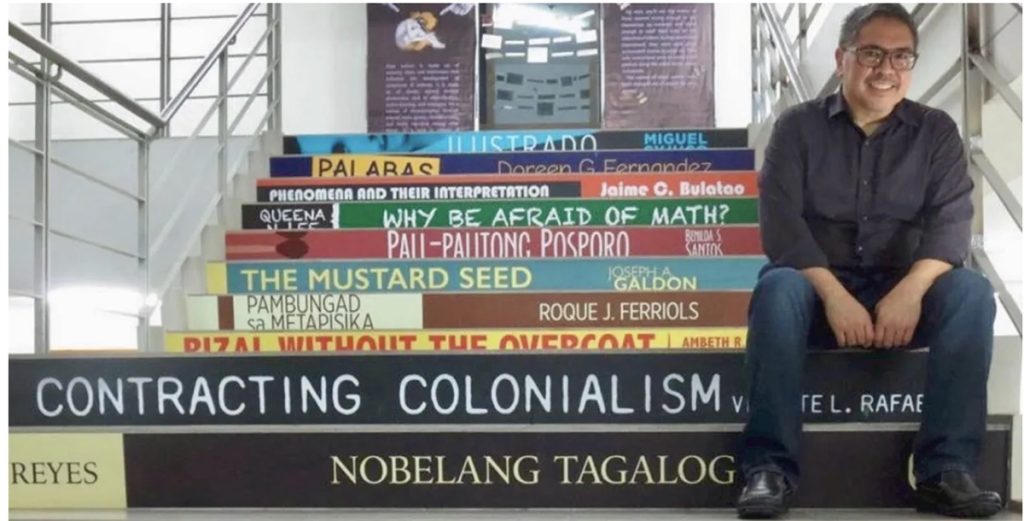
Credit: Lila Ramos Shahani
Vince’s UW colleague, assistant professor Nazry Bahrawi, who teaches Southeast Asian literature and culture, remembers Vince as “a very generous scholar,” never jealous of his work or position. Bahrawi said that when he hit the job market, Vince agreed to be one of his references, even though they had only briefly met in person in 2019, after organizing an online conference together in 2018.
Bahrawi ultimately didn’t ask Vince to speak on his behalf for the UW job he ended up getting—he felt that would put Vince in an awkward position, since it was the institution where he was already teaching. Bahrawi was thrilled when he landed it, in part because it meant he would get to work alongside Vince.
Vince’s work had already played an integral role in Bahrawi’s career. One of the things Bahrawi said he admires about Vince as a scholar is that his work is cross-disciplinary, and demonstrates that there are no true divides between subjects. For instance, Vince never approached history in a cause-effect sort of way.
“He’s a very unconventional historian because he deals with history in a very theoretical way, in a very creative way. He doesn’t look at causality, like, ‘This event leads to something else, and that’s why we are here today,’” Bahrawi said. “He deals with dates, but he doesn’t deal with dates scientifically. … He’s a thematic historian who’s very creative with his works.”
Vince also changed Bahrawi’s own modes of thinking about himself and his own work.
“One of the things I’ve been thinking about in my own work is whether I qualify as an Asian American. I was born in Singapore, and then I came here. So I started to think about a concept called ‘Asians in America,’ rather than an Asian American,” Bahrawi explained. “That’s how I see him to be a role model of. He’s someone who was raised in the region, who studies the workings of their own cultures, but is doing it from somewhere else. … I am very much influenced by his methodology of trying to work from outside his own culture, but then also trying to be connected to people or academics who are still in the region. … He handles scholarship in between two different places, almost in a liminal state.”
Vince was also generous in other, quieter ways. He spent much of his time doing pro bono work for Filipinos and Filipino Americans facing deportation back to the Philippines, during Duterte’s reign. Duterte famously hated people who did drugs and people with drug convictions facing deportation to the Philippines might be “killed on arrival,” Shahani said.
“Their lawyers would contact Vince and he would have to write country reports about the Philippines,” Shahani remembered. “He did quite a lot of that. It’s actually not easy to write a country report because what is a country? It’s so huge, right? And I was like, ‘You should start charging for this.’ And he was like, ‘No, no, they need help.’ So it ate up a lot of his time.”
“He was just the perfect human for me”
Shahani has kept writing since Vince passed. She is working through her anger at the medical system that she feels betrayed both of them in different ways.
“I feel that the need to feed us a Hallmark greeting card version of wellness was constantly being dangled in front of us,” Shahani said of her and Vince’s experience. “And I would have preferred honesty. I remember five years ago, when he got diagnosed with his cancer, his oncologist was like, ‘Oh, he can live another 35 years. The science is so advanced.’ And Vince bought that, swallowed that hook, line, and sinker.”
She said when Vince was originally diagnosed, doctors told them it was “chronic.” But that’s not what his medical chart said in his final days in the hospital.
“When I read his chart in the hospital, I saw the word ‘terminal.’ I was like, ‘Hey, wait a minute, when did we go from chronic to terminal?’” Shahani remembered. “And the doctor in the hospital was like, ‘Oh, honey, he’s always been terminal. He was terminal on day one.’ And I was like, ‘What? Well, then why didn’t you say so? Why? Was it because the chemotherapy was $20,000 every two weeks that you just wanted the poor guy to go through that? Do you know how hard it was for him?’”
Much of Shahani’s recent writing focuses on questioning the entire system of death and dying in the United States—how it’s commodified, how it’s commercialized, and how it feels designed to suck every last penny from the dying and grieving. Mere days after his death, a foundation called her asking for money. In exchange, they would remember him publicly.
She’s also reflecting on how the country treats its elders. It’s a country with an increasing population of elders, dwindling care population—in part due to the Trump administration’s immigration crackdown—and a lack of medical facilities. “What are you now going to do with this geriatric population that you kind of don’t [care] about anyway, except you kept them alive and made money off the fact that you kept them alive?”
“When Vince would walk down the street and some kid would yell, ‘Move your ass, old man,’ [I felt] disgust. I never want to grow old here,” Shahani said. “In this country, you’re young, you’re healthy, you get respect. I remember once I was in a wheelchair because I broke my ankle in a very bad way, and I noticed how people treated me differently. … When you’re in Asia, if you have a disability or if you’re older, it’s automatic. People are solicitous and it’s not because they think you’re superior or smarter. It’s just that you’ve been on the planet longer and that in itself entitles you a modicum of respect.”
If Shahani and Vince had known the full scope of his prognosis, Shahani said, they would have spent their remaining time together by the sea.
“I would have demanded that we retire last year, move to Hawaii, look at the water, and write our memoirs,” Shahani said. “Of course he loved his students and he loved teaching. … He was working with some great people, but I knew his heart was in his memoir and he didn’t have time for it.”
Shahani is still trying to gather her spinning thoughts. After all, she lost the love of her life, nearly out of the blue. But that’s what she also holds onto, this thread of strength and tenderness between them. Not everyone gets that.
“It just saddens me that so many people are in unhappy relationships,” she reflected. “I’m glad I waited as long as I did to marry him, because he was just the perfect human for me.”