



By Ruth Bayang
NORTHWEST ASIAN WEEKLY
Visitors to Asian Family Market in Tukwila were greeted on Sunday with a spread of traditional Malaysian favorites, from savory nasi lemak (considered Malaysia’s national dish served with a spicy chili paste, anchovies, peanuts, cucumber, and eggs) to a colorful variety of kuih (sweet desserts)—including the coconut-covered onde-onde and layered seri muka. The tasting event, paired with teh tarik (literal translation: “pulled tea,” made by mixing black tea with condensed milk, then repeatedly “pulling” or pouring it between two containers to create a frothy, creamy texture) marked the Seattle-area launch of the “Taste of Malaysia” tour, a strategic push to move Malaysian products into the American pantry.
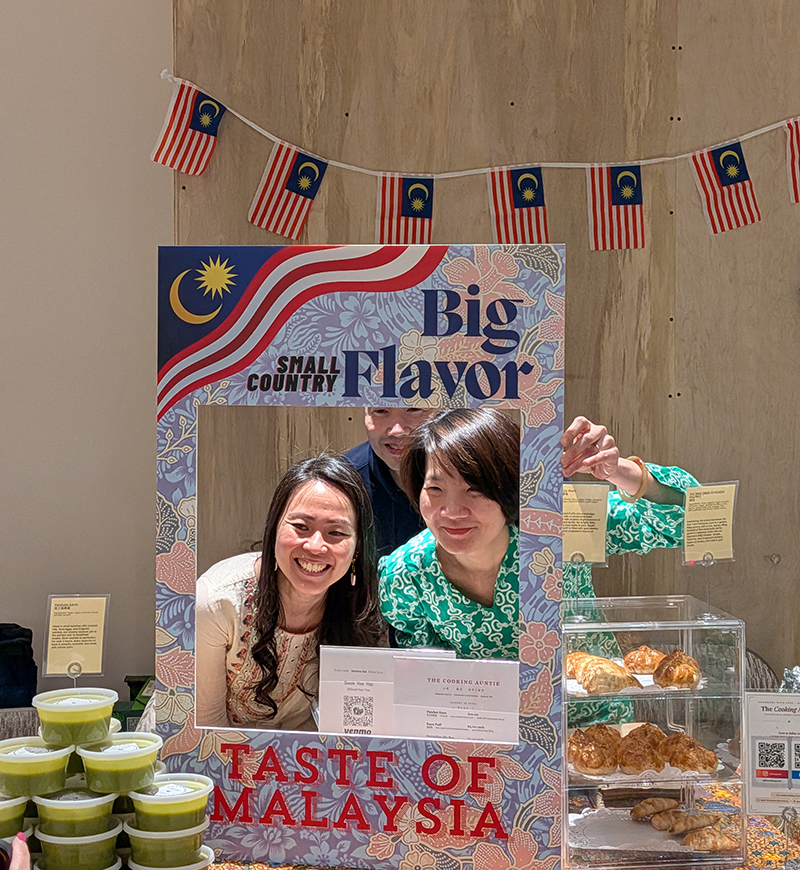
Photo by Ruth Bayang
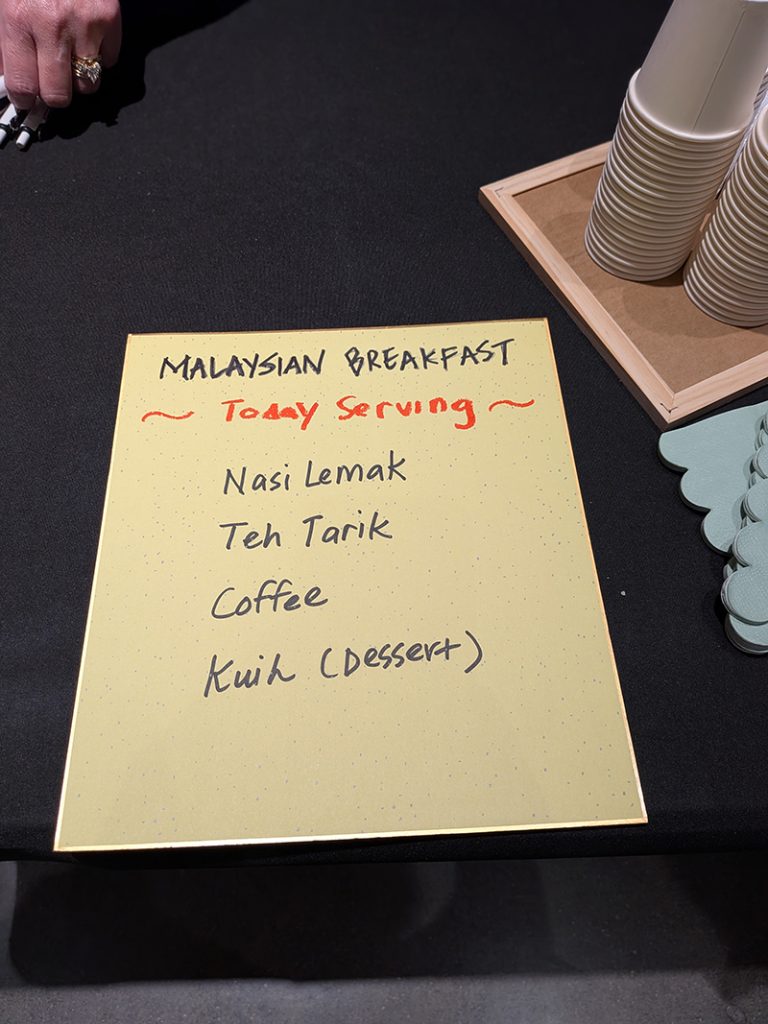
Photo by Ruth Bayang
The showcase is a collaborative effort between the Malaysian Ministry of Agriculture and Food Security and Ixora Food.
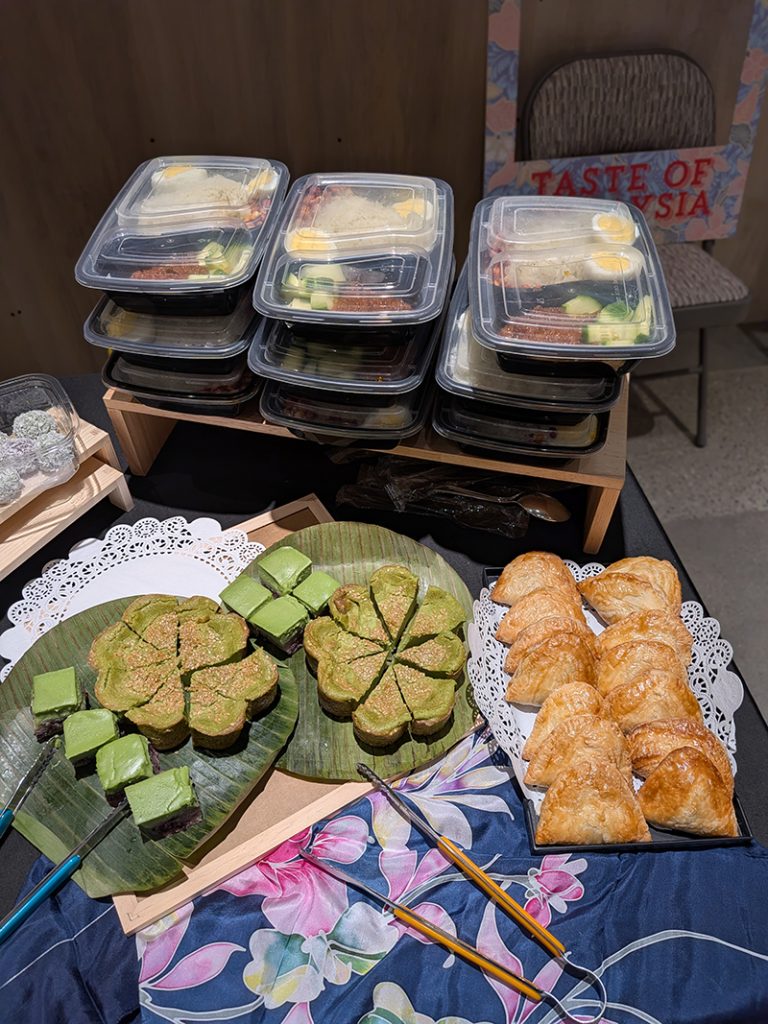
Photo by Ruth Bayang
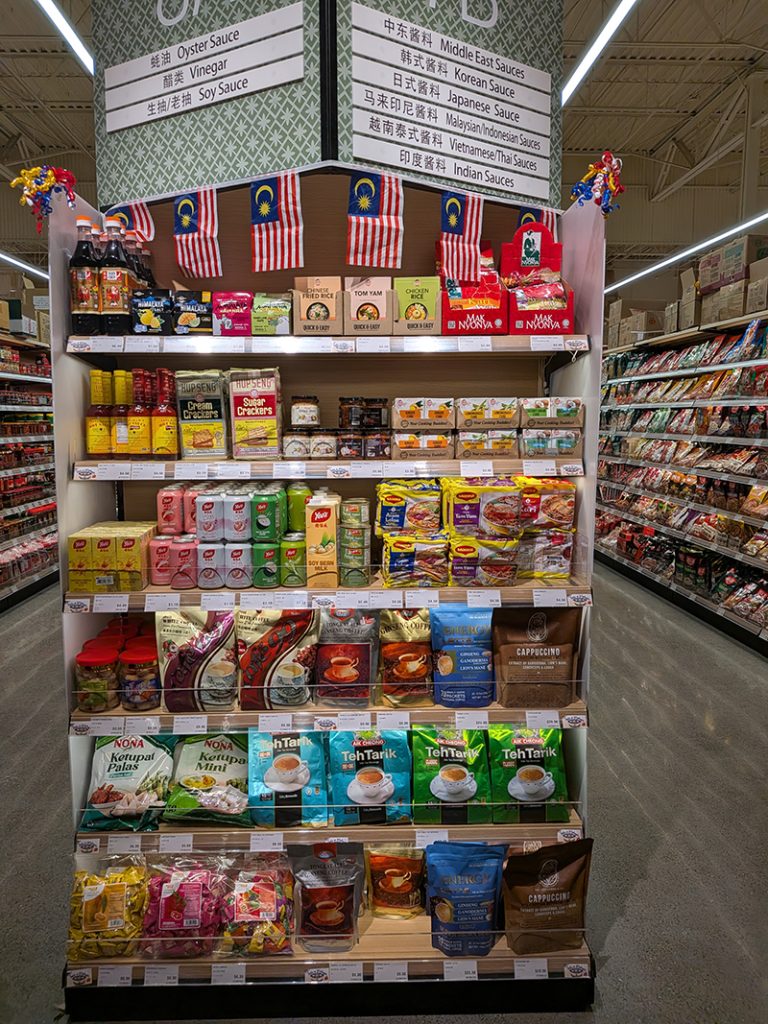
Photo by Ruth Bayang
Local artisans and global strategy
Joining the international initiative were local vendors like Cooking Auntie, who offered a selection of traditional baked goods. Her table featured classic Chinese walnut cookies and golden kaya puffs—a flaky pastry filled with a rich, fragrant coconut jam. In addition to the pastries, the vendor also sold jars of her signature pandan kaya, a staple Malaysian spread.
For Jia Hui Sim, owner of Anchorage-based Ixora Food, these events are as much about business strategy as they are about culture. Sim, a Malaysian native who has lived in the U.S. for 14 years, helps companies back home navigate the tricky waters of American retail.
“It is very hard for Malaysian products to come in,” Sim explained. She noted that many exporters get stuck in a “chicken and egg” loop—grocery stores want to see a distributor before they’ll stock a product, but distributors want to see that the product is already selling in stores.
“This is a perfect platform for them to land in the U.S.,” Sim said. By setting up these pop-up events and showcasing pre-prepared samples, brands can gather the sales data and photos they need to prove to major distributors that American shoppers are hungry for what they’re offering.
Testing the waters in the PNW
The Tukwila event is the first of several stops this year. After wrapping up in Washington state, the tour will head to Houston in October and San Diego in November.
Afiq, a representative from the Malaysian Agriculture Office in Washington, D.C., said the choice to come to the Seattle area was intentional. While the office covers everything from Canada to South America, they are currently focused on learning how regional tastes vary across the United States.
“We want to get that information so that we know what product is suitable,” Afiq said. He noted that they are looking closely at how American preferences—specifically the love for spicy Mexican and Hispanic cuisines—might translate to Malaysian spices. The long-term dream? Seeing Malaysian food infrastructure rival that of Japanese or Thai cuisine in the U.S.
Sim, who also runs two restaurants in Alaska, said she’s seen firsthand how a single bite can act as a gateway to culture.
“People almost always say, ‘Oh my gosh, I’ve never tried this (Malaysian food) before,’” she said. “The culture, the food, and tourism have to work hand in hand.”
If you missed the first round, you have another chance to check out the selection.
The “Taste of Malaysia” vendors will return to the Asian Family Market at 17501 Southcenter Pkwy on May 3 from 11 a.m. to 2 p.m.