


By James Tabafunda
NORTHWEST ASIAN WEEKLY
April is National Financial Literacy Month in the United States, and the numbers that greet it may be cause for concern.
Among teenagers, 42% say they are terrified they will not have enough money to cover their future needs and goals, according to a Junior Achievement and MissionSquare Retirement’s Foundation survey conducted in 2025. Internationally, about one in five 15-year-olds scored at the lowest level of financial literacy on the 2022 Program for International Student Assessment, meaning they cannot make simple decisions about finance using basic math or see the value of a budget.
For three women—a Filipino American entrepreneur in California, a British Indian mentor in England, and one of the world’s leading academic researchers on personal finance—the numbers describe a crisis that is both urgent and indicates gaps in financial literacy.
A lesson learned as a child
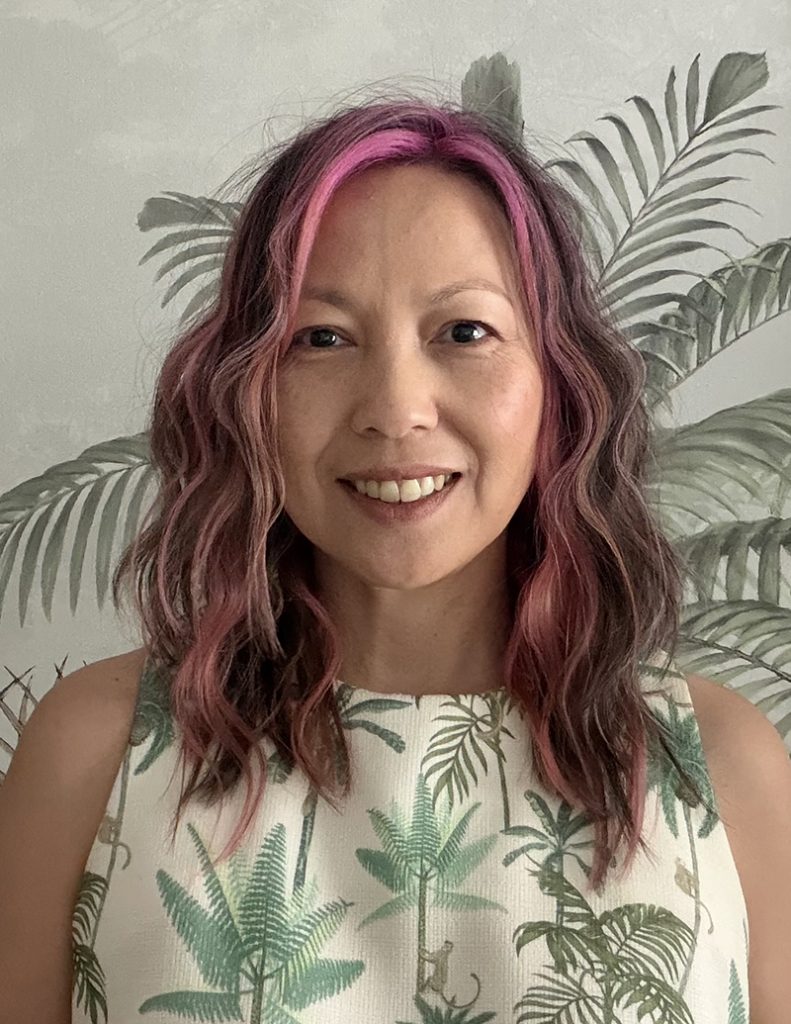
Roxanne Tan
Roxanne Tan does not remember being taught about money. She remembers watching it—her mother scraping every grain of rice from the pot, her father pushing down the trash to stretch a single bag further.
Tan is a Filipino American entrepreneur based in Playa del Rey, Calif., and the founder of the brand Haaah. She moved to the United States from the Philippines at age 5. When her family arrived, eight people crowded into a three-bedroom condominium—a drastic change from the two-story house, two maids, and driver the family had left behind in Manila.
“We went from what I thought was living a good life to downgrading,” she said. “My dad worked at Philippine Airlines. He had to wait until he met his 20 years before coming here. And then when he came here, he couldn’t use his degree, and he was working as a valet attendant.”
The family’s response to that downgrade was unwavering and made out of necessity. Every dollar earned was saved. No credit cards. No loans. Within a couple of years, her parents bought a condominium—rundown, Tan said, but theirs.
“I learned that at a very young age,” she said. “Just always save and save and save and not spend. And now, even if I spend on something, I have to make sure that I really need it and that I really like it, and I’m going to use it for a very long time.”
Her father gave her a $10-a-week allowance as a teenager. Again, every dollar earned was saved. She would not buy lunch at school—too expensive—walking home hungry rather than part with the money she was saving to shop the clearance rack. She bought her first car in cash in her early 20s.
Turning memory into a method
Those early experiences eventually became the inspiration for a book. Watching her teenage nephews scroll their phones and spend impulsively, Tan began designing a different kind of financial education tool.
“I wanted something relaxing and bite-sized information that would stick to your brain right away,” she said. “I don’t want to concentrate too much. I just—okay, I get it. That’s it.”
Published last December, “Connect with Words: Money Digest” is a screen-free word search and journal book built around 100 puzzles, 1,000 curated financial terms, real-world example sentences, and writing and drawing prompts. The 246-page paperback is designed not to lecture, but to reflect, pairing clear definitions with questions that ask readers to examine their own relationship with money.
“This book is about trying to get your subconscious—how do you really feel about money, why do you spend?” Tan said. “Are you really buying this because you need it, or did something bad happen?”
She offers a key observation about the challenge facing today’s teenagers: social media has replaced the scarcity that once demanded discipline.
“With the phone, you have to compare yourself with what another person has at the same age as you—I want this, I want that, I deserve this,” she said. “Kids now are more independent at a younger age and making more decisions at a younger age, and I learned that they’re even spending more without parental guidance.”
For Asian American, Native Hawaiian, and Pacific Islander families in particular, Tan argues, financial literacy has long existed in behavior, not conversation. The model is observational: children learn by watching parents navigate limited resources, frugality, and sacrifice. That approach carries real strengths—she cites the widespread aversion to credit card debt as common across Filipino American households—but it also leaves gaps.
“Growing up, I didn’t have the proper mindset of building wealth,” Tan said. “The great thing I learned from my family is saving money. But I didn’t learn about building wealth and having the right mindset of what money is really about.”
Across the Atlantic, a parallel story
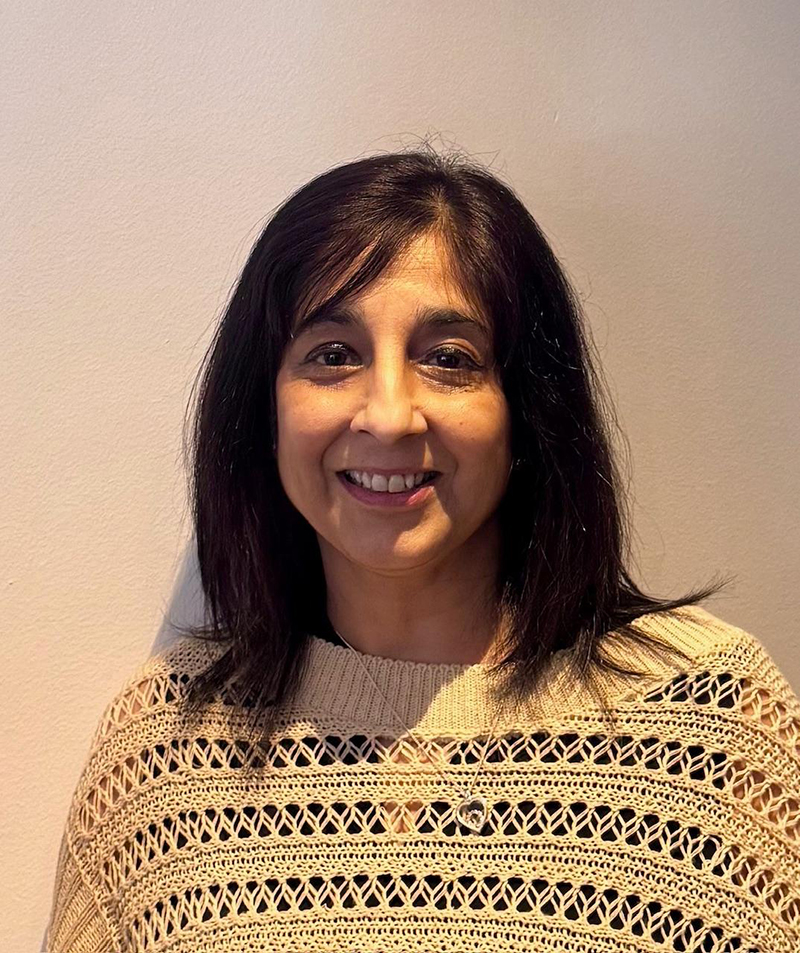
Jalpa Lai
Jalpa Lai lived a version of Tan’s story in her own past.
Lai is a certified financial coach and mentor who runs Lollywise Coaching in Woking, Surrey, England—roughly half an hour by train from London. Born in Kenya to a British Indian family, she arrived in the United Kingdom (UK) when she was 1, after Kenya gained independence as a former British colony. She grew up inside a tight-knit Indian immigrant community that treated financial conversation as something close to improper behavior.
“In many South Asian families, money is tied to ideas of security, sacrifice, and responsibility,” Lai wrote in a statement. “Those values can be powerful, but they can also mean money isn’t talked about openly, which leaves many young people figuring things out alone.”
Her father taught her to save, which she views as a gift. But he never discussed investments. And there was an unspoken assumption—common, she said, in her generation—that when she married, her financial future would be handled for her.
“I think that delays independence, quite frankly,” Lai said. “And so it was what I said earlier—that if you look after your money, you can walk away from things that make you miserable. To me, that is really, really important.”
Two events in her 50s supported that conviction. A close friend could not leave an unhappy marriage because she knew nothing about her family’s finances. A second friend lost her home after her wealthy husband died, leaving behind insufficient insurance and unexpected debt.
“These two things really hit home, how you can get trapped very easily,” she said.
Building confidence, not just curriculum
At Lollywise Coaching, Lai works one-on-one with teenagers and young adults navigating their first bank accounts, first incomes, and first debts. She also sits on the board of a community interest company—the Set Them Up Foundation—that delivers financial education to young people from lower-income backgrounds.
The UK is set to make financial literacy a mandatory curriculum subject by 2028, a step Lai welcomes but views with skepticism—because, she says, formal inclusion is not the same as effective teaching.
“What is really needed is proper focus on financial literacy,” she said. “But not just delivering boring talks, but building financial confidence. What’s missing is creating an environment where teenagers and young adults can ask questions without any embarrassment.”
She teaches a concept she calls the “One Pence Challenge”—saving one penny on the first day, two on the second, and three on the third. After 365 days, the cumulative total reaches almost ₤700.
“I can’t overstate the importance of building a financial safety net,” she told a group of students—roughly 16- and 17-year-olds. “If you look after your money, it’s going to give you choices in life. Then, you can walk away from anything that makes you miserable.”
One of her recurring discoveries: the most financially-confident teenagers in workshop settings are often males who arrive already talking about cryptocurrency and exchange-traded funds, while females—and many students from lower-income families—sit in silence. To fix that, she restructured her sessions around small-group breakouts with individual mentors, making sure every voice in the room was heard.
“Financial confidence doesn’t come from knowing everything,” Lai said. “It comes from understanding the basics and having the confidence to ask questions.”
The research behind the urgency
The anecdotal picture both women describe has solid statistical support.
Annamaria Lusardi, director of Stanford University’s Initiative for Financial Decision-Making and founder and academic director of the Global Financial Literacy Excellence Center, has spent decades studying this gap.
“I witness this pattern in my research and among my students: Those with high financial literacy exhibit savvier financial behaviour,” she wrote in a March 2026 World Economic Forum article. “Those who know better, also do better.”
Her research shows that adults with very low financial literacy are twice as likely to be debt-constrained and three times more likely to be financially fragile compared with those who score highest. She has also identified a gender gap already evident among 15-year-olds and a socioeconomic gap that widens as students from disadvantaged backgrounds fall further behind.
“New opportunities to build wealth are at hand, perhaps in tax-favoured accounts offered by governments,” Lusardi wrote. “Young people will need financial knowledge to navigate these choices now and throughout their futures.”
A month to start a lifelong habit
With National Financial Literacy Month now underway, Tan, Lai, and Lusardi each point to the same starting place: conversation.
Cushioning—the financial safety net Lai builds starting with one penny on day one, the savings habit Tan inherited from her parents—may be the one lesson that crosses most cultures, most generations, and most classrooms where the conversation is finally allowed to happen.
Leave a Reply