


By Carolyn Bick
NORTHWEST ASIAN WEEKLY
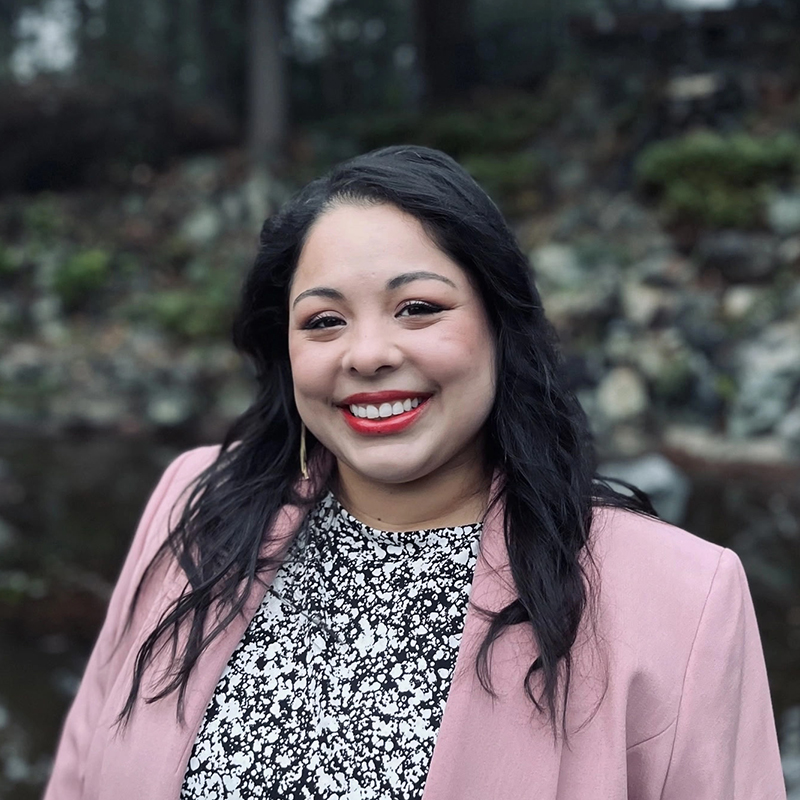
Courtesy of Natasha Laitila
Natasha Laitila, a lifelong resident of the 29th Legislative District, has decided to throw her hat into the ring for the district representative seat. She has always wanted to represent her district, and was originally going to wait until she finished her graduate degree at the Evans School of Public Policy—she graduates this coming June—but when Sen. Steve Conway announced his retirement, and current 29th District Rep. Sharlett Mena (Pos. 2) announced her run for Conway’s seat, Laitila thought, “This is my sign. Because I love this community.”
In a recent interview with the Northwest Asian Weekly, Laitila told us how she plans to bring her experiences as a lifelong 29th-er, as well as her experience across all branches of government, to her role as representative, if elected. As she told the Northwest Asian Weekly, “I was born and raised [in the 29th District]. I am a product of it. I have experienced the good and bad policies as a child, as a student, as an adult.”
This interview has been lightly edited for length and clarity.
Northwest Asian Weekly
So first of all, tell me about your background. I know that you’re a lifelong resident of the 29th District, but I wanted to know what that experience was like as a Malaysian American child, and then as a Malaysian American woman.
Natasha Laitila
[My father’s] family originally emigrated from Finland, and my mother was born and raised in Malaysia and moved here in the 1990s. Things in the 1990s were very different [from] now. I don’t know Bahasa Melayu[, also known as Malay], which is something that also my mother wished that she taught me, but growing up in the 1990s and being one of the only people of color in the neighborhood, and being questioned on whether this is your real daughter was something that was a reality for my mother.
Thankfully, things have changed, but there’s a lot of work to be done. … I am very racially ambiguous, so a lot of people mistake me for being Latina. There’s nothing wrong with that, of course, but I would say that was challenging, because I come from a very unique biracial makeup [and] there were not a lot of other kids who have the same experience as me.
We are often lumped in [to the myth of the AANHPI monolith], but our experiences can be very nuanced and different, especially with Southeast Asia.
I grew up moving back and forth between Malaysia and the U.S. We would visit family very often in Malaysia. One thing to note is that my mother is East Indian. Her family, generations before that, were originally from Kerala, India, but when England had India and Malaysia as two British colonies, at some point, my family had moved over. I don’t know a lot of history about my family on my mother’s side, because my grandmother lost her family in World War II, during the Japanese occupation in Malaysia. It’s like two levels of displacement in a way.
I’m very grateful for my upbringing. I think [something] that is consistent with the AAPI community is family—maintaining community, being dedicated to one another, helping one another. Those are strong aspects that my parents, especially on my mother’s side, instilled in me.
NWAW
What was it like to basically navigate three different cultures? Malaysian, Finnish—if your dad brought any of that to the table—and American?
Laitila
One thing that my parents did extremely well was blend their two cultures together to create a new environment where my sister and I could thrive. I grew up seeing them work together, make compromises, but have respect for each other and their cultural differences.
For example, … in Malaysia, religion is bigger than race—you could argue that. Malaysia is predominantly a Muslim country, but my family is of the small minority who are Catholic. My dad was raised as a Baptist and was not practicing, but religion was very important for my mother. Finding that nuance of him respecting that and going to church with us growing up, getting communion, going through confirmation—he supported through all of that.
I think something that is also very similar, even though [my parents] come from very different backgrounds, is a theme that I see in many immigrant communities: resiliency, and being able to push through what can oftentimes seem impossible circumstances. There’s a Finnish word, sisu, and it’s like through grit and resilience. You’re able to have this sense of strong pride that you can get through this. Despite coming from two very different cultures, that is something that I saw growing up: my parents being able to blend very well and instill that in my sister and I. A lot of compromises, but the baseline is respect. They had strong respect for each other.
NWAW
When you were younger, was there someone or something that inspired you to go into public service?
Laitila
Funny enough, [I] have a photo of this.
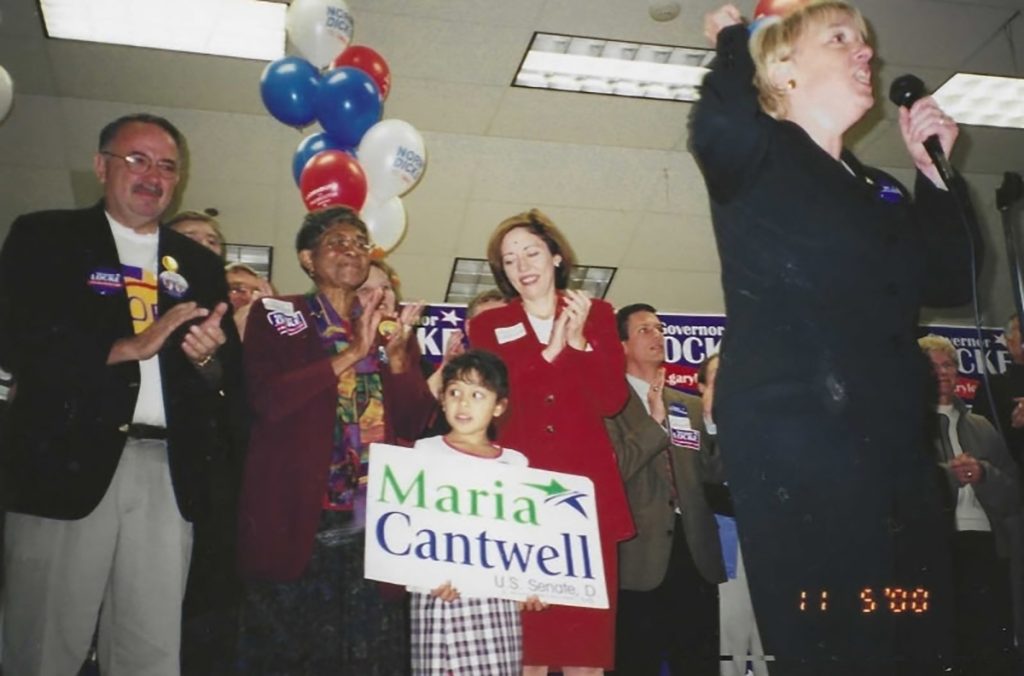
Courtesy of Natasha Laitila
When I started first grade at Sheridan Elementary, it was in 2000, 2001. I need to look at the year, but this is when Maria Cantwell was running for her Senate seat. And so, there’s a picture of me with Cantwell holding her sign with then-Representative Conway and Representative Rosa Franklin. And I think [Sen.] Patty Murray was there, too.
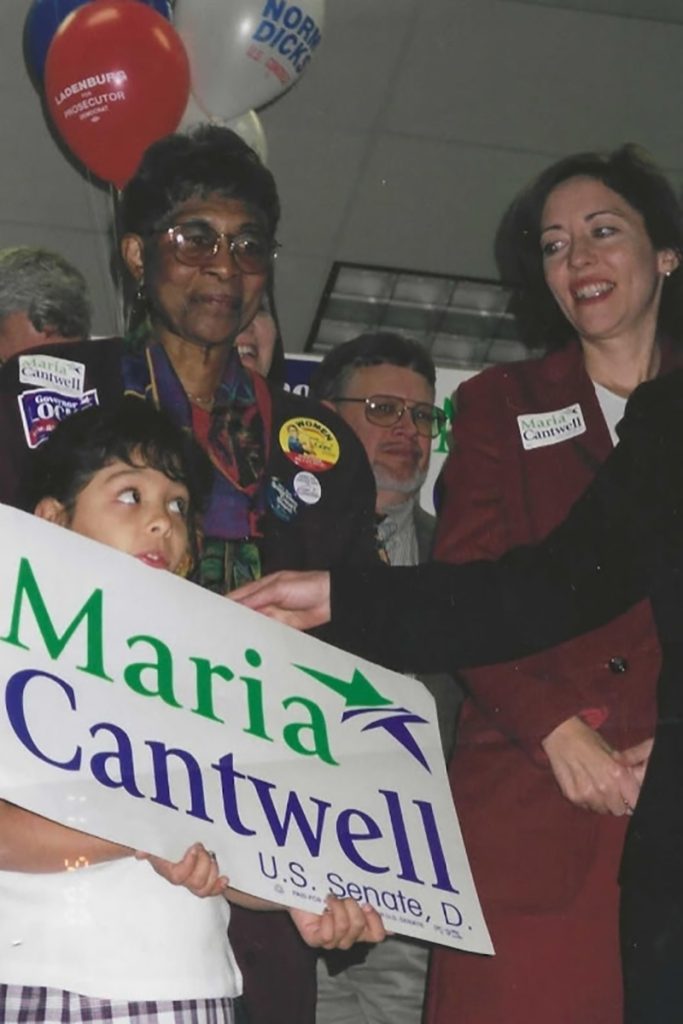
Courtesy of Natasha Laitila
They called me up on the stage. I was holding their sign, and that was the first time that I was introduced, or I could remember being introduced to politics and seeing my parents being so excited, but also very nervous of interacting with elected officials and not knowing what this was, but being very, very curious.
One thing to note is that the 29th has one of the lowest average voter turnouts in the state. And so, to me, growing up, the only thing I saw about being politically active was, was voting, if you could. Not everyone can vote based on immigration status, if you’re a permanent resident, or other circumstances, but policies affect us all. But that [experience in elementary school] was the first time I remember being mentally aware of, ‘Oh, what is this?’
I naturally gravitated toward that. In high school, I got involved with Teen Council, which was a program where high school students could volunteer and lead comprehensive sex education presentations around health classes in the school district. Unfortunately, that program has been cut because of [cuts to] Planned Parenthood.
That opened the door to advocacy for me and I went to Olympia … I think those were my two biggest things.
NWAW
What are your motivations for running? Why did you specifically run for this position, and what do you bring to the table that no one else does?
Laitila
When I was in high school, Olympia seemed a lot farther than it actually is. People in my community felt nervous of interacting with the political process, whether it was not trusting the political process, or being intimidated of how to navigate it, because it’s not accessible.
After I graduated from Pacific Lutheran, it was very important for me to stay within the community and serve, so I did two years of AmeriCorps at the United Way Pierce County. That was my first time working in a nonprofit, working on the front lines. And I won’t lie, it was very, very hard.
What AmeriCorps basically is, is they tell you that you have to basically live in poverty to understand what the community you’re serving is going through. But the thing is, a lot of people I knew grew up in these communities. So telling them, ‘You need to have an understanding of how these communities are’—it’s like, ‘No, I am from this community.’
But how can I serve my community if I can’t take care of myself? That was my first instance of becoming aware of what I think is a bad policy.
I got my first state job at the Office of Public Defense, as a program assistant with the Parents Representation Program, that, in essence, helps reunite families and keep kids out of the foster care system and keep kids with kinship. … I was the only assistant for a statewide program. So I had six managers, and I was the point of contact for, like, 200 managing attorneys.
To me, you have these families who are in crisis, but you only have one admin to take all these calls. [That was] my second experience of seeing a good intention policy, but not great implementation.
So then, I was thinking, ‘I’m really interested in what’s going on in Olympia. I think it’s important for me to see what state government is really like.’ And so I made a goal for myself, that if I could work across all three branches of government, then I would think about maybe running.
I was able to achieve that goal. I worked in the legislature, and in both the State House and Senate. I was Rep. Jamila Taylor’s first [legislative assistant]. I was Sen. Hasegawa’s[, too. I was recently] with the Department of Commerce implementing a federal program at the state level.
Time and time again, I have seen things come up—good policy with not great implementation, seeing bad policy with terrible implementation, which makes it even worse. But then people who are trying to voice their concerns and their frustrations don’t know how and are intimidated about Olympia. I’m very passionate about making that more accessible.
I was born and raised [in the 29th District]. I am a product of it. I have experienced the good and bad policies as a child, as a student, as an adult—and now, as a caretaker. My sister and I take care of our parents. We live in a multigenerational household. We’re a mixed-status household. I have that unique experience of working across all three branches of government … and seeing how, at the very top of the legislature, good people have good ideas, but oftentimes not talking about … is it actually going to affect the target population.
And if that’s not talked about, then what is the policy doing? That’s a big reason why I’m running. It’s so critical that we strengthen progressive leadership on all levels of government to protect our communities, especially our AAPI and immigrant communities from, to be blatant, ICE (Immigration and Customs Enforcement) and from what’s going on in the federal government. That’s a big reason why I’m running now.
NWAW
What have been your biggest challenges in this race?
Laitila
It started with my family because we’re scared as everyone else is about what’s going on at the federal level and also with ICE. My mom’s originally from Malaysia and my grandma passed away two years ago. We have not been able to go back since because we are afraid we won’t be able to get back in the country.
We have family there. I know that’s the same for many other community members. But despite that fear, it was very important to not only me, but my entire family that we make a stand somehow, and whatever those challenges are, we will face it together.
I bring a lot of privilege of being born a [U.S.] citizen. English is my first language. I have navigated these systems.
The least I can do is highlight and bring to the forefront these conversations, because it’s literally life and death for people. Why should I be afraid of whether … people think it’s controversial to talk about ICE and how they’re attacking our communities? I should not be worried about that. I need to make a stand to protect people who cannot for a variety of reasons.
[My sister and I] take care of our parents and there was a conversation [about how] my role is going to be different moving forward. We are a tight-knit family. We rely on each other, but if we make this decision, it’s going to look different.
Third, I come from a working-class family and money is a big thing. It was a huge hit [when I had] to resign [from the Department of Commerce, because of the Hatch Act]. It wasn’t easy.
But it makes me more strongly believe that this is the right decision. Even though it is going to be extremely challenging that I had to resign from my job, we will still be able to make it work. And I need to show others that this is possible, because we need more people from our communities to run. Through intimidation tactics, through not knowing the system—through a variety of different things, there are many reasons why people from my community and from the AAPI community don’t run. That needs to change.
NWAW
If you’re elected, what are your long-term goals as representative, and why those goals?
Laitila
My biggest goals are my three main [campaign] issues: strengthening economic stability for residents, protecting immigrant families, and standing up for workers.
When there is a deficit, like there is now, benefits, education, money for community programming—that gets cut often first, and that should not be the case. Economic stability is so critical to build a strong foundation for families to thrive. Do you have access to stable work? Can you afford where you live? Can you afford health care? Can you afford long-term care?
A lot of people in the district also take care of their parents, like myself, or there’s kinship [care]. Economic stability is so critical, and we can do better.
When I was at the Department of Commerce … I saw every day how hard working families were trying to navigate the system, whether through an app error or they didn’t understand that they had to get certain paperwork done. [We need] to build a structure that relieves compliance burden on families. It’s not a sexy topic, but that is a long-term thing that needs to be addressed.
For immigrant families, it’s maintaining strong protections for our immigrant communities. [That entails] privacy protections, and addressing the Tacoma Detention Center—what is going on there, and the inhumane treatment that people are receiving.
It includes protections for mixed-status families. What does visitation look like [and] limiting the size or the locations—even having detention centers—exploring those ideas.
Third is standing up for workers. Labor is one of the core foundations to build economic stability. If people do not feel safe at work, do not feel like they have dignity at work, it affects every aspect of their life.
NWAW
Lastly, how do you see your work uplifting the Southeast Asian community? And why do you think it’s important for you, as a Southeast Asian American woman, to hold public office?
Laitila
I bring the unique experience that’s not completely representative of the AAPI community, but is a small part of it. And it breaks that monolith mold. Oftentimes, communities of color are treated as single groups. And that’s not the case. And they deserve to have nuance. I think that’s one core thing I can bring.
Accessibility is a huge thing for me. [I want to be] talking about people feeling intimidated about interacting with the political process, not knowing how, not having the education. [We should be] providing that language access [and] providing a voice and perspective of mixed-status families, because there’s a lot of mixed-status families. And that could be whether families are members that are either undocumented or are permanent residents or refugee status. That is a wide range of perspectives that I can bring.
Also, cultural competency in services. I think that is very critical, especially when families are trying to receive services from government. If we are to build a diverse government that caters to the needs of our residents, there needs to be cultural competency. And I can help bring that, and representation is key.
I am just so grateful for the opportunity. I do not take this lightly. It gives me an opportunity to learn from other AAPI communities, because we’re not just one, to learn from others, and how I can help elevate issues.
I want to be able to leave this position with the door open behind me. I want this to be a position that when I leave, it is easier for the next person who comes from very similar backgrounds to represent our community, because that’s what’s needed.
This is a people powered campaign, and this campaign is where I want to show up and really hold that standard for people to see that it’s critical that we show up and we speak out and we listen as well.
I have seen how these systems work from the inside. I dedicated my 20s to learning … what I think is good leadership and what I think is not good leadership that I don’t want to perpetuate. I know that we can make these systems work better for people, because that’s what government is supposed to do. What sets me apart in this race is this deep understanding and love for the district, and that deep, nuanced understanding of Washington state government. I can hit the ground running and I’m excited to do that.
Laitila’s official campaign kick-off will be held at Kamlai Thai Cuisine, 8425 S Hosmer St Suite D, Tacoma, WA 98444 on Thursday, April 18. Readers can find more information on her campaign website.
Leave a Reply