


By Nia Wong
NORTHWEST ASIAN WEEKLY
SEATTLE, Wash. – The Mayor of Seattle dedicated an hour on March 31 to meet with Northwest Asian Weekly and approximately 30 other journalists from BIPOC communities across the greater Seattle area. The invite-only gathering was for members of grassroots media outlets to share concerns with Mayor Katie Wilson and to question her directly during her Ethnic Media Roundtable. Participating journalists packed Seattle City Hall’s Norman B. Rice room for the discussion and these were among the pressing issues brought to Mayor Wilson’s attention.
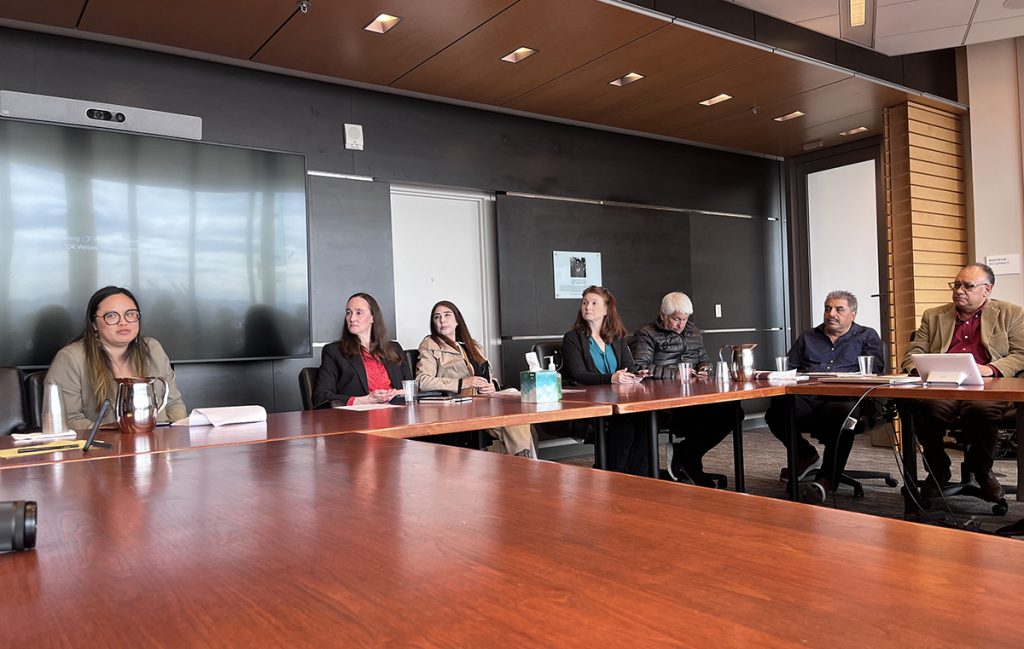
Photo by Nia Wong
The state of ethnic media
The playing field is definitely not level, according to one BIPOC journalist and echoed by others at the mayor’s roundtable. The challenges of accessing public records and information, specifically from the Seattle Police Department (SPD), and covering last-minute press conferences had participants calling on the City for improved communication and scheduling for ethnic media outlets who operate on smaller budgets and staffing. There were also requests for transparency on the City’s budget and specifically what portion is allocated to not only ethnic media but all media. City representatives in attendance at the roundtable revealed new funding will increase for ethnic media, not just in terms of traditional ad placements but also in how the City strengthens partnerships. Wilson shared plans for a news program in the works modeled after the democracy voucher program, where residents would be given a set amount to donate to their local news outlet of choice, potentially giving financial help to ethnic media outlets that spread critical alerts and information to BIPOC communities. Wilson said she is “very committed to moving forward” with this, but no timeline is in place yet.
Support for immigrant communities
Horrific reports of Immigration and Customs Enforcement (ICE) and other federal agencies abducting people, the murders of Alex Pretti and Renee Good, as well as conditions and deaths inside ICE facilities have communities on alert in Seattle. In response, the Office of Immigrant and Refugee Affairs says it is investing $4 million into community initiatives with $1.25 million going towards legal defense for immigrants in Seattle. RFP applications will open for small community grants aimed at providing resilience and rapid response efforts, such as delivery for food services for those who might be afraid to leave their homes, or developing emergency alert systems so there’s a way to activate and communicate with immigrants to let them know about what’s happening with ICE in real time. Additional funds will support emergency assistance and immigrant inclusion programs, including naturalization, ESL, and workforce development. City representatives said they are currently communicating with the Minneapolis Police Department to collaborate and incorporate ways to have police reflect communities that are served in Seattle, and Wilson revealed SPD has been directed “to monitor and record potentially illegal ICE activity that can help, hopefully, later, with accountability, with bringing people to justice.”
In January 2026, Wilson signed an executive order prohibiting ICE from staging on city property and since then, multilingual signs have been created for private businesses and property owners to place in their windows if they choose, to remind federal immigration enforcement is not allowed without a warrant in their private spaces.
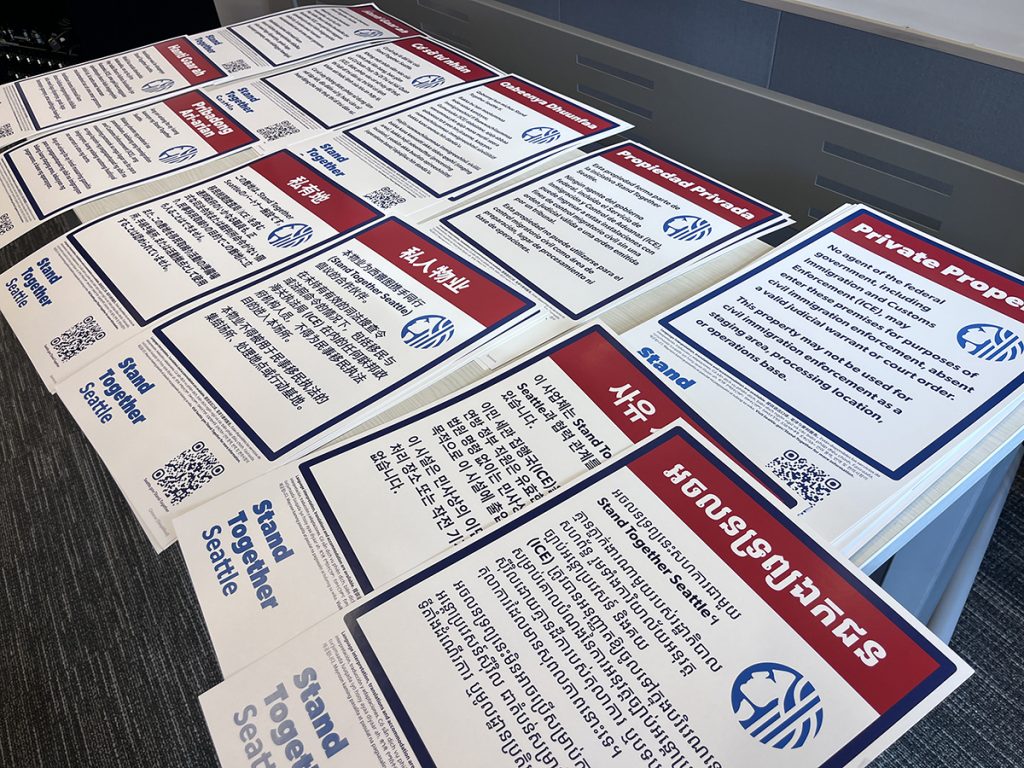
Photo by Nia Wong
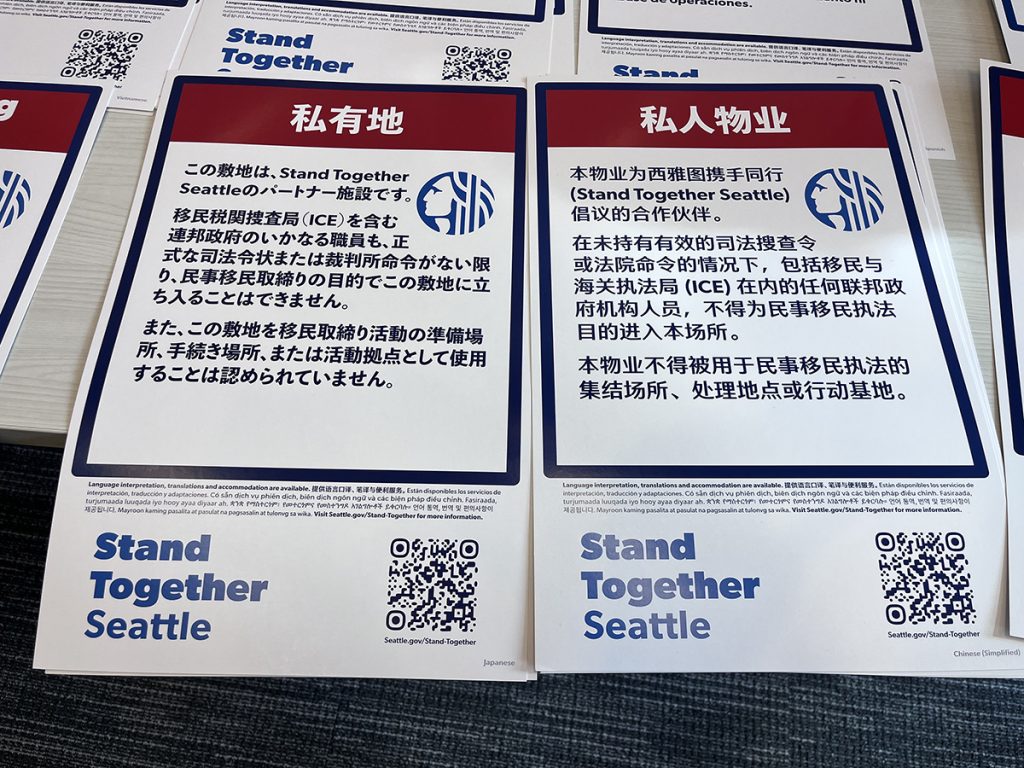
Photo by Nia Wong
Surveillance in the Chinatown-International District
When asked about the City’s controversial CCTV pilot program, Wilson firmly said she has no plans to turn off the already installed surveillance cameras in the Chinatown-International District and while the footage would not be shared with federal agencies, the City is currently preparing to audit the data security, storage and sharing practices, as well as implementing “better” policies at the SPD to make sure the data is secure.
Following the hour-long roundtable, Wilson did not say when or if she would host another ethnic media roundtable, but did share that her staff had been taking notes throughout the session and would be thinking through what her office could address in what she described as “an ongoing conversation.”
Leave a Reply