


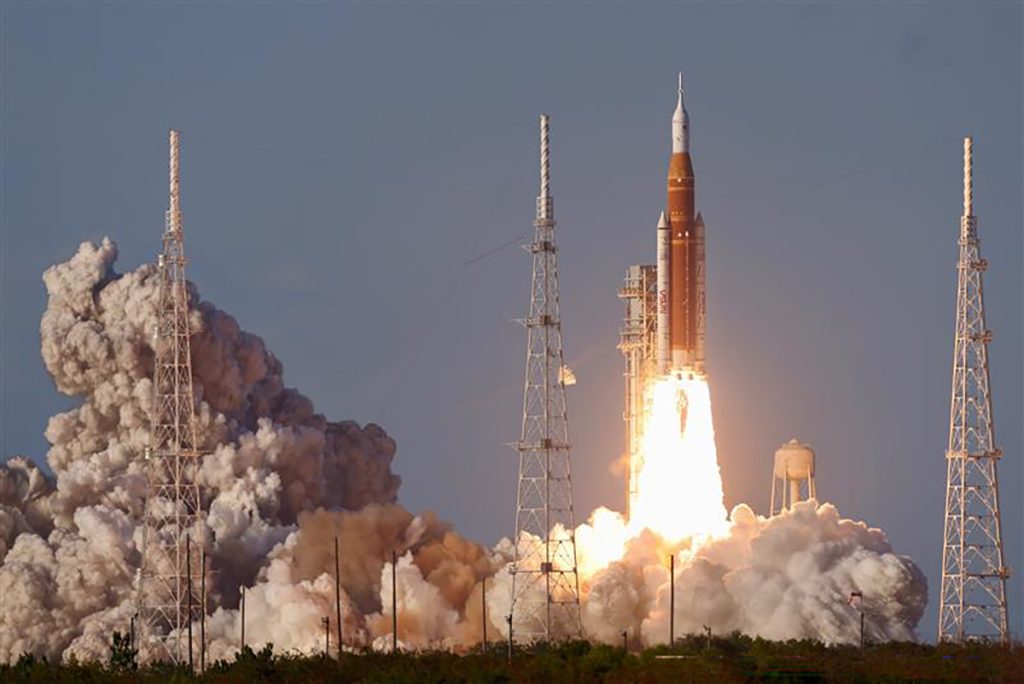
At 6:35 p.m. EDT on April 1, 2026, NASA’s Space Launch System rocket and the Orion Artemis II spacecraft lifted off from the agency’s Kennedy Space Center in Florida, sending four astronauts on a planned test flight around the moon and back. (From X/@NASA)
A small plush mascot named “Rise,” designed by a California elementary school student, has launched aboard NASA’s Artemis II mission as the flight’s official zero-gravity indicator.

Lucas Ye, 8, designed “Rise.” (Courtesy: Freelancer)
The creator, Lucas Ye, a second-grade student from Mountain View, California, submitted the winning design as part of a global contest that drew more than 2,600 entries.
Now currently on its mission, “Rise” serves both a symbolic and practical role. The soft toy floats freely inside the spacecraft in microgravity, providing a visual cue that the astronauts have entered weightlessness.
The Artemis II mission, part of NASA’s broader Artemis program, is the first crewed flight of the Orion spacecraft around the Moon in more than 50 years and a key step toward returning humans to the lunar surface.
The mascot’s design was inspired by the iconic “Earthrise” photograph taken during the Apollo 8 mission. The image, captured by astronaut William Anders, shows Earth appearing above the Moon’s horizon and has become a symbol of exploration and a new perspective on the planet.
Zero-gravity indicators have long been a tradition in human spaceflight.
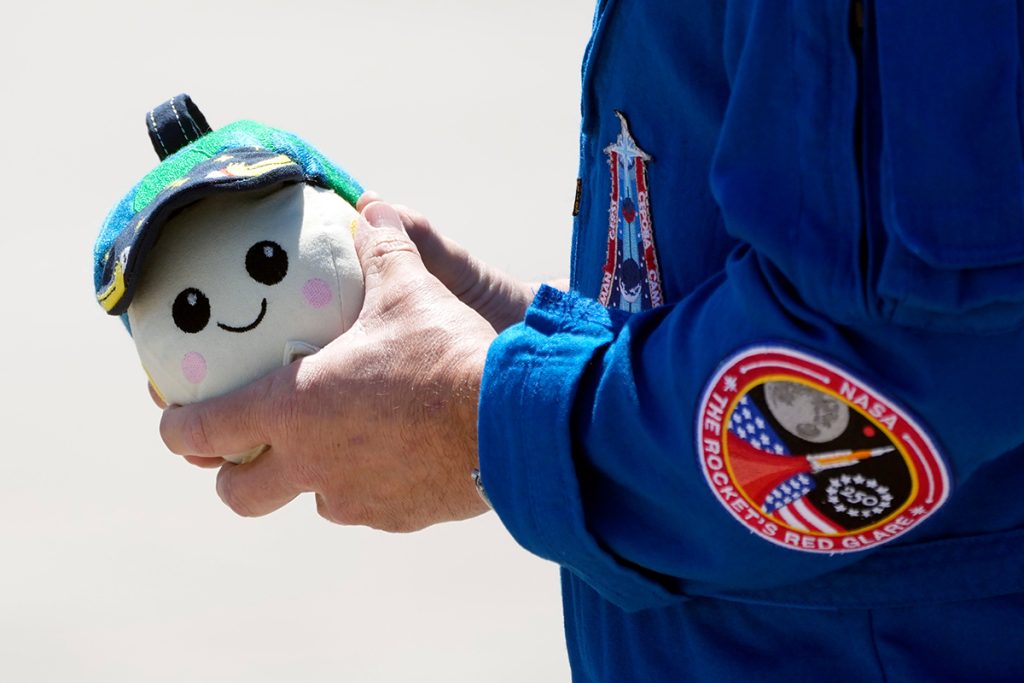
Artemis 2 crew member Commander Reid Wiseman holds “Rise” after the crew’s arrival at the Kennedy Space Center on March 27, 2026, in Cape Canaveral, Fla. (AP Photo/Chris O’Meara)
The mascot’s name reflects both the idea of rising into space and the broader goal of advancing human exploration beyond Earth.
Leave a Reply