


Immigration arrests of people from Asian and Pacific Islander countries increased sharply in 2025, according to new analysis released Thursday by the advocacy group Stop AAPI Hate, which says rising enforcement and anti-immigrant rhetoric are having widespread effects on Asian American and Pacific Islander (AAPI) communities.

ChongLy “Scott” Thao is escorted by agents from the U.S. Immigration and Customs Enforcement outside his home in St. Paul, Minnesota, on Jan. 18, 2026. Thao, a U.S. citizen with no criminal record, was detained and led outside in freezing temperatures wearing little clothing before being released.
Using government data obtained through a Freedom of Information Act request and analyzed by the group, arrests by U.S. Immigration and Customs Enforcement rose to 7,752 between January and mid-October 2025. During the same period in 2024, arrests totaled 1,998.
The increase coincides with immigration policies implemented under President Donald Trump after he returned to office. Advocates say the enforcement surge and accompanying rhetoric have intensified fears among AAPI residents across the United States.
In a national survey conducted in January with researchers at NORC at the University of Chicago, 53% of AAPI adults said they or someone in their community had been affected by anti-immigrant policies or sentiment in the past year.
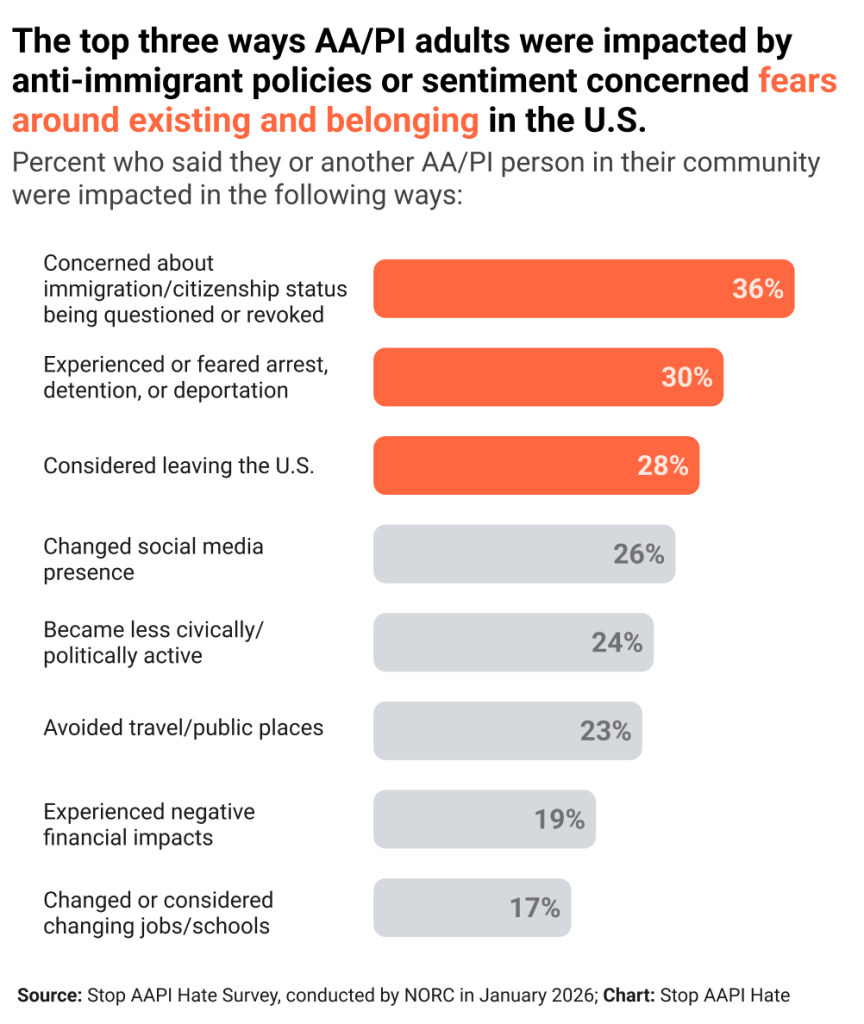
Among respondents, 36% said they were concerned their immigration or citizenship status could be questioned or revoked, while 30% said they had experienced or feared arrest, detention or deportation. Another 28% said they were considering leaving the United States.
The survey included 1,378 adults and was conducted in English as well as Mandarin, Cantonese, Vietnamese and Korean.
Researchers said the concerns were reported at nearly identical rates among people born in the United States and those born abroad, suggesting fears extend beyond immigration status.
The ICE data analyzed by the group also found that most arrests involved people from Asian countries, particularly China, India and Vietnam. Smaller numbers involved people from Pacific Island nations including the Federated States of Micronesia and the Marshall Islands.
The survey also found broader social impacts. About 45% of respondents said they feel less secure living in the United States, and 39% reported withdrawing from public life, such as reducing social media activity or avoiding travel or public places.
People who reported being affected by anti-immigrant policies or rhetoric were nearly twice as likely to report moderate or severe anxiety or depression, according to the survey.
Advocates say the findings reflect the broader effects of immigration enforcement and political rhetoric on communities that include both immigrants and U.S. citizens.
Despite those concerns, the report said 67% of respondents also reported feeling motivated to support and protect immigrant communities.