


By Andrew Hamlin
NORTHWEST ASIAN WEEKLY
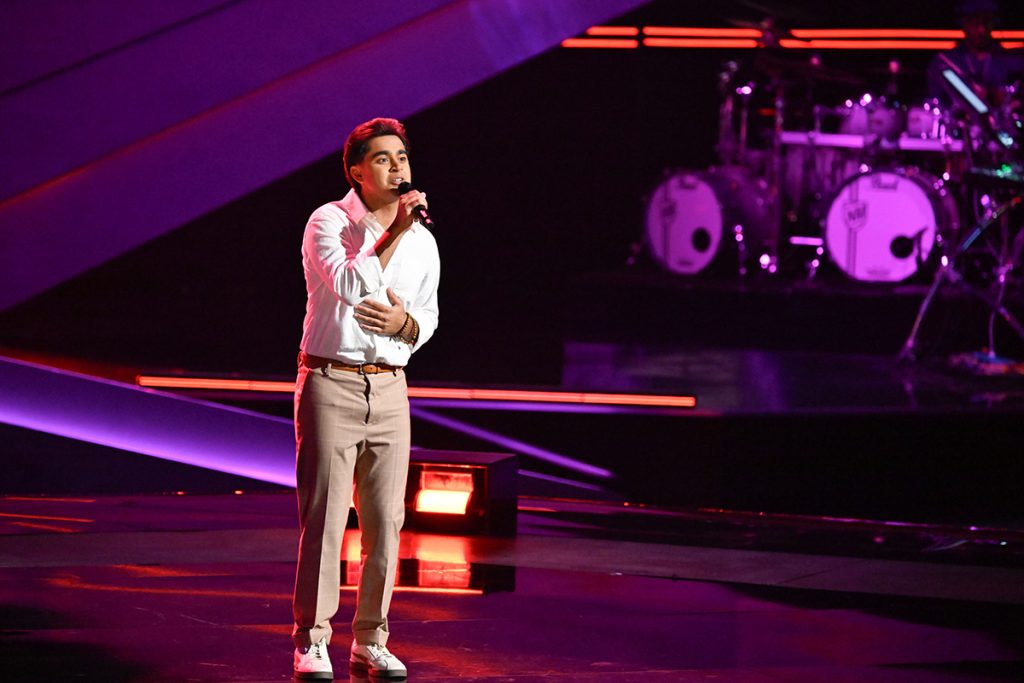
THE VOICE — “The Blind Auditions Part 2” Episode 2902 — Pictured: Adi Arora — (Photo by: Griffin Nagel/NBC)
For the “blind audition” portion of “The Voice” TV show, all the celebrity judges sit with their backs to the stage, leaving each auditioning performer out of their sight. Turning a chair around to face the stage indicates that a given judge approves of what’s going on.
Adi Adora, an Indian American undergrad at Cornell University who chose Bruno Mars’ falsetto workout “It Will Rain,” for his blind audition, remembered: “When John [Legend] turned his chair almost immediately during the performance, that was the moment I realized the audition was going well.
“There were definitely nerves walking onto that stage.” He continued, “But once the music started, I tried to focus on telling the story of the song. Performing a lot in a cappella and other groups helped me get comfortable being on stage. Those experiences really helped me learn how to channel nervous energy into the performance.”
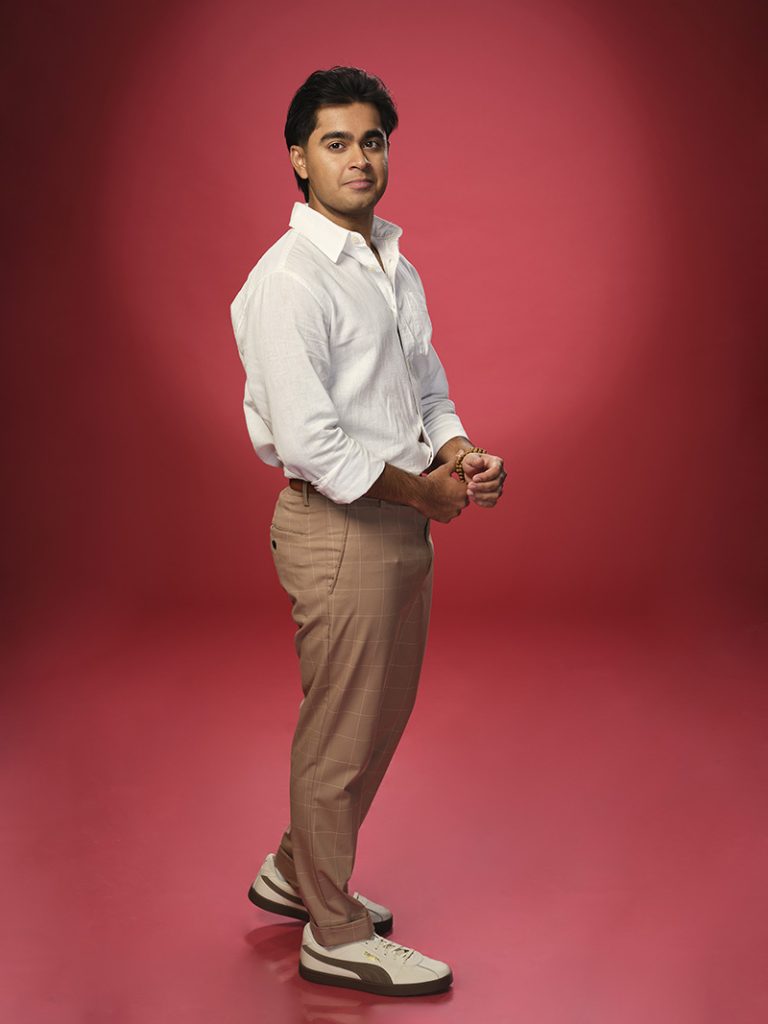
THE VOICE — Season: 29, Contestant Gallery — Pictured: Adi Arora — (Photo by: Danny Ventrella/NBC)
Adora grew up in Milburn, New Jersey, just west of New York City. “Some of my earliest memories involve spending time with my family and listening to music with my brother. Music was always playing in our house, and that environment definitely shaped my interests early on. I also spent a lot of time involved in school bands and other musical activities growing up, which really helped me develop my love for music.
“My family is Indian, and that culture was always an important part of our household growing up. I became more aware of it as I got older through family traditions—food, music, and conversations with my parents about our background. I also learned a lot traveling around India to visit extended family who live there.”
He experimented with different instruments growing up, and music was always a crucial part of the home. “I didn’t actually think of myself primarily as a singer until high school when I joined [an] a cappella group, somewhat reluctantly. Before that, I mostly saw myself as an instrumentalist.
“Once I started singing more seriously, people around me began encouraging me, and that helped me gain confidence in my voice. My family and friends were always very supportive and helped push me to keep developing as a singer.”
Adora’s older brother has both Down syndrome and autism. His brother isn’t much for words, but the singer found music could bridge that gap. “Music was always one of the easiest ways for us to connect. We would spend a lot of time listening to songs together, and I would also play music for him on piano. Even without saying much, you could tell when he connected with the music because he would react emotionally or get excited about certain songs.
“Seeing how much he enjoys music has always motivated me, and that connection is a big part of why music became so meaningful in my life.”
He won admission to Cornell and began studying computer science. But he didn’t forget about performing.
“At Cornell, I joined Last Call, the university’s all-male a cappella group, and eventually became the music director. I also perform with a band on campus called Sonder, that plays pop, funk, rock, and R&B. And I’ve sung with jazz groups as well.”
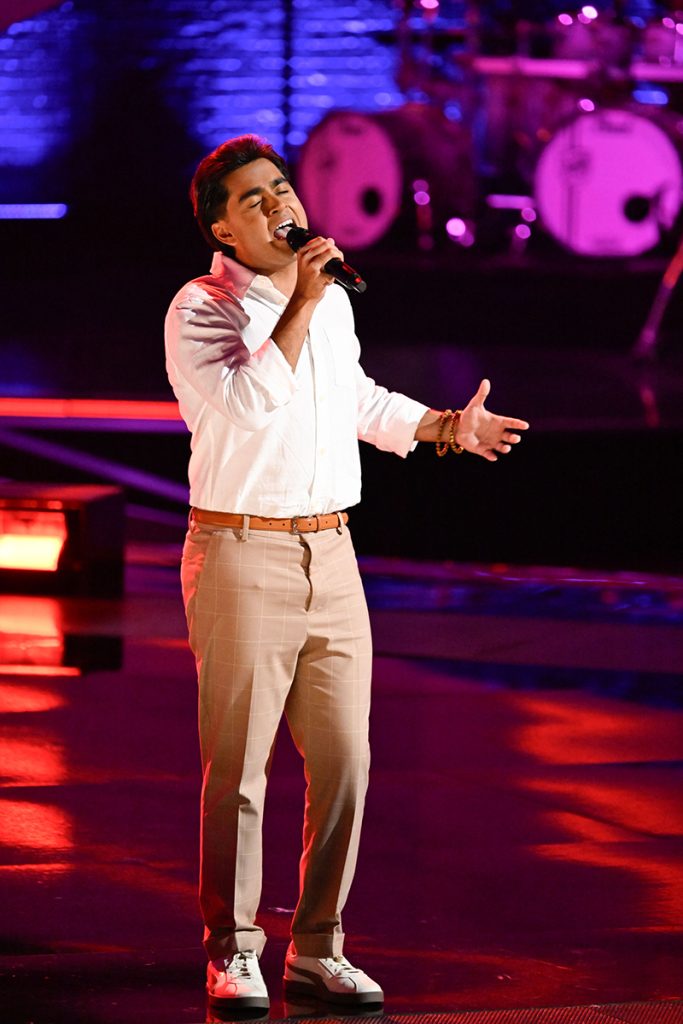
THE VOICE — “The Blind Auditions Part 2” Episode 2902 — Pictured: Adi Arora — (Photo by: Griffin Nagel/NBC)
He originally submitted an audition for “The Voice” after encouragement from a long-time friend. He was reluctant, given the large numbers of applicants to the show who never get anywhere, but he’s now grateful to his friend for her persistence. He feels comfortable with his falsetto, and he picked “It Will Rain,” because it’s “a song that allows me to show both emotion and range vocally.”
A successful blind audition allows the singer to choose which judge to work with as a mentor. Adora went with John Legend, finding many similarities to his own path in Legend’s track record on becoming involved with music as a college undergrad, and directing an a capella group.
Asked about hopes for the future, Adora shared a few simple wishes. “My biggest hope is to keep growing as an artist, learn from the other musicians on the show, and continue sharing music with more people.”
Leave a Reply