

By Carolyn Bick
NORTHWEST ASIAN WEEKLY
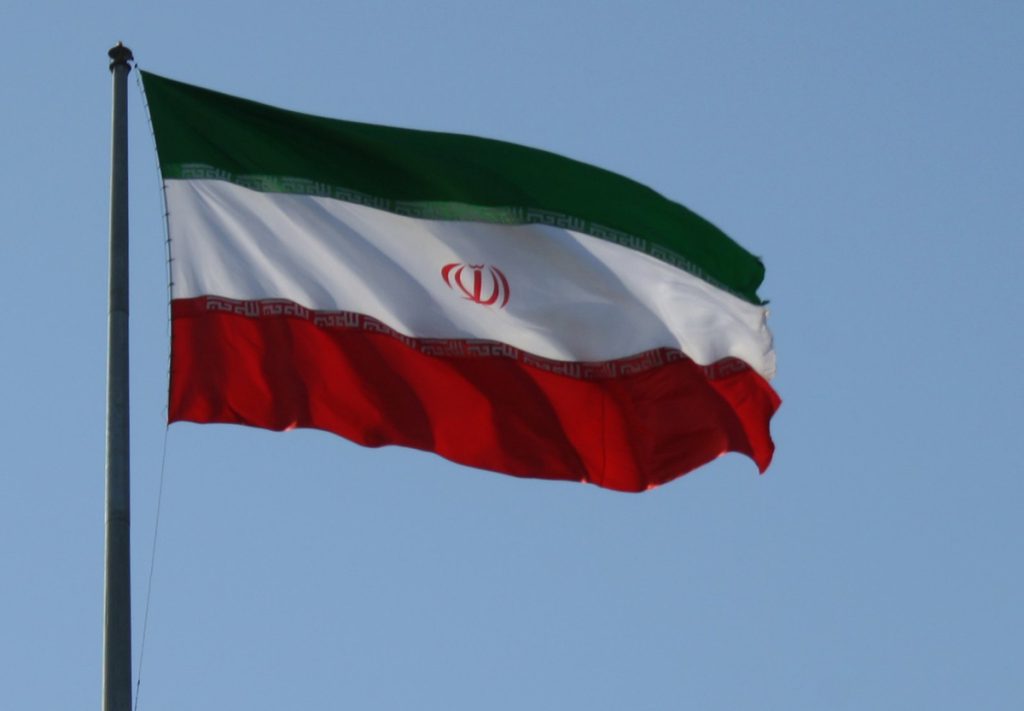
Iranian flag. Photo by Blondinrikard Fröberg.
President Donald Trump has threatened military action against Iran—even going so far as to send the United States’ largest military aircraft carrier, the U.S.S. Gerald Ford, into the region to join an already massive military fleet—if Iran’s government doesn’t agree to a nuclear program deal. Trump’s threats come as talks with Iran are ongoing, and as Abbas Araghchi, Iran’s Foreign Minister, said that the country was poised to finalize a draft of a deal within days.
The U.S. and Iran are slated to hold talks in Geneva on Thursday.
Aria Fani, assistant professor and director of Persian and Iranian Studies at the University of Washington, said that no matter which way he looks at it, Trump’s actions come with “massive question marks” and no clear answers.
“Does the US seek regime change? If not, are they happy with routine bombardment of the country’s military sites?” he wrote in an email. “Given the enormous amounts of investment in data centers … regional actors like [the United Arab Emirates] and Turkey don’t wish to see another Iraq.”
Some lawmakers say that Trump should seek approval from Congress before any military action, including the limited strikes the president is threatening. Sen. Tim Kaine, a Virginia Democrat, attempted to file a resolution that would require the president to seek this approval.
Though the resolution did not pass—in addition to enough Republicans agreeing to sign on, Trump himself would ultimately have to sign the resolution—a previous war powers act aimed at limiting Trump’s strikes on Venezuela garnered the support of three Senate Republicans. Originally, five Republicans had joined their Democratic colleagues, but two bowed to pressure from Trump.
Trump’s recent round of saber-rattling against Iran comes against the backdrop of the recent arrest of England’s former Prince Andrew, now simply known as Andrew Mountbatten-Windsor. King Charles stripped Mountbatten-Windsor of his title, after his involvement with the late convicted sex offender, Jeffrey Epstein, became public in late January’s release of more than 3.5 million files related to the case.
Trump is named numerous times in those files, as are other prominent officials and figures from around the globe. However, despite the fallout those from countries other than the U.S. are facing—despite their prominence on the world stage, such as Mountbatten-Windsor, Norway’s former prime minister Thorbjørn Jagland, and Norway’s Crown Princess Mette-Marit—those from the U.S. named in those files have yet to face similar consequences.
Some experts believe that Trump’s increased aggression against Iran is a way to distract from those files, since the administration’s campaign to downplay the files has not worked, while others believe Trump is determined to create a forever-weakened Iran.
President Barack Obama successfully negotiated a nuclear deal with Iran in 2015, but Trump unilaterally withdrew from that deal in 2018. Since then, talks have stalled.
“It’s all so … depressing. The U.S. is currently starving Cubans, orchestrating a massive military show of force by Iran, and even in their list of negotiation demands with the Islamic Republic (which they fully expect Iran to reject), they don’t even name any human rights concerns as part of their conditions,” Fani said. “You’d have to be delusional to think the U.S. seeks to intervene on behalf of ordinary people.”