


By Andrew Hamlin
NORTHWEST ASIAN WEEKLY
“My mother is Korean, and my biological father is Black. Having a mixed race and transcultural identity is the lens through which I view the world.”
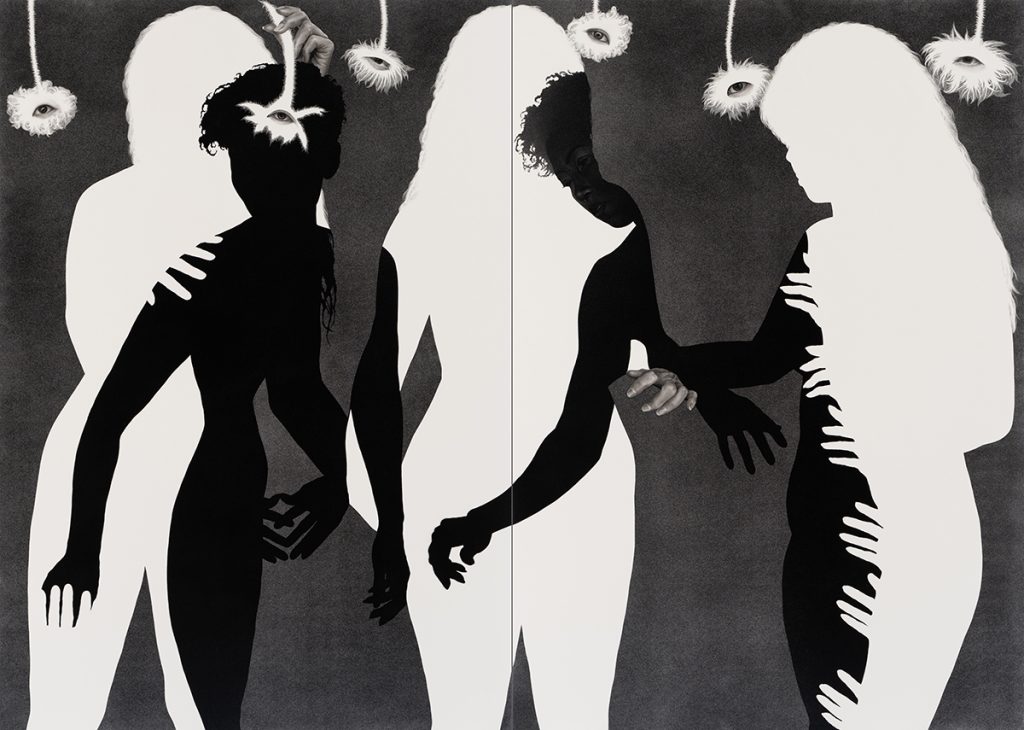
That’s artist Samantha Yun Wall, based in Portland, and her plain and simple explanation where she’s coming from. Winner of the 2024 Betty Bowen Award honoring Northwest artists, she brings “What We Leave Behind,” her first-ever solo exhibition of drawings and paintings, to the Seattle Art Museum through Oct. 20.
The Seattle Art Museum (SAM) and the Betty Bowen Committee, chaired by Gary Glant, announced that Wall had won the Betty Bowen Award back in October 2024. In addition to the SAM exhibit, the award includes a cash grant of $20,000.
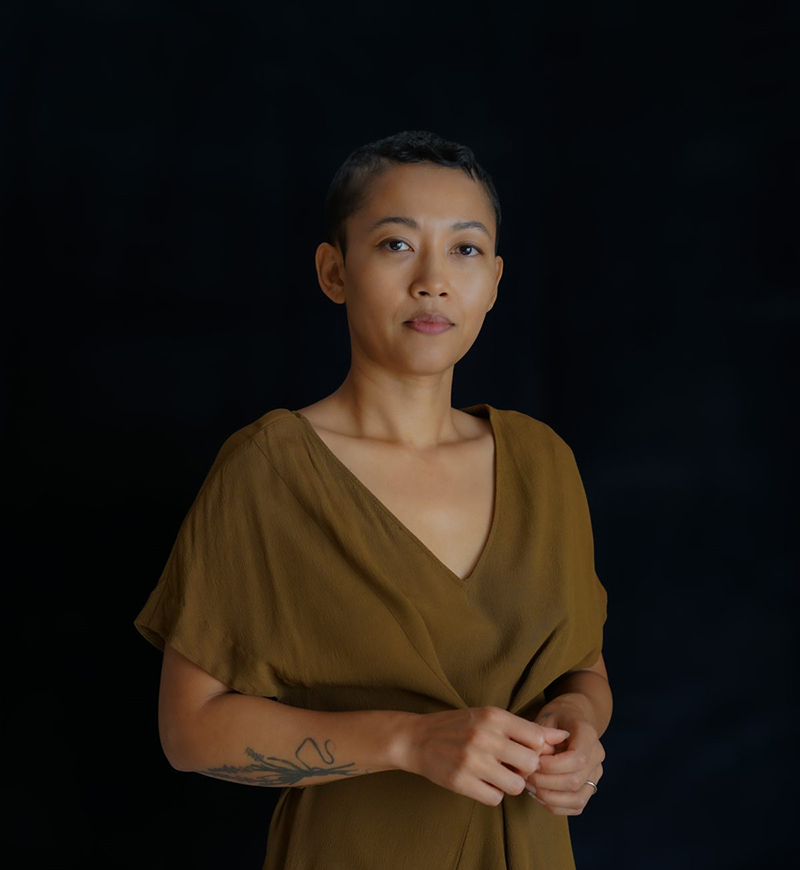
Samantha Yun Wall
She moved from Seoul to the United States as a young child, living with her mother and stepfather in Alabama, then Fort Hood, Texas, before settling in Fort Jackson, South Carolina.
“I left Korea when I was nearly 4 years old, so I have very few memories of my time there, but the ones that I have are emotionally charged. One of my favorites is a tender memory of my grandmother feeding me oranges after she’d peeled the membrane from the slices.
“I don’t have clear memories of how the different cities in the U.S. differed from one another—living primarily on military bases, there was little difference. It was only when I left the military base in South Carolina that I felt a difference in the social dynamic and developed new tools to navigate those differences.”
She admitted that being based in Portland, she doesn’t know Seattle all that well, but “I hope to change that in the coming years through artist residencies and more frequent visits. I’m intrigued by the different layers of the art world overlapping in Seattle, which can offer opportunities to engage with a wide range of audiences.”
Asked about early artistic influences, she reflected that no one single moment started her on an artistic path.
“I was a quiet, introspective child, and drawing was how I processed my surroundings. I do remember believing that a career in the arts was something unattainable for someone who looked like me. It wasn’t until college [at Portland’s Pacific Northwest College of Art] when I took my first life-drawing class from one of two women instructors at my school, that I felt encouraged to lean into my love of the arts.”
Her work uses carbon-based materials: ink, graphite, charcoal, and conté crayon (professional-grade crayons mixing kaolin clay, natural pigment, and a binding substance). She draws and paints quite a bit on Dura-lar, a high quality polyester film designed to be durable, heat resistant, versatile, and free of corroding acids. And she often works from photographs depicting various family members.
“I explored oil painting, black-and-white photography, various printmaking techniques, ceramics, and sculpture in undergrad, but I returned to drawing. I’ve always had pencils in hand; they were accessible and affordable. As my art practice matured, I developed an intimate relationship with carbon-based materials and expanded the possibilities of drawing.”
As for the future, she’s currently preparing museum exhibitions for Eugene, Oregon, and Sarasota, Florida.
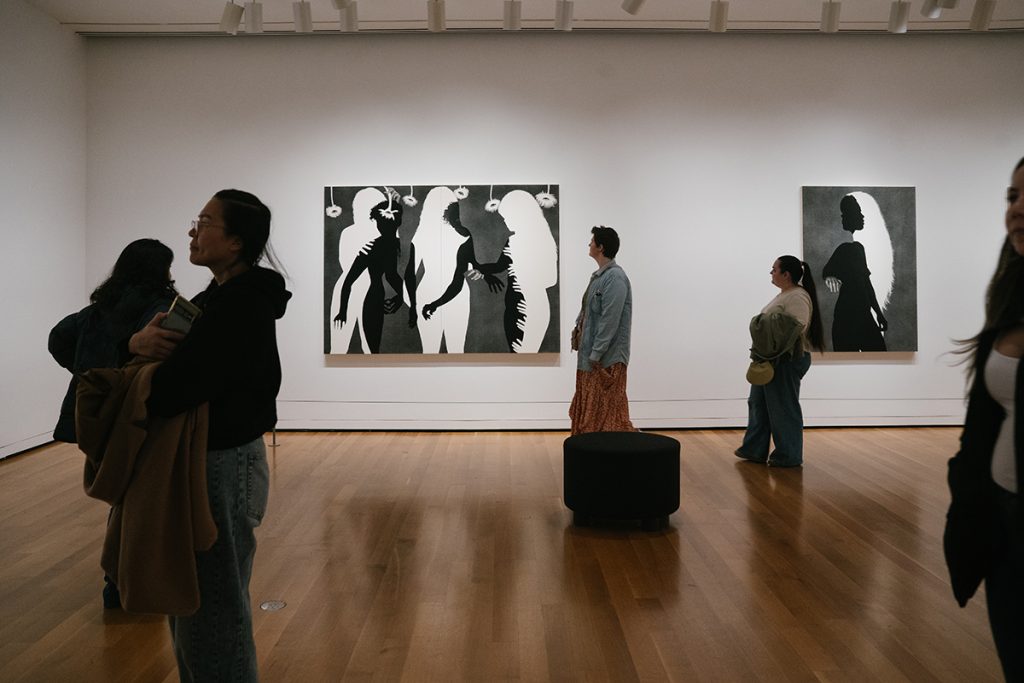
Summing up the current exhibit, she said, “The work in ‘What We Leave Behind’ explores family and the immigrant experience through the lens of my transcultural, multiracial identity. I came across the tale of the ‘granny flower’ while researching Korean folklore and mythology, and I kept returning to it. It’s a tragic story about family and loss, emphasizing filial piety and maternal sacrifice—themes that have appeared in previous work and are tied to my Korean upbringing.”
“What We Leave Behind” runs through Oct. 20 at the Seattle Art Museum.
For prices, hours, and other information, visit seattleartmuseum.org.