


By Ruth Bayang
NORTHWEST ASIAN WEEKLY

Photo provided by Tony Au
Seattle Mayor Katie Wilson and Deputy Mayor Brian Surratt met Feb. 2 with community leaders from the Chinatown-International District (CID) to discuss homelessness, public safety and economic pressures facing the neighborhood.
The meeting, held at Diamond Bay Restaurant, brought together business and property owners, residents and other leaders from Chinatown, Little Saigon and Japantown.
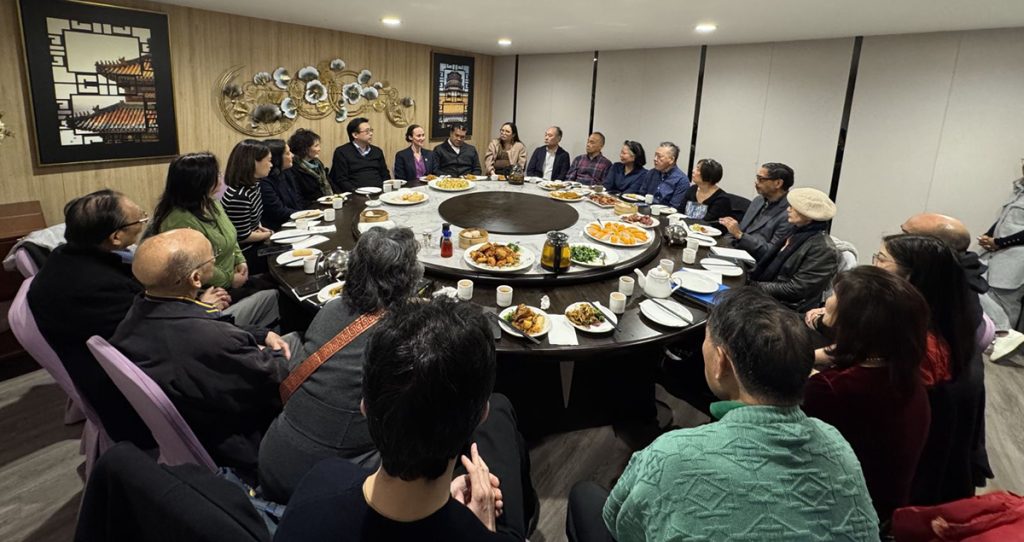
Photo provided by Tony Au
Participants described ongoing concerns about street disorder, vandalism and violence, while also urging the mayor’s office to work closely with the community on long-term solutions.
Mike Fong—the senior deputy mayor in the Jenny Durkan administration—helped facilitate the meeting, and thanked Wilson for meeting with the group early in her tenure and said he hoped it would be the start of an ongoing partnership.
“This is hopefully the first of more to come—relationship-building, table-setting opportunities,” Fong said.
“Homelessness and public safety are very big priorities for me,” Wilson told attendees. She said her office is focused on expanding emergency housing and shelter capacity, especially for people experiencing mental illness or substance use disorder. The goal, she said, is to move people indoors with appropriate services rather than shifting encampments from one neighborhood to another.
Wilson talked about Seattle’s role as a host city for the 2026 FIFA World Cup and said the city wants to ensure the event benefits local residents and small businesses while minimizing disruption to the CID.
She also addressed ongoing questions about light rail expansion and station siting in the neighborhood. As a member of the Sound Transit board, Wilson said she is committed to seeking the best solution.
“I really would like to see an outcome that’s both… not terribly disruptive for the neighborhood, and then also results in really good transit connections for folks who live in the neighborhood.”
Business owners described the daily impacts of crime and vandalism.
One community leader said a recent fatal shooting occurred in his parking lot but was intentionally kept out of the spotlight to avoid sensationalizing the neighborhood.
“We actually denied all the interviews,” he said. “We were able to deter the sensationalism that Chinatown is a place where bad things happen. … We need to make that stop, too, but we don’t also need to turn it into where people start to fearmonger Chinatown and our area.”
Another business owner said vandalism has become routine.
“Every other night, we get graffiti,” he said. “Every morning I have the broom and paint—basically just to hide some of what’s out there.”
Community members said they look forward to continued collaboration with Wilson and her administration.