


By Andrew Hamlin
NORTHWEST ASIAN WEEKLY
 The Cirque du Soleil (“Circus of the Sun”), founded in Quebec, Canada, in 1984, specializes in distinctive, colorful circus performances emphasizing color, coordination, and multicultural virtuosity, with each production also showcasing an overall theme. Acrobat Miho Inaba and Technical Assistant Director Jourdan Rosell, from Canada and the Philippines respectively, traveled long distances geographically and otherwise, to participate in the Cirque’s ECHO programming, opening on Feb. 5 at Redmond’s Marymoor Park.
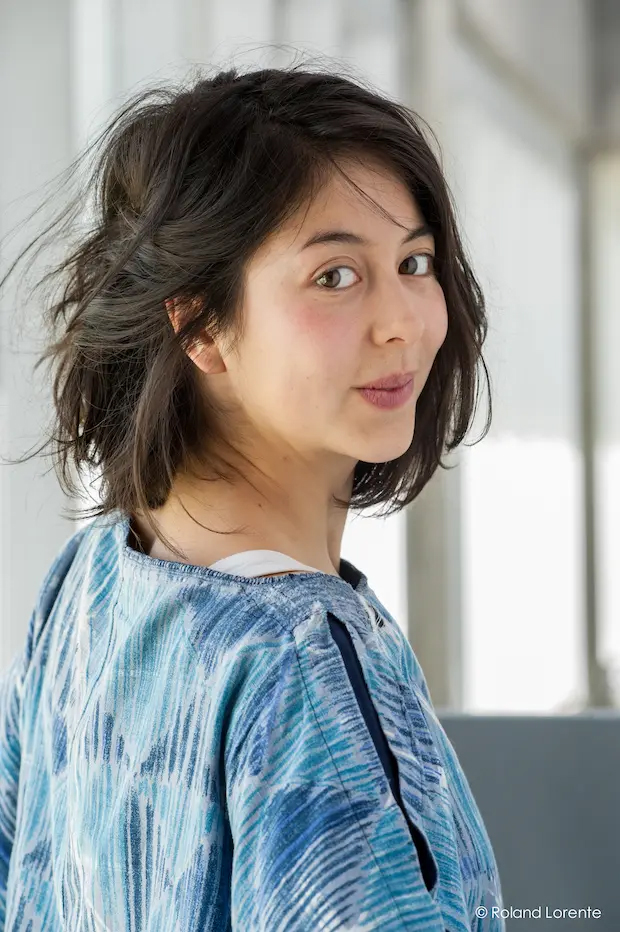
Miho Inaba
“Growing up, I was always moving,” remembered Inaba, born to a French mother and a Japanese father in Canada. “I started attending open training sessions at the circus school in Montreal. That’s where I met circus artists and athletes and began to understand the circus world from the inside. The more I trained and spent time in that environment, the clearer it became that this was the path I wanted to follow. I eventually auditioned for the National Circus School, and when I was accepted, it felt like everything came together—it was the moment I knew I had found my place.”
Jourdan Rosell, born and raised in Metro Manila, Philippines, was always curious about how shows, concerts, and live performances come together—the people behind them, their journeys, and how their experiences shape the work. “Growing up, I really looked up to those professionals and knew I wanted to be part of that world. I wanted to contribute to something world-class, learn from the best, and one day pass that knowledge on by mentoring others, just like the people who inspired me when I was younger.”
Inaba studied a wide variety of dancing and acrobatics, but for Cirque du Soleil, she specializes in banquine, or human cradle acrobatics. “It starts with a pyramid of people: Two strong bases at the bottom, then a porter standing on their shoulders, and I’m the flyer. My role is to swing between the legs of the cradle porter, get thrown, do tricks in the air, and be caught safely.
“What makes it different from other forms of acrobatics is this combination of teamwork, timing, and trust. There’s also a team of spotters on the ground whose job is to make sure I’m completely safe if I slip or miss a trick. It’s an incredible mix of strength, precision, and coordination—and it’s exhilarating every time.”
The specifics of each show can fluctuate, but Rosell says he doesn’t mind. “That’s actually one of the reasons I love this job. Every day brings a different challenge, and you’re constantly learning—whether it’s about equipment, the show itself, the people, the venue, or even the weather. No two days are the same. The main priority is always making sure we have a show for the public, but on tour, there are always curveballs. Things change quickly, and you have to be ready to adapt. That’s where teamwork really comes in.
“We rely on a strong, collaborative group—it truly takes a village to work through challenges and find solutions in real time. I’m very fortunate to work with such a dedicated and skilled team, and it’s that collective problem-solving and support that allows us to keep the show running at a high level, no matter what comes our way.”
Asked about future plans after ECHO, Inaba saw a future beyond acrobatics, as much as she loves that. “I hope to start with a blank page: take classes, learn new dance styles, and keep pushing myself creatively. At the moment, I’m also training to become the backup for the main character in ECHO, and I’m really enjoying it. It feels so refreshing and playful, like a playground where I can experiment and be free. Taking a break from character work was necessary for me, but coming back to it now has been really exciting—it makes me feel happy and inspired again.”
Rosell’s personal forecast hewed closer to Cirque du Soleil itself. “Right now, my main focus is supporting the longevity and artistic integrity of this show, making sure it runs at the highest level. Beyond that, I hope to make a meaningful impact—not just on the production itself, but on the people I work with. Whether I stay here long-term or eventually move on to another show, my goal is to leave a positive mark on the team and the work we do together.”
Cirque du Soleil’s production of ECHO runs Feb. 5–March 22 at Marymoor Park, 6046 West Lake Sammamish Parkway NE in Redmond.
For tickets, showtimes, and other information, visit https://www.cirquedusoleil.com.