



By Julie Kang
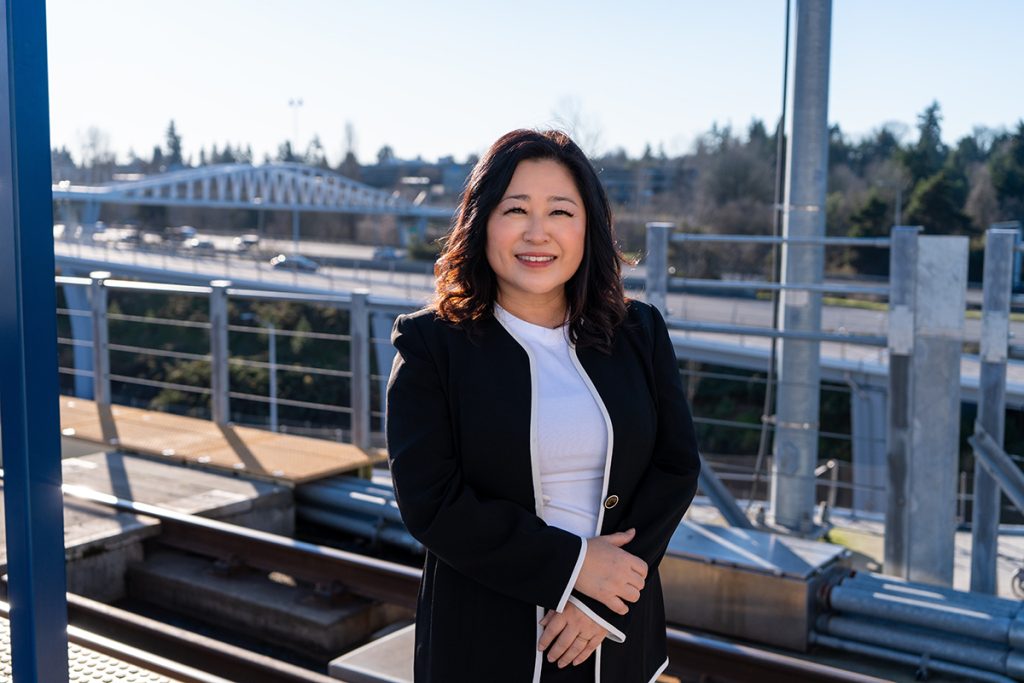
Julie Kang, Ph.D.
I write with gratitude, clarity, and justified anger.
First, I want to thank King County Councilmember Rod Dembowski, state Sen. Javier Valdez, and state Rep. Daria Fariver for publicly supporting Ming Ming Tung-Edelman and for raising serious concerns about her removal from the Refugee Artisan Initiative (RAI). Their leadership matters. In moments like this, silence does harm and they chose to speak up for justice.
I write as a researcher in multicultural education whose scholarship focuses on the bamboo ceiling, the persistent, systemic barriers that block Asian American women from attaining and sustaining positions of leadership. I also write as a community leader who has personally witnessed Ming Ming’s work, the growth of RAI, and the heart and integrity with which this organization was built.
I have attended multiple RAI events over the years. I have seen firsthand the relationships Ming Ming cultivated, the trust she earned, and the pride and dignity reflected in the refugee women whose lives were changed through RAI’s work. I am deeply familiar with the accomplishments Ming Ming led, including programmatic growth, national recognition, successful fundraising, and most importantly, a model of economic empowerment rooted in respect for refugee communities.
What happened to Ming Ming is not an isolated incident, and we must elevate alarming situations in our community when injustice hurts our community. The bamboo ceiling is not about lack of competence or vision. It is about conditional inclusion. Asian American women are welcomed as builders, translators, cultural brokers, and problem-solvers but not as final decision makers. Our leadership is tolerated only so long as it remains non-threatening to majority mainstream governance norms. When women of color assert authority, challenge harmful practices, or insist on accountability, we are recast as “difficult,” “unprofessional,” or “the problem.”
Ming Ming founded the RAI nearly a decade ago. She did not merely start an organization, she built a community-centered institution grounded in trust, cultural fluency, and deep accountability to refugee women.
Yet according to public reporting, Ming Ming was removed through a process marked by opacity, coercion, and a lack of cultural competency. Board leadership exercised institutional power in ways that reflect a familiar pattern: the expertise of an Asian American woman leader is questioned, her authority undermined, and her resistance to erasure reframed as misconduct.
This is not simply a nonprofit governance issue. It is a racialized and gendered power issue.
Asian American women leaders are routinely held to impossible, contradictory standards: expected to be collaborative but not authoritative, visionary but not insistent, grateful but silent.
When we violate these unspoken rules by naming inequity or defending our work, we are punished. The bamboo ceiling does not merely block advancement; it removes leaders after they have built something of value.
What makes this case especially painful is that RAI’s mission centers immigrant and refugee women, communities for whom trust, relational leadership, and cultural respect are foundational. Removing the founder most deeply connected to those communities without transparency or accountability fractures that trust and undermines the organization’s moral legitimacy.
The elected officials and community leaders who spoke up understood this clearly. They recognized that this was not an “internal personnel matter,” but a public issue involving accountability, public investment, and community trust. Their leadership reflects what research and lived experience both affirm: equity without shared power is not equity at all.
I join them in calling on community leaders, funders, and the RAI board to support the return of Ming Ming Tung-Edelman to a meaningful leadership role and to engage in a public reckoning with how race, gender, and power shaped this decision. At minimum, this moment demands transparency, independent review, and governance practices that do not replicate the very inequities organizations claim to dismantle.
If Seattle is serious about equity, Asian American women cannot continue to be celebrated for building institutions only to be pushed out once those institutions become successful. The bamboo ceiling thrives on silence and normalization. Breaking it requires naming it and acting against it.
This is a test of our values.
Not in words, but in action.
Julie Kang, Ph.D.
Researcher in Multicultural Education
Community Leader and Advocate in Seattle City Council District 5