
By James Tabafunda
NORTHWEST ASIAN WEEKLY
As Washington state faces a widening $4 billion budget deficit, Asian American and Pacific Islander (AAPI) priorities as well as other priorities become a topic of concern, not hope.
The state’s top legislative leaders gathered on Jan. 8 to discuss the shortfall that threatens to slash funding for education, healthcare, and social services during the 2026 legislative session. House Majority Leader Joe Fitzgibbon, House Minority Leader Drew Stokesbary, Senate Majority Leader Jamie Pedersen, and Senate Minority Leader John Braun outlined potential spending cuts and revenue increases at Seattle CityClub’s annual Legislative Preview, a public forum that drew more than 50 community members to The Collective Seattle.
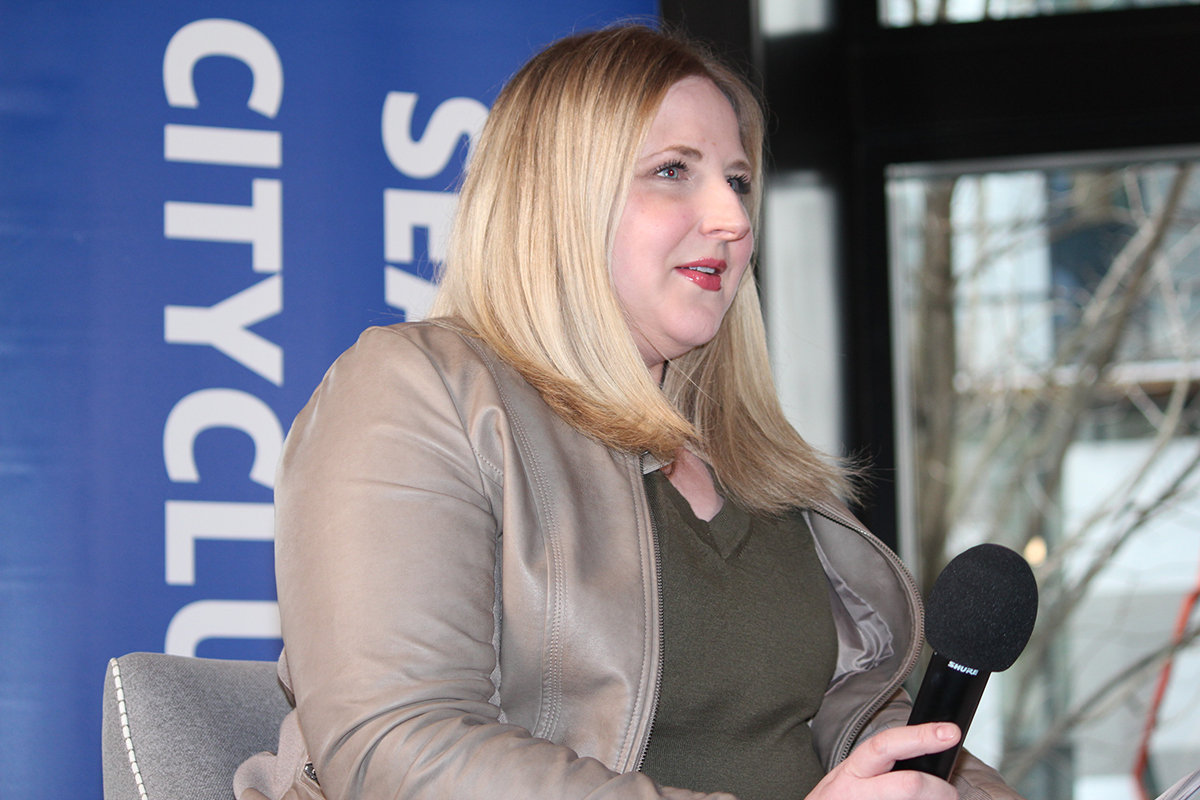
Melissa Santos, politics reporter at Axios Seattle (Photo by James Tabafunda)
The fiscal crisis emerged despite lawmakers passing a balanced budget in April, raising questions about how the state accumulated a $4 billion budget deficit in less than nine months. Axios Seattle politics reporter Melissa Santos moderated the discussion, pressing legislative leaders to explain the discrepancy before they convene on Jan. 12 for a session expected to force difficult decisions on state spending priorities.

House Majority Leader Joe Fitzgibbon, D-West (Photo by James Tabafunda)
Fitzgibbon attributed Washington’s budget challenges to multiple factors, including “massive federal cuts to Medicaid” and “state food assistance” from Congress and President Donald Trump, new federal “red tape requirements” for new information technology systems to remove people from program rolls, revenue declines from Trump’s trade war with Canada, Europe, China, and Mexico, and “a state tax code that doesn’t keep pace” with economic growth.
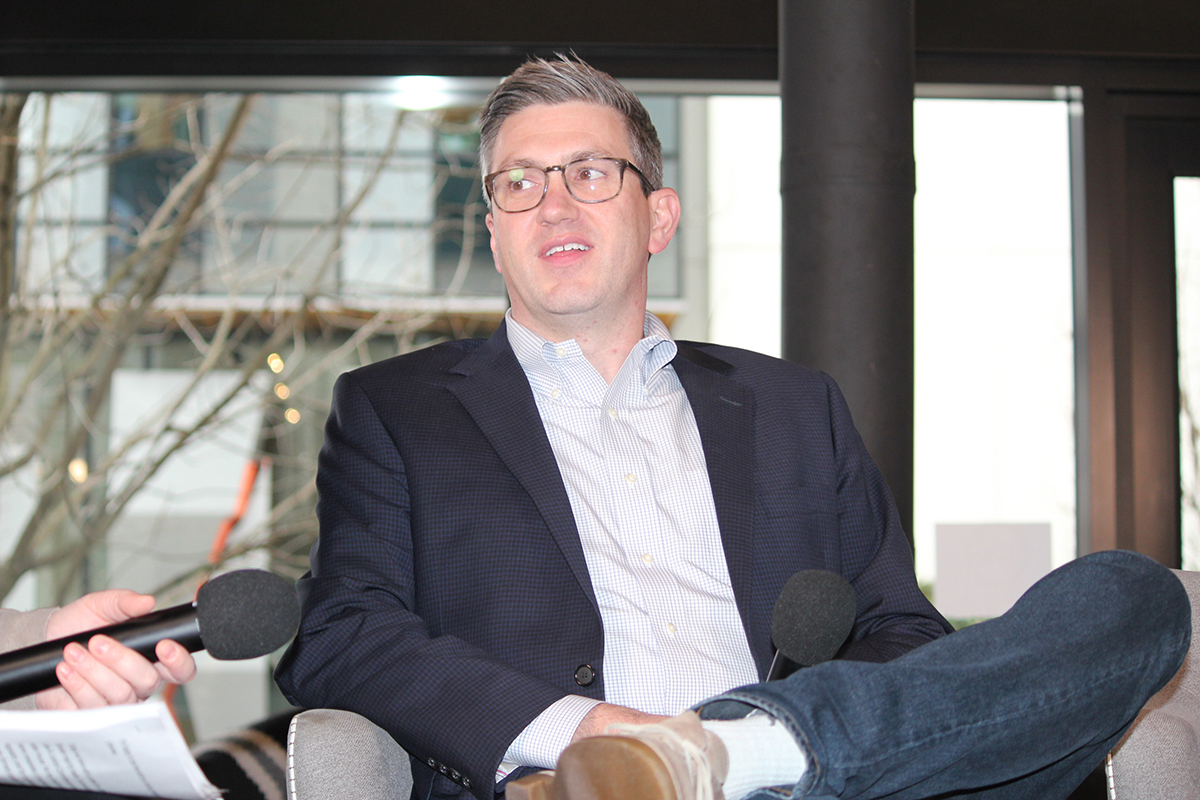
House Minority Leader Drew Stokesbary, R-Auburn (Photo by James Tabafunda)
“I don’t really agree with that assessment,” said Stokesbary, dismissing federal cuts as a cause of Washington’s budget crisis. He said, “For the last several budgets in a row, the legislature has consistently spent more money than it’s taken in.” Stokesbary, who serves as ranking Republican on the House Appropriations Committee, compared the state’s revenue claims to someone saying their “employer isn’t paying me enough money” for their shopping desires.
The forum covered several priorities, including housing, taxes (for individuals and businesses), vaccination, higher education, the Working Families Tax Credit, artificial intelligence, the Climate Commitment Act, foster care, ferries, and transgender youth in sports.
Immigration enforcement and homelessness

Senate Majority Leader Jamie Pedersen, D-Seattle (Photo by James Tabafunda)
One AAPI priority discussed at the event centered on federal immigration enforcement tactics. Pedersen identified protecting vulnerable populations from federal actions as a top priority, second only to the budget crisis.
“For my caucus, probably the biggest challenge that we are facing is a historically malevolent federal government that is going after poor people, going after immigrants, going after transgender people, going after science and research institutions,” Pedersen said. He emphasized that many protective measures, including restrictions on masked federal agents and limits on Immigration and Customs Enforcement (ICE) access to schools and daycares, require no state funding.
Fitzgibbon cited a Minneapolis incident where an ICE officer fatally shot 37-year-old Renee Nicole Good on Jan. 7, as she attempted to drive away, framing the legislation as a response to federal agents covering their faces during enforcement operations.
“It is very unusual in a democracy to have law enforcement officers cover their faces,” Fitzgibbon said. “ICE officers across the country under this administration have used face masks and balaclavas to cover their faces and prevent themselves from being identifiable.” California has already passed legislation banning masked federal agents, and Washington appears to follow suit.
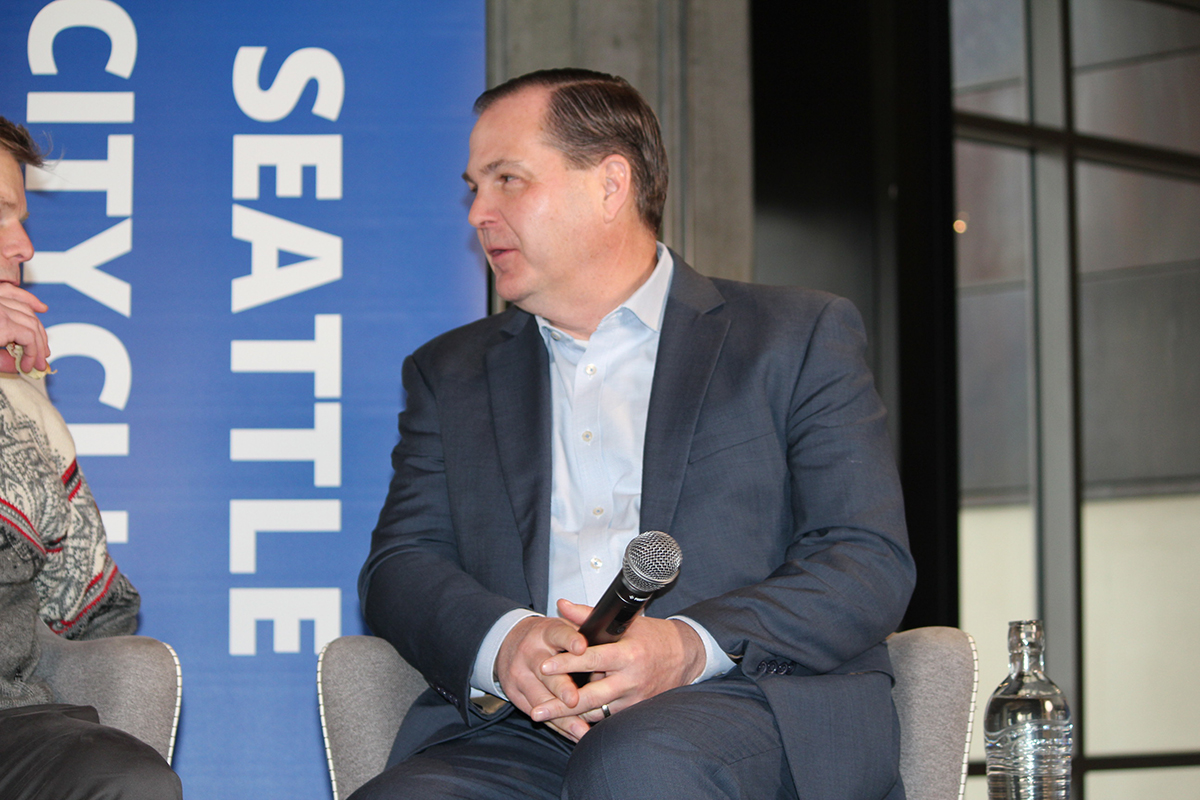
Senate Minority Leader John Braun, R-Centralia (Photo by James Tabafunda)
Braun urged caution, warning that state laws restricting federal immigration enforcement could place local law enforcement in untenable positions.
“We run a very high risk of putting our law enforcement, our public safety folks in an untenable position where they are faced with a choice between whether they want to follow federal law or whether they want to follow a state law,” Braun said. He acknowledged concerns about fair treatment but emphasized that constant conflicts between federal and state mandates undermine law enforcement effectiveness. The proposed legislation includes Senate Bill 5855 and House Bill 2173, which would prohibit federal agents from wearing face coverings during enforcement activities in Washington.
Separate bills would restrict ICE access to schools, daycares, and other sensitive locations, and prohibit educational institutions from collecting families’ immigration information. Senate Bill 5906, the Secure and Accountable Federal Enforcement Act, clarifies that immigration enforcement officers must have a valid judicial warrant, judicial subpoena, or court order before entering nonpublic areas of early learning centers, K-12 schools, higher education institutions, healthcare facilities, and election offices. For Washington’s AAPI immigrant communities—including Southeast Asian refugees, Pacific Islanders, and undocumented residents who qualify for Apple Health coverage—these protections address fears of deportation and family separation under heightened federal enforcement.
The immigration debate reflects the broader partisan divide over state versus federal authority, with Democrats framing protective legislation as defending vulnerable communities against federal overreach, while Republicans warn of legal conflicts and practical enforcement challenges for local law enforcement agencies caught between competing jurisdictions.
Homelessness is a second priority that affects all Washington citizens.
Fitzgibbon prioritized permanent supportive housing for people experiencing homelessness, noting that mental health challenges and chemical dependency often prevent people from securing stable housing.
“Some jurisdictions in our state have been taking that challenge very seriously and permitted a lot of units,” he said, while others “have said, we don’t want to have that kind of thing here.” He supports legislation requiring all cities and counties to allow permanent supportive housing in residentially zoned areas with adequate infrastructure.
The proposal would remove local impediments to building units where residents receive behavioral health care while transitioning toward independent living, Fitzgibbon said. Permanent supportive housing is an intervention that combines housing assistance with wraparound supportive services to help people with mental illness, substance use disorders, and chronic health conditions achieve housing stability and independence in their communities.
Drugs
Illegal drug use in many neighborhoods, including those in the AAPI community, is a third priority.
Braun acknowledged the 2023 gross misdemeanor drug law as a reasonable bipartisan compromise but noted implementation challenges.
“We came to a reasonable conclusion through a bipartisan process,” he said, though the transition from felony to misdemeanor eliminated existing drug court infrastructure. “We moved from a felony to a misdemeanor, which practically speaking, means all the structure that we had set up around our drug courts around the state no longer really applied.” Braun credited law enforcement re-engagement while supporting treatment-first approaches.
He noted wide variation in outcomes across jurisdictions due to local flexibility built into the law. Washington’s 2023 legislation, enacted following the State v. Blake Supreme Court decision that struck down the state’s felony drug possession statute as unconstitutional, made knowing possession and use of controlled substances in public places a gross misdemeanor punishable by up to 180 days in jail or a $1,000 fine. The law created pretrial diversion programs for defendants charged with simple possession but eliminated the previous requirement that law enforcement refer individuals to treatment for their first two arrests.
Pedersen acknowledged the budget deficit prevents expanding treatment options, framing the impasse as evidence that “we have to figure out how to have a revenue system that matches the needs of our state.”
Closing remarks
Stokesbary’s closing statement named House Republicans’ priorities as affordability, safety, and education results.
“Washington is uniquely expensive compared to almost every other state,” he said, blaming state policies for steep grocery, housing, gas, and child care costs. Stokesbary said Washington ranks among the top for property crime and questioned why spending increases fail to improve outcomes.
Fitzgibbon voiced hope, saying tax-code reform offers relief.
“It’s hard not to feel a little bit bleak when we have federal officers covering their faces like murdering people on the streets of American cities,” he said, arguing sustainable revenue is needed for disability, foster care, wildfire, and treatment programs as lawmakers debate new employer payroll and asset taxes.
Pedersen said a millionaires tax could finally allow Washington to overhaul its tax code after the 1933 Culliton v. Chase decision blocked income taxes. He noted the 2009 Jenkins/Frockt lawsuit overturned supermajority requirements and voters affirmed progressive taxation in 2024.
“Those are things that would not have been possible before,” Pedersen said.
Braun said affordability tops constituents’ concerns, noting Washingtonians have rejected income taxes 11 times, including Initiative 2111 in 2024 that statutorily outlawed them. “When you talk to regular Washingtonians, affordability has outstretched them all,” he said.
For more information on AAPI Legislative Day, Feb. 5, go to https://www.apicsouthpugetsound.org/news.