

By James Tabafunda
NORTHWEST ASIAN WEEKLY
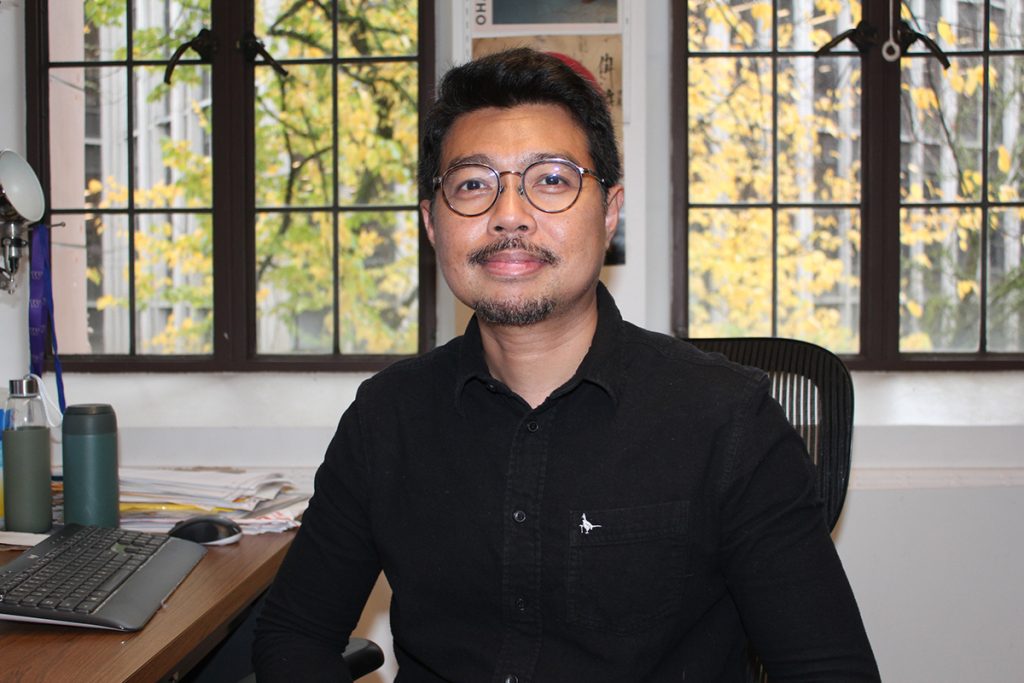
Nazry Bahrawi, assistant professor of Southeast Asian literature and culture at the University of Washington
When Nazry Bahrawi stood before his University of Washington classroom five years ago, he noticed something troubling: His students, even those of Asian descent, knew almost nothing about the Malay world—its literature, cultures, or contemporary concerns.
The assistant professor of Southeast Asian literature and culture wondered why Malays lacked the geographic anchors—like Chinatowns for Chinese communities—that bind diaspora populations across North America. On Jan. 23, he explored that question with four individuals via Zoom in a discussion titled “Malays in the Diaspora: What is Malayness in the global context?” The conversation revealed how scattered Malay communities from Malaysia and Singapore to Vancouver, British Columbia are dealing with fading languages, adapting traditions, and forging new cultural expressions thousands of miles from their ancestral homelands.
The question carries weight for a diaspora without the infrastructure that has sustained other immigrant groups. Chinatowns emerged across North America in the mid-1800s as havens where Chinese immigrants facing discrimination found safety, shared language, and familiar food. These geographic enclaves became anchors of cultural preservation across generations. But Malays living in Seattle, Vancouver, and cities throughout the diaspora have no such physical gathering places. Their communities remain scattered, connected through intentional networks rather than neighborhood boundaries.
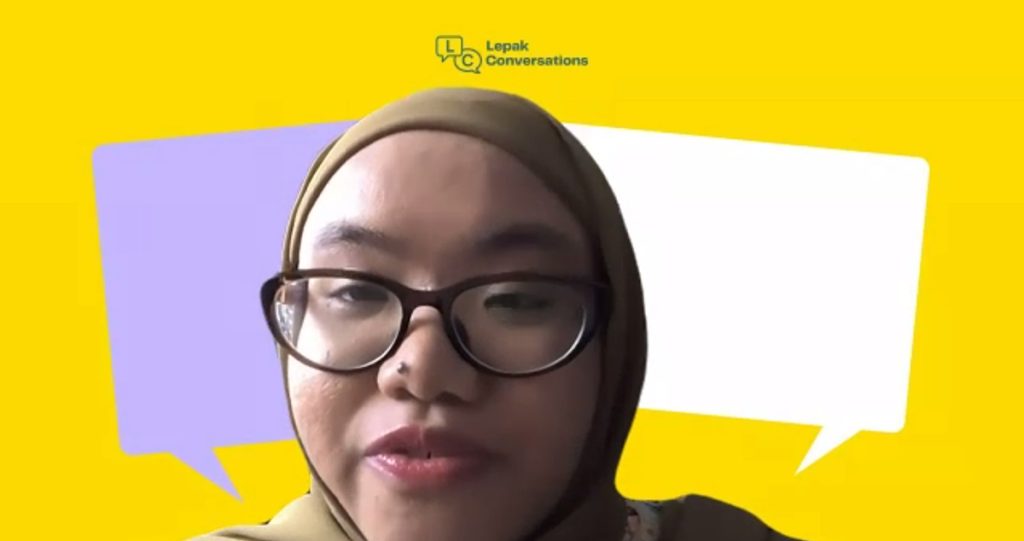
Yulianna Frederika, moderator of “Malays in the Diaspora: What is Malayness in the global context?” in Singapore
Yulianna Frederika moderated the panel discussion from Singapore, where she founded Lepak Conversations in 2020. The advocacy platform addresses Malay and Muslim issues through what she calls “lepak”—accessible, relaxed—dialogue.
Two panelists joined from Vancouver, the ancestral and unceded territory of the Musqueam, Squamish, and Tsleil-Waututh Nations.
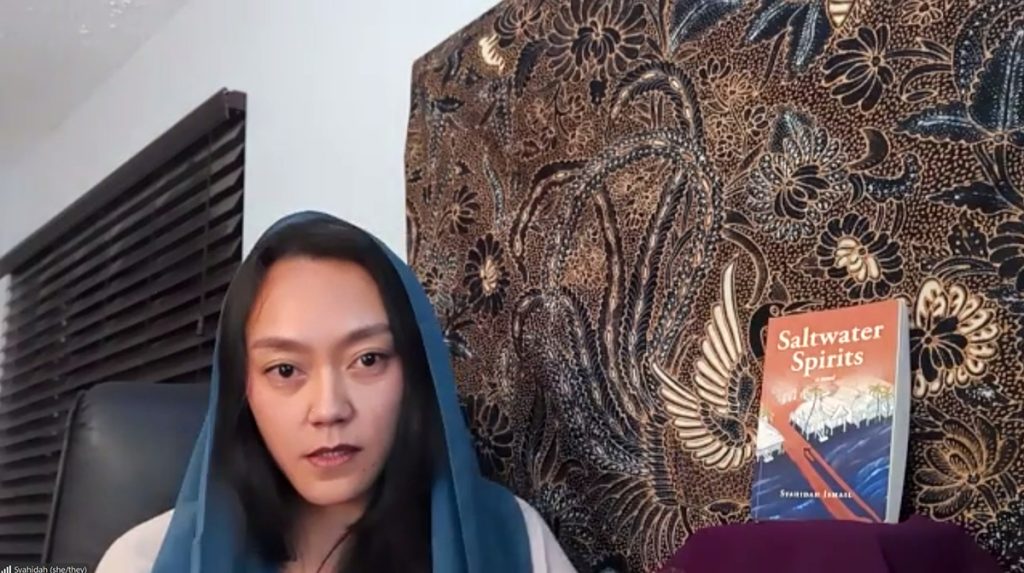
Syahidah Ismail, author of “Saltwater Spirits” in Vancouver, British Columbia
Syahidah Ismail has lived in Vancouver for 19 years. Her 2019 novel, “Saltwater Spirits,” broke ground as the first published in North America by a Singaporean author of Malay descent living in diaspora. Her lineage traces to South Sulawesi’s Bugis people in Indonesia—historically seafarers and traders—and Bawean Island off Java’s northern coast. She describes the concept of “air,” as central to her identity: “It is in my blood.”
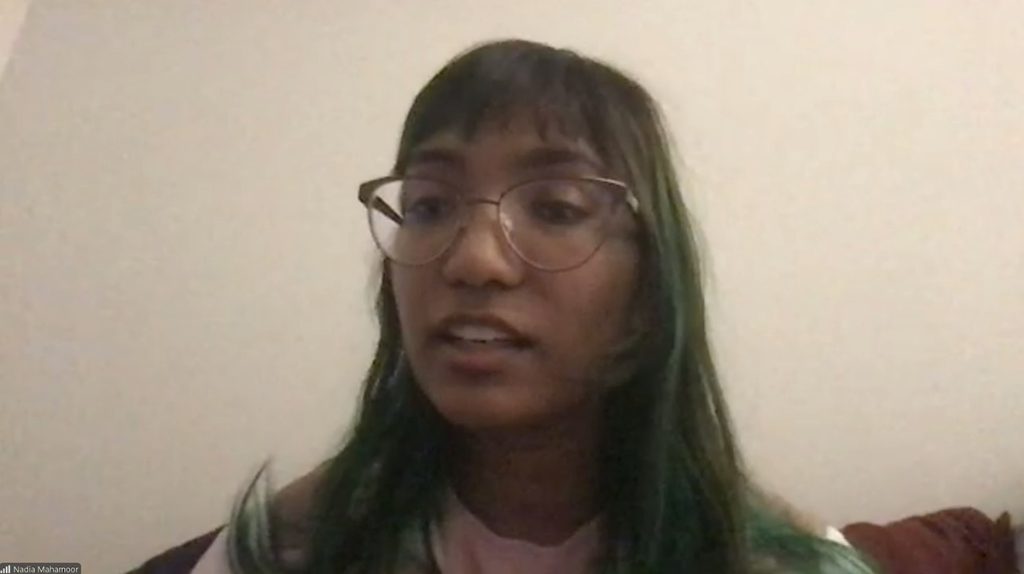
Nadia Mahamoor, multidisciplinary artist in Richmond, British Columbia
Nadia Mahamoor is a Sri Lankan Malay artist and panelist who joined the discussion from Richmond, British Columbia. She completed her bachelor’s degree in industrial design at Emily Carr University of Art and Design in Vancouver. Her creative practice explores identity, textiles, and what she calls “futurisms”—imagining futures where diaspora and colonized people see themselves represented.
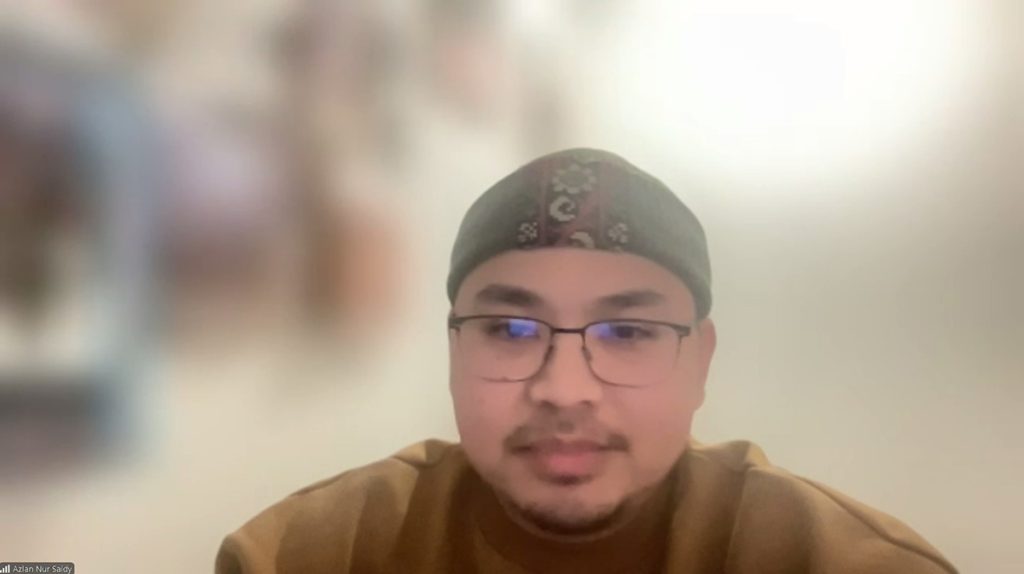
Azlan Nur Saidy, community planner and arts organizer in Vancouver, British Columbia
Azlan Nur Saidy is an urban planner and community arts organizer. Born in Singapore, he works in Vancouver thinking about what it means to see Malay communities visible and thriving in the future.
Together, they represent the diversity of diaspora Malayness: Singapore and Sri Lanka, established academics and younger creatives.
When language slips away
Historically, Malayness has centered on cultural-linguistic identity, not political borders. The pillars are well-established: Bahasa Melayu, Islam, customs, artistic traditions like batik and gamelan, specific cuisines, and storytelling practices passed through generations.
In North American diaspora, these pillars are slowly fading. Language transmission suffers enormous pressure.
Saidy grew up with his parents speaking Malay to him, but he responded in English. He understands Malay fluently but struggles to speak it. He said he “grew up learning French in school.” His Malay identity exists in linguistic complexity: understood but not easily spoken, inherited but not fully embodied.
Mahamoor faces possible loss. Sri Lankan Malay is a creole language—a mix of Malay, Sinhala, and Tamil with no written form. It exists only in speech, passed from generation to generation. Increasingly, families are not teaching their children.
“My mom speaks it and her side of the family speaks it because they decided to continue it, but they never taught me,” Mahamoor said during the panel. Her paternal family never taught her father at all. “I do feel like the language is dying. I want to try and teach myself how to read it and speak it, and also possibly spread it down to my future children.”
The stakes are high. How do you claim Malayness as an identity when you cannot speak its language?
Curry halibut and living traditions
If language poses challenges, food persists as the most resilient expression of Malayness in diaspora.
Saidy remembers his grandmother’s daily trips to Vancouver’s fisherman’s market, searching for the right fish to make curry. When she couldn’t find what she needed, she bought halibut from a Japanese Canadian fisherman instead.
“She would come back home and make curry halibut,” Saidy said. “Is that a traditional way of making it? No, but it was Malay for us.”
The anecdote captures adaptive tradition—not heritage preserved unchanged, but culture responding to available resources and the lands where one lives.
Mahamoor speaks of food as a primary inheritance. “Food connects cultures non-verbally,” she said. “Even if you can’t speak the language, even if you culturally have difficulty spreading traditions, food is a big thing that brings us together.”
She described her family’s cuisine: crab curries, fish curries, satay made from dried beef rolled in chili, and rendang. Many of these dishes appear across the Malay Archipelago, including Indonesia, East Malaysia, Brunei, and the Philippines.
Beyond cuisine, diaspora Malays maintain tradition through artistic and spiritual practices. Saidy hosts Puja Pantai, a thanksgiving ceremony traditionally practiced in Malaysia, Singapore, and Indonesia but currently banned in some Malaysian states. “We’re in the diaspora. No one’s telling us that we can’t do things,” he said, claiming sacred space outside state restrictions.
He plays gamelan—traditional Southeast Asian percussion instruments—in an ensemble where the instruments are made out of reused bicycle parts. He and Mahamoor are creating a Pacific Northwest batik pattern using local dyes, inspired by the lands and waters they call home. The batik will incorporate Sri Lankan crackling techniques—where wax is deliberately cracked to create distinctive patterns—alongside Malay traditions.
Indigenous to the region
The panelists emphasized that Malayness transcends any single nation. Bahrawi offered a reframing of indigeneity itself. Malays are indigenous not to Singapore or Malaysia as nation-states, but to the Malay Archipelago as a bioregion.

Nazry Bahrawi, assistant professor of Southeast Asian literature and culture at the University of Washington
“When I think about indigeneity, I think about indigenous to the land-water complex,” Bahrawi said. “Being indigenous to the region of the Malay Archipelago … Are you indigenous to Singapore or are you indigenous to Malaysia … to Indonesia? To me, it is a moot point.”
Saidy illustrated this through lived experience. He was born a Singaporean citizen but gave up citizenship at 21 and did not complete national service. When he returned to Singapore, he became a foreigner in his birthplace. When people ask whether he is a citizen or visitor, he has no clear answer.
“I’m indigenous to this region, and I’m caught in those two binaries,” he said.
This reframing—from nation-state to bioregion, from citizenship to relationship—shapes how diaspora Malays can claim identity without the anchor of national belonging. Malayness becomes portable, relational, rooted in water and history, not passport and border.
Historically, the concept of “masuk Melayu”—literally “entering Malayness”—described how people who adopted the Malay language, customs, and Islam were accepted as Malay regardless of genealogical lineage.
Creating new culture
A key observation emerged during the panel: Diaspora Malays want to preserve tradition, yet adaptation to North American practices are inevitable and necessary for community survival.
Saidy articulated this through “futurisms”—imagining yourself and your communities in a future different from today. He noted that diaspora creates unprecedented opportunities for cultural creativity. Different groups of Malays are meeting for the first time.
“All of a sudden, you have different groups of diaspora all together at the same time, where our ancestors maybe might not have met like I met Nadia,” he said. “There’s new culture coming out.”
Mahamoor came away from the discussion struck by diversity. “It’s so cool how things get transformed, especially within diaspora,” she said. “It is so beautiful.”
A virtual village
The “global Kampung Melayu”—worldwide Malay community—does not look like Chinatowns with their grocery stores and restaurant-lined streets. Instead, it’s a network of intentional connections—through literature, dialogue, art, food, academic courses, and community organizations.
When Frederika opened the panel, she emphasized the significance. “This is the very first time we are crossing borders beyond Singapore, beyond Asia,” she said. Lepak Conversations was going global, bringing conversations about Malayness to people scattered across continents.
When asked what she was taking from the discussion, Ismail offered two Malay words: “cinta sayang”—two kinds of love. “My entire life, my whole being is because of these two words,” she said. “Because people loved me enough and cared for me enough.”
Saidy said that Malay identity was “even more expansive than I could have imagined.”