


By Kai Curry
NORTHWEST ASIAN WEEKLY
Paula Murtha was about a month old when her parents brought her home from a Korean orphanage. For much of her life, that was where the story ended. It wasn’t until adulthood that she began to look back—and discover how much of herself she had set aside. Ahead of Korean American Day on Jan. 13, the Northwest Asian Weekly spoke to the Lakewood resident about her experience.
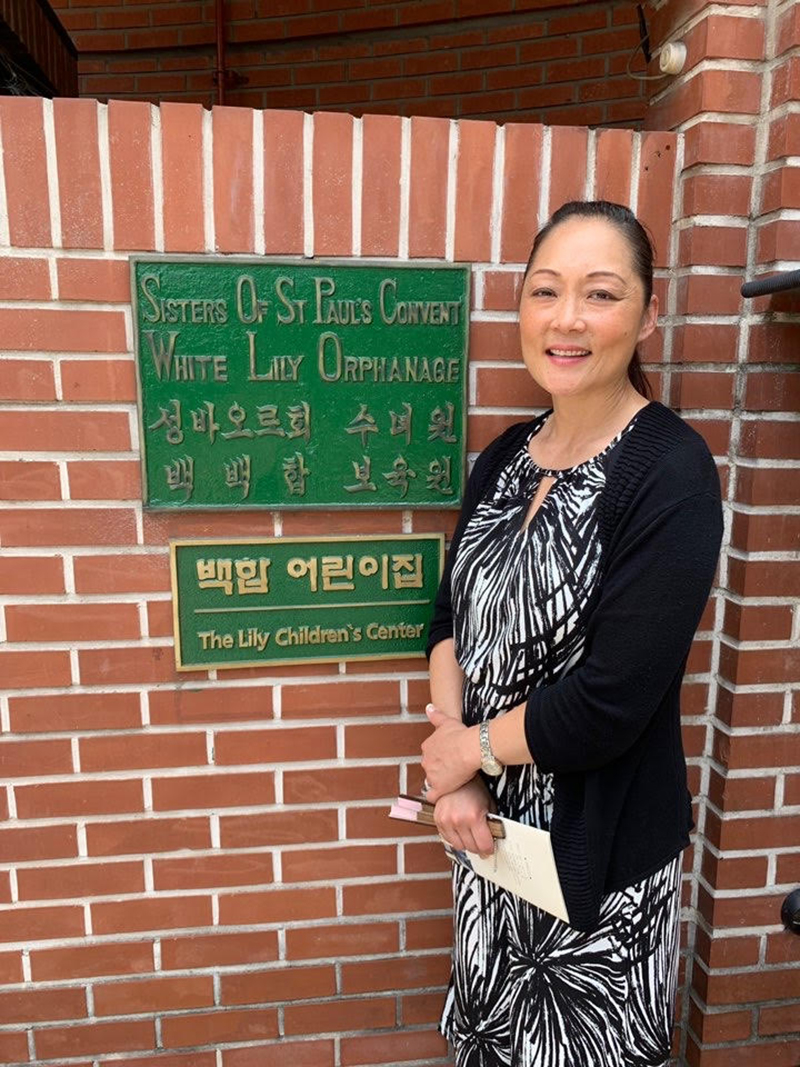
During a 2019 “Mosaic” tour with Me and Korea, Murtha visited the orphanage in Korea where she was adopted as a baby. Photo courtesy of Paula Murtha.
Adoption of Korean children goes back to the 1950s, when mixed children resulting from the presence of troops in Korea during the Korean War were in need of homes. This practice then widened to include Korean children in general. Murtha assumed she had white ancestry until a DNA test told her she was entirely East Asian—a mix of Korean, Chinese, and Japanese. Murtha’s adoptive dad was stationed in South Korea with the U.S. military when he and her mom decided to adopt a child. They didn’t have children yet, and her mom “basically brought home a baby one day,” Murtha shared. She was adopted from a Catholic orphanage, where some lore exists about a “blind nun” who assists prospective parents.
Murtha tells her story with doses of acceptance and humor. When Murtha’s new mom first went to the orphanage, she was told that there were no babies available. A friend told her “to talk to the blind nun,” who knew which children had not already been claimed by Holt International Children’s Services. Babies placed through Holt were costly while “I was free,” Murtha said. Her parents brought her back to the United States.
Murtha didn’t notice she was different while she attended military schools with diverse populations. That changed when her family moved to Texas.
“I was singled out because of my race, in a negative light. I was the only Asian person in the whole town.” Murtha knew she was adopted, but didn’t understand anything about her race. The only Asian thing her family did was cook Chun King out of a can. People called her “oriental,” so that’s what she thought she was.
After high school, Murtha joined the U.S. Air Force. She earned her degree and completed officer training. Any curiosity about her Korean origins remained on the back burner. Around the time she met her second husband, Michael, she decided to retire. It wasn’t until she and Michael moved to Washington that Murtha became interested in what it meant to be a Korean adoptee. Another adoptee found her and introduced her to a Facebook page dedicated to those with this special circumstance. It was the first time Murtha had ever met any other adoptees. She couldn’t believe how many others there were and that a community was there waiting for her.
“I was blown away. It was so cool to me that there were people that had kind of a similar experience.”
Prior to this, Murtha had not had any overt interest in finding her birth parents. She admits that growing up, she struggled with feeling different and didn’t want to be Korean. Even when stationed at one time in Korea, she would tell people she was American. She could not speak Korean. Now she feels foolish.
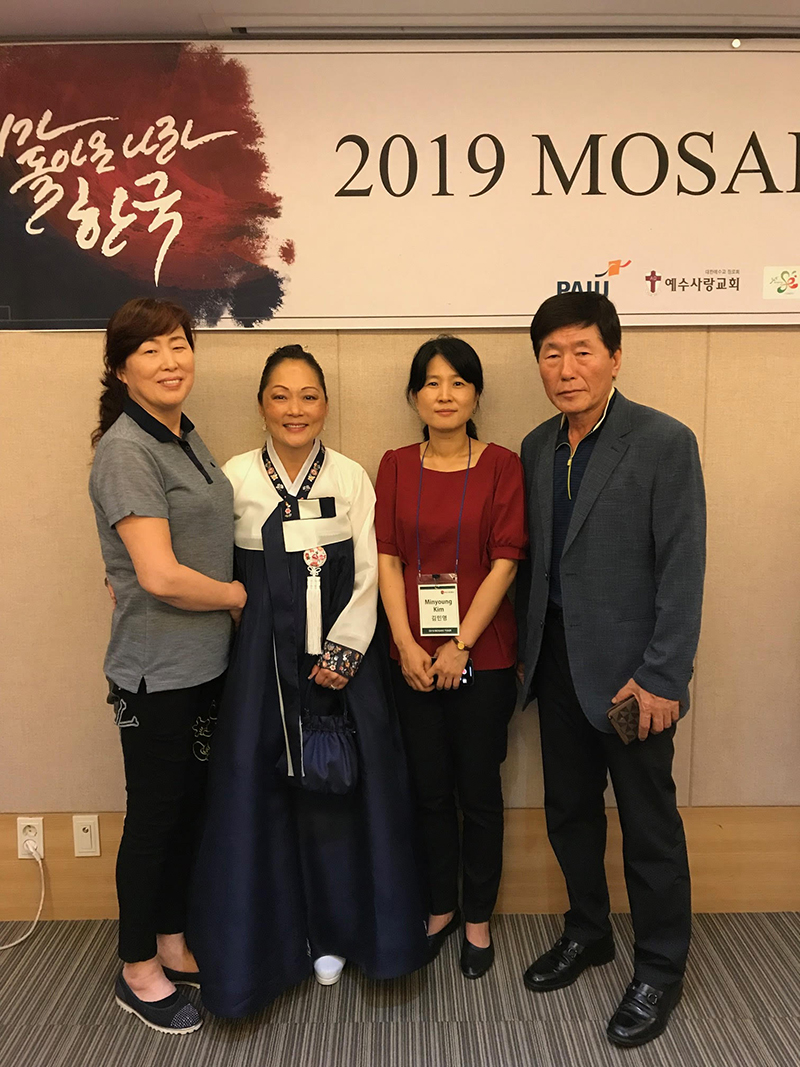
Murtha in traditional hanbok (a gift) next to Me and Korea founder and executive director, Minyoung Kim, in red, and flanked by the Korean couple who befriended Murtha over the years. Photo courtesy of Paula Murtha.
“I had a whole year there. I could have been looking for my birth family, instead of trying to deny that that part of me existed.” The delay made Murtha’s eventual search for her past harder. Her mom died in 2010 and Murtha had not asked her everything she could have. Murtha’s dad hadn’t had much to do with it, so she had no one to ask until she was put in touch with a nonprofit called Me and Korea, founded by Minyoung Kim.
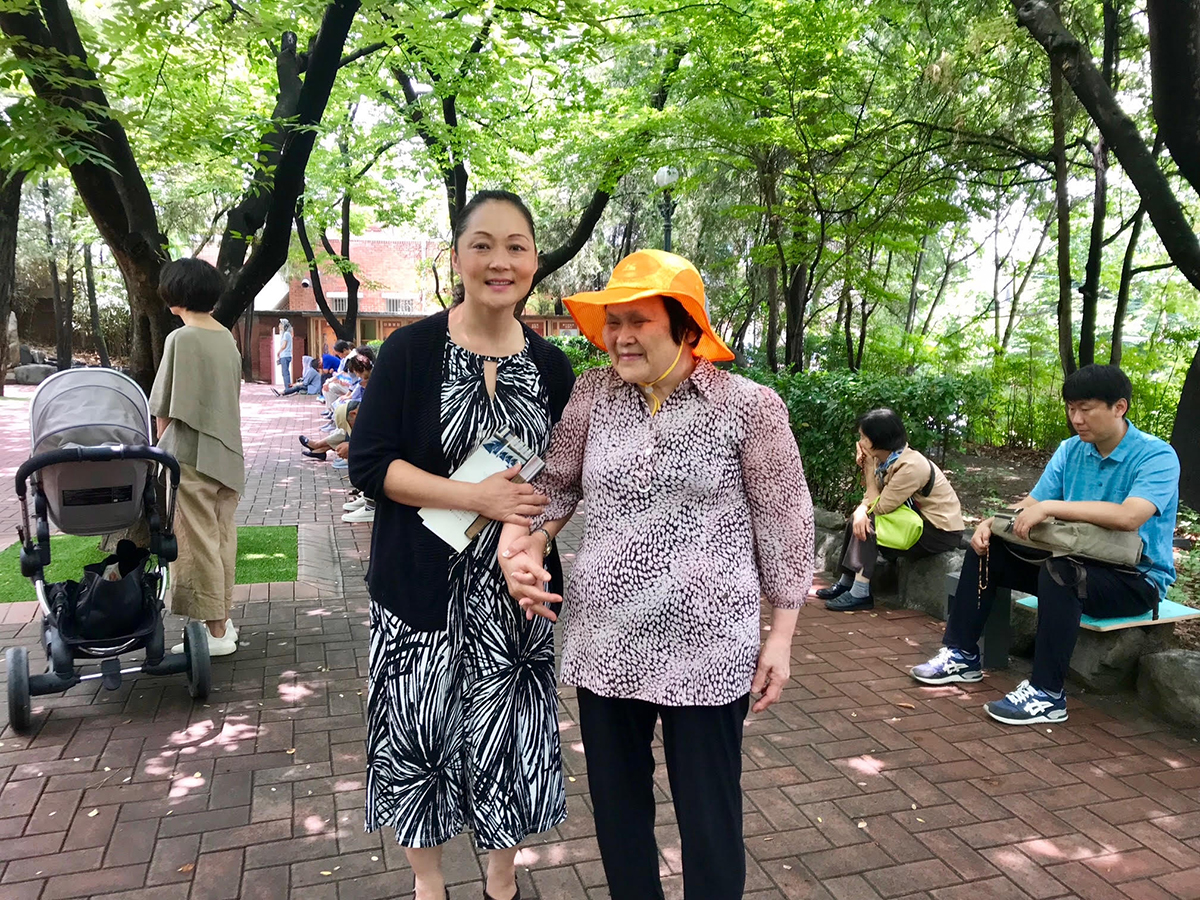
On a Me and Korea tour in 2019, Murtha met the “blind nun” that helped in her adoption as a baby. Photo courtesy of Paula Murtha.
In 2019, through this organization, Murtha toured Korea. She went to the orphanage. She met the “blind nun”—who is not a nun at all, but a girl also in the orphanage, now much older. Murtha never located her real parents, but in a way, she’s glad that has been the result of her search, rather than some of the more nightmarish stories of other adoptees. Some weren’t even given up, but were stolen. Some were given up because they required expensive surgery. In some heartbreaking cases, even when an adoptee finds their real mom, that person is remarried and doesn’t want the new family to know. Korea is slowly changing, yet childless parents and single women are still not met with approval.
Murtha hasn’t found her natural parents, but when stationed in Korea, she met a new Korean friend at a nail salon. “I call her unnie,” Murtha told us. It means “big sister” or is used to address a woman older than you. This new friend interpreted for Murtha, fed her Korean food, and formed a connection to Murtha’s culture that she did not have. They kept in touch. This friend helped Murtha search for her birth family, such as taking her to city hall, although it was to no avail. That’s okay. Murtha is happy with her newfound Korean connections and her adoptive mom and dad. They might not be related by blood, yet Murtha still feels she shares some of their characteristics, such as a sense of adventure from her mom.
“I grew up grateful,” she said “I was a bratty teenager. I would say, ‘I wish I could find my real parents.” [My mom] never said anything. Being an adult now, I think, oh, what a nightmare that would have been.”
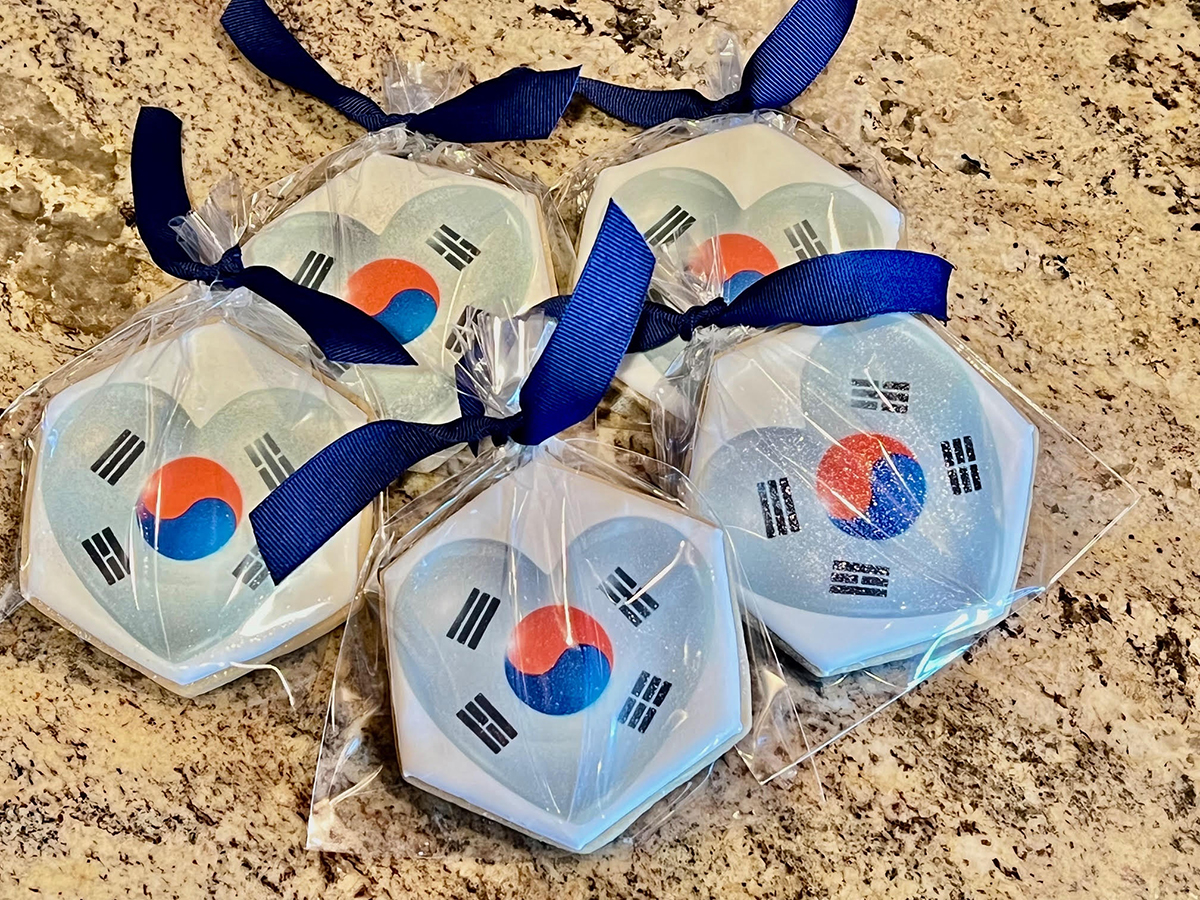
Sometimes Murtha has the opportunity to reflect Korean culture in her cookie business, My Cookie Friend. Photo courtesy of Paula Murtha
Maybe it’s partly unconscious, partly conscious, but today, Murtha surrounds herself with a strong sense of family. She makes her own family traditions. She and Michael each have children from prior marriages, as well as their own. In addition, they make a habit of sponsoring foreign exchange students—right now, a girl from Japan. Paula works from home making specialized cookies and teaching others how to make them, too, through her business, “My Cookie Friend.” She doesn’t see herself living in Washington forever.
“Texas is home.” She has incorporated more Korean foods into her menu, such as bulgogi. “I still am not 100% on board with kimchi,” she laughed. Recently, she discovered bibimbap. It’s been fun for her to share her Korean culture with her kids, who are growing up in schools where they don’t experience racism.
Emotions long held down run deep. Murtha gets teary-eyed when she thinks of the current representation of Asians in American music and television—normalizing being Asian in a way that she didn’t have when she was growing up. “I want to take my boys to Korea someday.”
Kai can be reached at newstips@nwasianweekly.com.