



By Nina Huang
NORTHWEST ASIAN WEEKLY
Gone are the days when New Year’s resolutions were all about losing weight. After years of crash diets, rigid rules, and the familiar feeling of falling off track by February, many people are rethinking what “healthy” really means. Instead of chasing a number on the scale, the focus is shifting toward being more consistent, moving a little more regularly, and building a lifestyle that feels comfortable, realistic, and supportive of everyday activity.
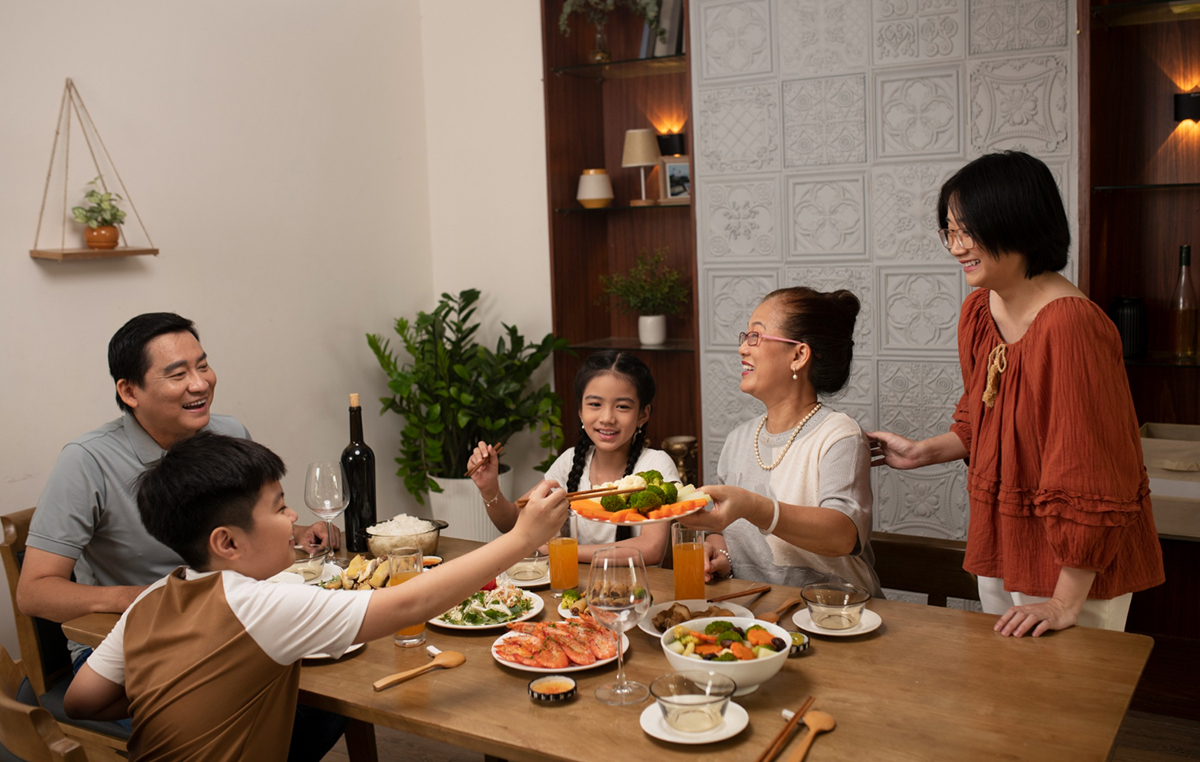
For many Asians and Asian Americans, that shift matters deeply. Food isn’t just fuel or a number on a scale—it’s culture, comfort, and connection. Rice, noodles, dumplings, and home-cooked dishes aren’t things to “fix” or cut out; they’re part of who we are. The question many are asking now isn’t how to give them up, but how to enjoy them while still taking care of our bodies.
Karen Ho said she stopped making New Year’s fitness resolutions years ago and now focuses on being more consistent with movement, with a general goal of starting a weight training-based program, such as Hyrox or F45. Similarly, Suie Chang said she no longer sets New Year’s resolutions and instead prioritizes maintaining a lifestyle that feels comfortable and meets her activity needs.
“You are not meant to lose your identity for the sake of being healthy,” said Dr. Angela Tran, Chief Medical Advisor of Sunlight, a medically supervised weight loss virtual practice headquartered in Kirkland.
“It is absolutely possible to eat healthy and participate in family gatherings and enjoy favorite cultural foods—but there is a medical strategy behind it,” Angela added.
Portion, not prohibition
Phuong Tran, a registered dietitian who works closely with Asian patients, says one of the biggest misconceptions around Asian diets is that they are inherently unhealthy.
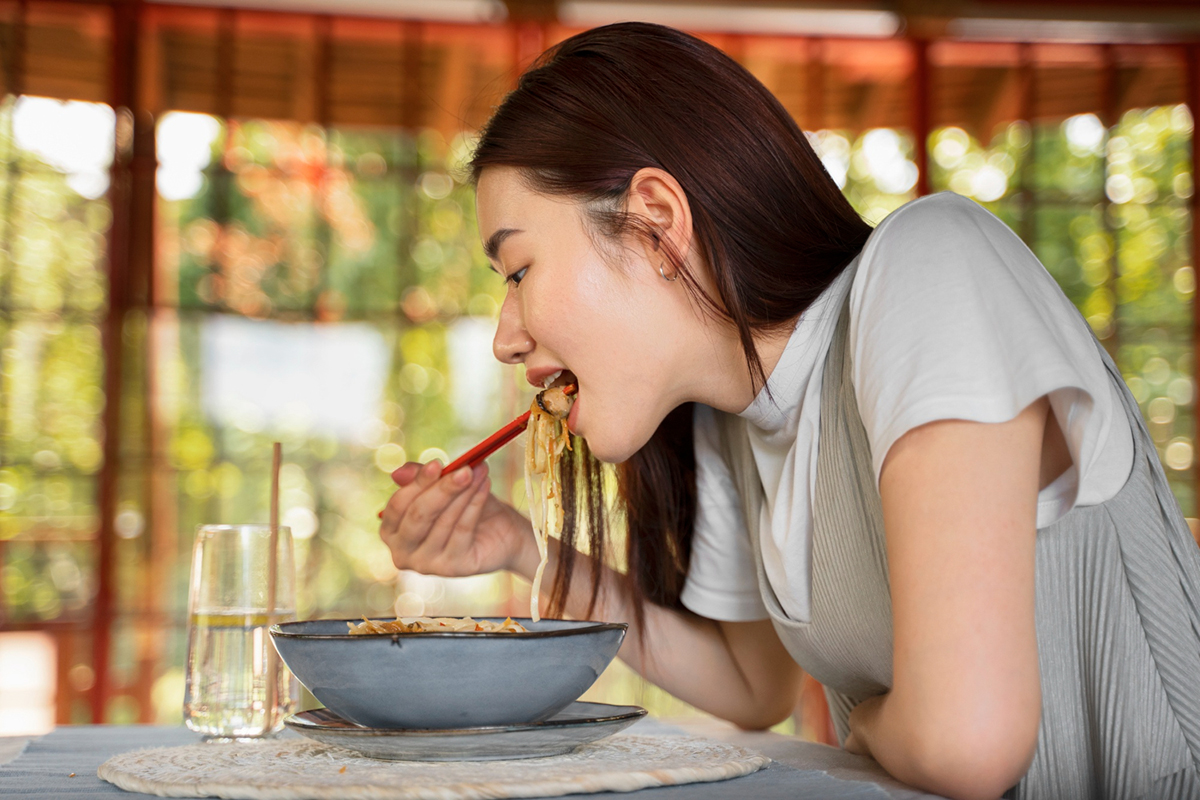
“It’s all about watching portion sizes, which can be hard,” Phuong said. “A lot of dishes, especially soups with noodles, have more carbs and bigger portions. A third of a cup is technically a portion size for noodles or rice, but if you look at a bowl of ramen or wonton noodle soup, it’s a lot more than that—and the protein is often on the lower side.”
General nutrition guidelines, such as MyPlate, recommend that half of a meal consist of non-starchy vegetables, a quarter protein, and a quarter starch. While Phuong acknowledges that this framework is Western and plate-based, she says it can still be adapted culturally.
“Asians don’t eat on plates the same way,” she said. “But you can think about how much rice you’re putting in your bowl and fill up more on non-starchy vegetables like spinach, broccoli, collard greens, or bok choy.”
Rather than eliminating rice or noodles, Tran emphasizes moderation and balance—especially protein. “Protein recommendations are about three ounces of meat per portion, depending on body size,” Phuong explained. “When you eat a starchy meal by itself, blood sugar spikes and drops quickly. But when you add protein or healthy fats, that slows things down.”
Health is more than a number
Many Asian Americans grow up in environments where body size is closely scrutinized, particularly for women. Phuong says this can lead to distorted expectations around weight.
“As Asians, we’re culturally a little more focused on body image,” she said. “Especially for females, that pressure can create body image distortion instead of accepting where we’re at and trying to be healthier.”
Phuong notes that weight loss is often wrongly treated as a moral or effort-based issue. “People ask, ‘Why can’t overweight people just lose weight?’ But it’s not that simple. There are endocrine issues, diabetes, and other underlying factors.”
Phuong encourages patients to look beyond the scale. “You can be on the heavier side, but if you’ve cut out sodas, sweets, and processed foods, you’ll see it in your labs. Your cholesterol comes down, your blood sugar improves, you sleep better. Those signs matter more than physical shape.”
Cultural context matters

Angela Tran (Photo provided by Sunlight)
Angela says Asian bodies—and Asian relationships with food—are often misunderstood in mainstream health care.
“Our body types as Asians are built differently, not just physically but genetically,” she said. “We metabolize American food differently, especially processed, high-carb foods. Asians are typically shorter, which means our metabolism is naturally slower.”
Beyond biology, culture plays a major role. “We’re told to finish our plate. If we don’t, it’s considered rude to the uncle who spent all day cooking,” Angela said. “Food is how we exchange love, how we pray, how we honor our ancestors.”
That’s why, she says, eliminating cultural foods is not the goal. “As an Asian doctor, I do not give up my favorite foods—that’s not the point. Structured eating, portion control, and focusing on protein can balance everything out.”
Angela encourages Asian patients to avoid skipping meals, a habit she sees often. “We skip breakfast, grab something small at 2 p.m., and then eat a huge dinner with family. By then, your body is in storage mode.”
Instead, she suggests “structured eating,” using smaller bowls, measuring rice portions, and prioritizing protein. “Protein is far superior than counting calories,” she said. “If you don’t eat enough protein, you lose muscle with age and your metabolism slows even more.”
Adding, not taking away
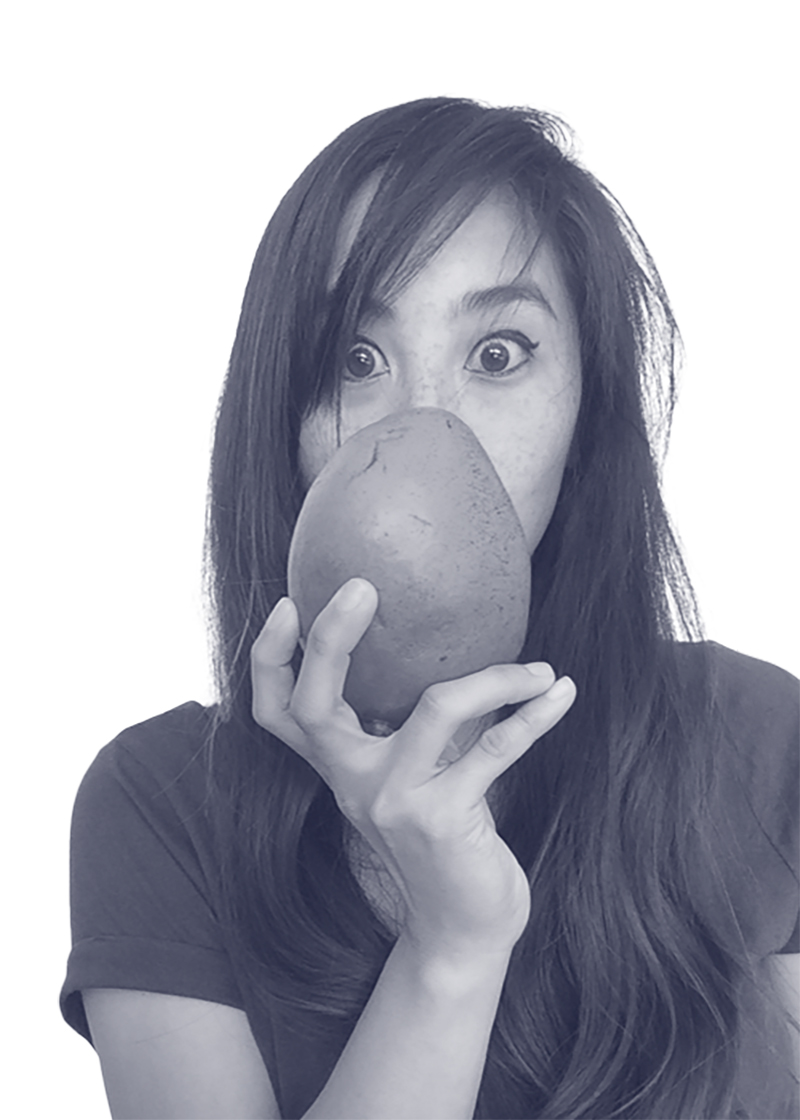
Mindy Lu (Credit: Mindy Lu)
For Mindy Lu, a licensed therapist and nutritionist, the conversation needs to shift away from weight loss altogether.
“When people ask me how to balance weight loss goals, my first question is: why weight loss?” Lu said. “The pursuit of weight loss itself can be more detrimental than helpful.”
Lu points to research showing that weight cycling—repeatedly losing and regaining weight—can increase stress on the body, raise diabetes risk, and worsen mental health.
“Health occurs at all different sizes,” she said. “It’s less about the number on the scale and more about quality of life and someone’s relationship with food.”
Lu is especially critical of Western nutrition narratives that vilify white rice.
“Nutrition education is white-centric,” she said. “When Western cultures say white rice is bad, it’s inadvertently Asian hate. White rice is not bad—we get to choose how we engage with it.”
Instead of removing cultural foods, Lu encourages adding to them.
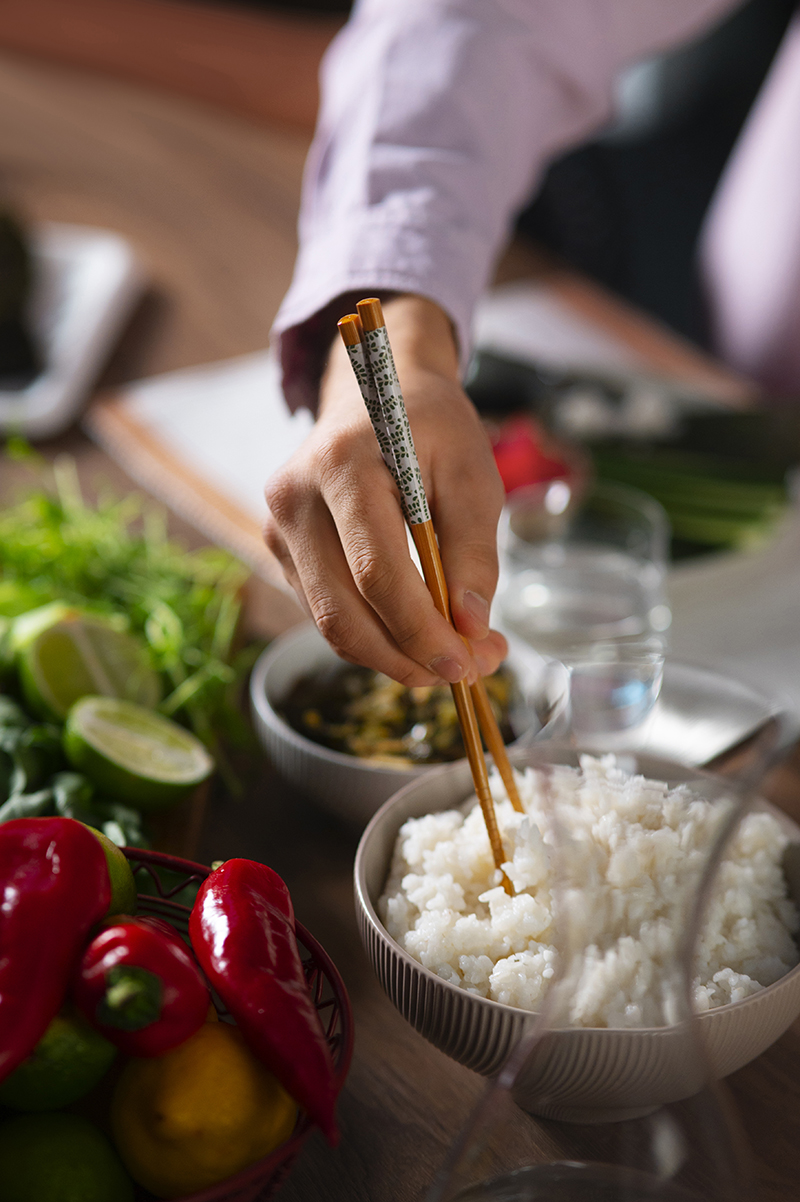 “We don’t take away white rice. We add black rice, peas, or garbanzo beans. We add protein and fat to balance blood sugar.”
She describes foods like dumplings and bao as inherently balanced.
“The carbs support energy and brain function. The protein and fat support muscle and vitamin absorption. Add some greens on the side, and you have a complete meal.”
Lu also introduces clients to intuitive eating, which emphasizes listening to the body rather than external rules.
“Our bodies are inherently smart,” she said. “Children are great intuitive eaters—until cultural messaging interrupts that.”
She distinguishes between body hunger, brain hunger, and heart hunger.
“Heart hunger is tied to culture and memory,” Lu explained. “At a family gathering, you might already be full but want another mooncake. You can choose to honor both—maybe half a mooncake, maybe the whole thing. It’s about making a conscious choice.”
“We can still take care of ourselves and our cultures at the same time,” Lu said.
South Asian perspectives on sustainability
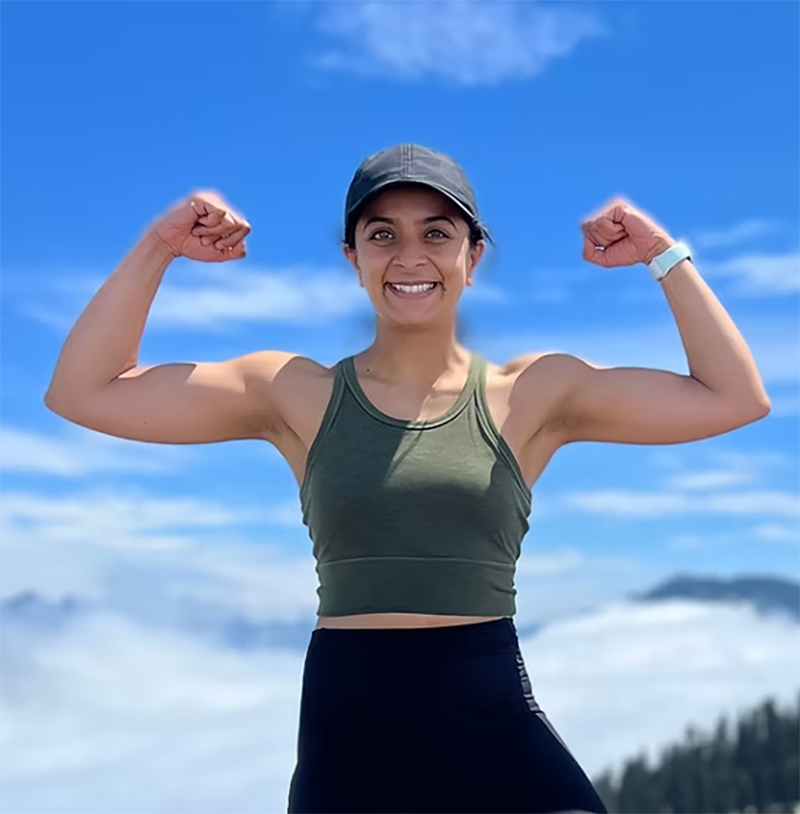
Surabhi Jain (Credit: Surabhi Jain)
Surabhi Jain, CEO and founder of GetFitMindBody, works primarily with U.S.-based Indian women juggling careers, parenting, and household responsibilities.
“The biggest gap I see is sustainability,” Jain said. “They’re put on 1,200-calorie diets or told to give up roti and rice. They lose weight, but they can’t maintain it.”
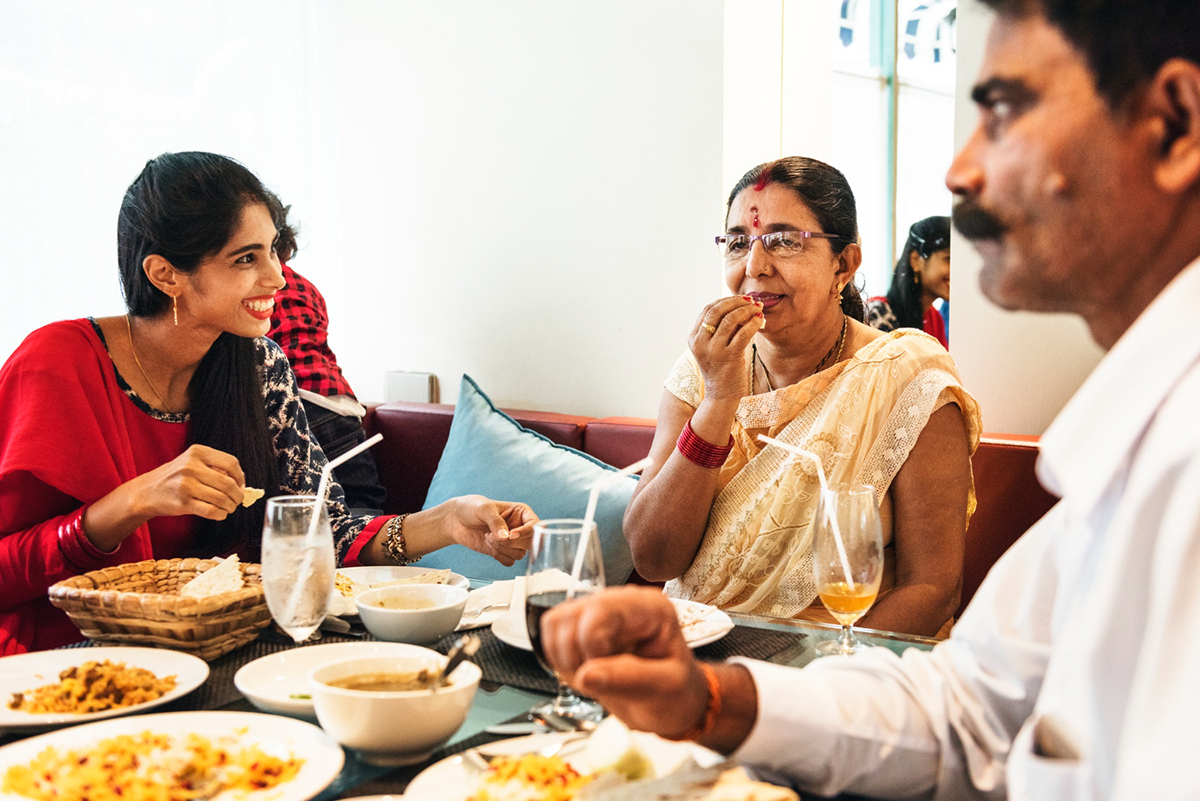 Jain keeps cultural staples intact but changes proportions. “Instead of anchoring the meal on rice or roti, we anchor it on protein and add the rice,” she said.
“They never knew they could do that—they thought they had to give up everything,” Jain said.
“We can keep the foods we love, but we need to eat them in a way that supports our goals and keeps our culture alive.”
Jain also urges clients to focus on functional goals rather than the scale. “If your goal is to carry your kid at the park for 30 minutes, you’re more likely to stick with it.”
Redefining fitness
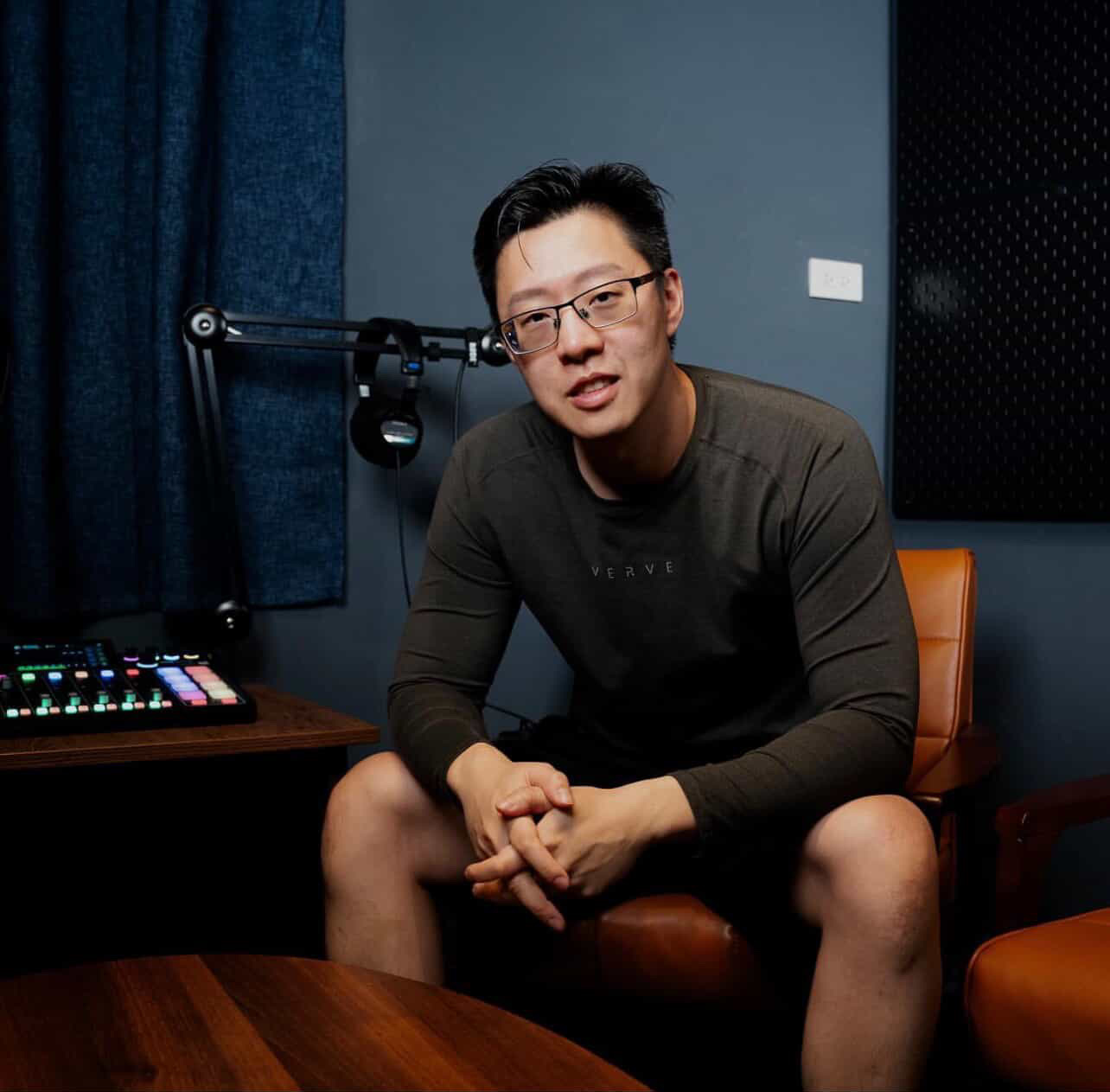
Kevin Hsueh (Photo provided by Kevin Hsueh)
Kevin Hsueh, a University of Washington graduate and fitness business owner now based in Taipei, sees a cultural divide in how fitness is perceived.
“In Asia, exercise is a tool—a means to an end,” Hsueh said. “In the U.S., fitness is more of an identity.”
Hsueh emphasizes that weight gain is about total caloric intake, not carbs alone. “As long as we keep total calories in check, we can still enjoy all the foods under an Asian diet,” he said.
He suggests pre-planning around family gatherings or being more selective at meals. “If you don’t overreach, finishing every bit on your plate shouldn’t be a problem.”
A bigger picture
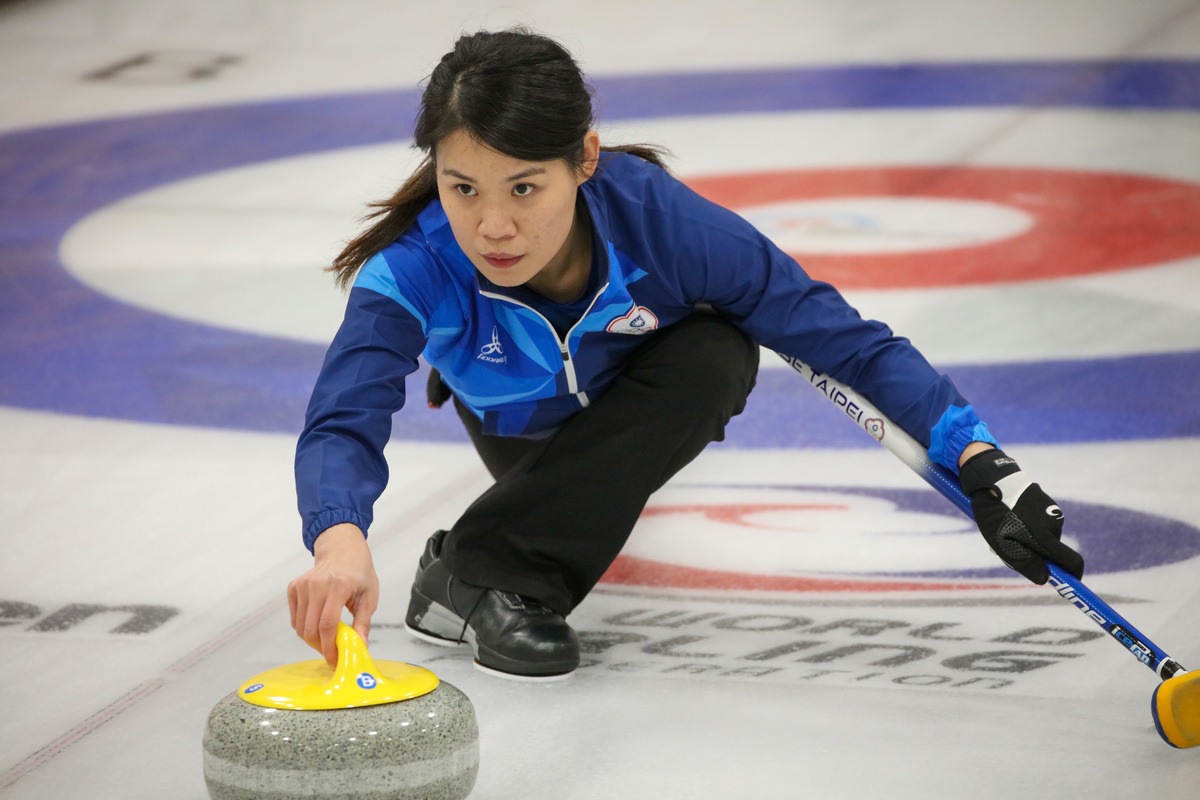
Ko Yang (Credit: Richard Gray)
For Ko Yang, an international curling athlete, health is about balance. “I view being healthy and having a balanced diet as more important than being under a certain weight,” Yang said. “I never restrict my diet.”
Across disciplines and cultures, the message from Asian health professionals is consistent: health does not require cultural erasure.
Everything—in food, movement, and goals—comes back to moderation, intention, and respect for the body and heritage we carry forward into the New Year.
Nina can be reached at newstips@nwasianweekly.com.