



Steve Hobbs
Washington State’s Secretary of State, Steve Hobbs, is facing a lawsuit from the U.S. Department of Justice (DOJ) following his refusal to comply with a request for extensive voter data. The DOJ had demanded the full names, addresses, dates of birth, driver’s license numbers, and last four digits of Social Security numbers for every registered voter in the state—a request that Hobbs deemed a violation of voter privacy and state law.
Hobbs has consistently opposed the release of confidential voter information, citing Washington state’s strict privacy protections. In response to the DOJ’s request, Hobbs directed his office to provide only publicly disclosable information in accordance with state law, including voter names, addresses, years of birth, and voting history. The request for more sensitive data, such as Social Security numbers and full dates of birth, was rejected.
“I take my duty to protect voters and the sensitive information they entrust to the state very seriously,” said Hobbs in a statement. “While we will provide the DOJ with the voter registration data that state law already makes public, we will not compromise the privacy of Washington voters by turning over confidential information that both state and federal law prohibit us from disclosing.”
Washington State Democratic Party Chair Shasti Conrad thanks Hobbs for championing the constitutional right of privacy of every Washington voter.
“This sham fishing expedition from the DOJ seeks to undermine the integrity of Washington state’s election laws by injecting conspiracy theories into our best-in-the-nation election system,” said Conrad in a statement. “Politically motivated investigations based on Trump’s tweets are wasting taxpayer dollars and pitting Americans against each other.”
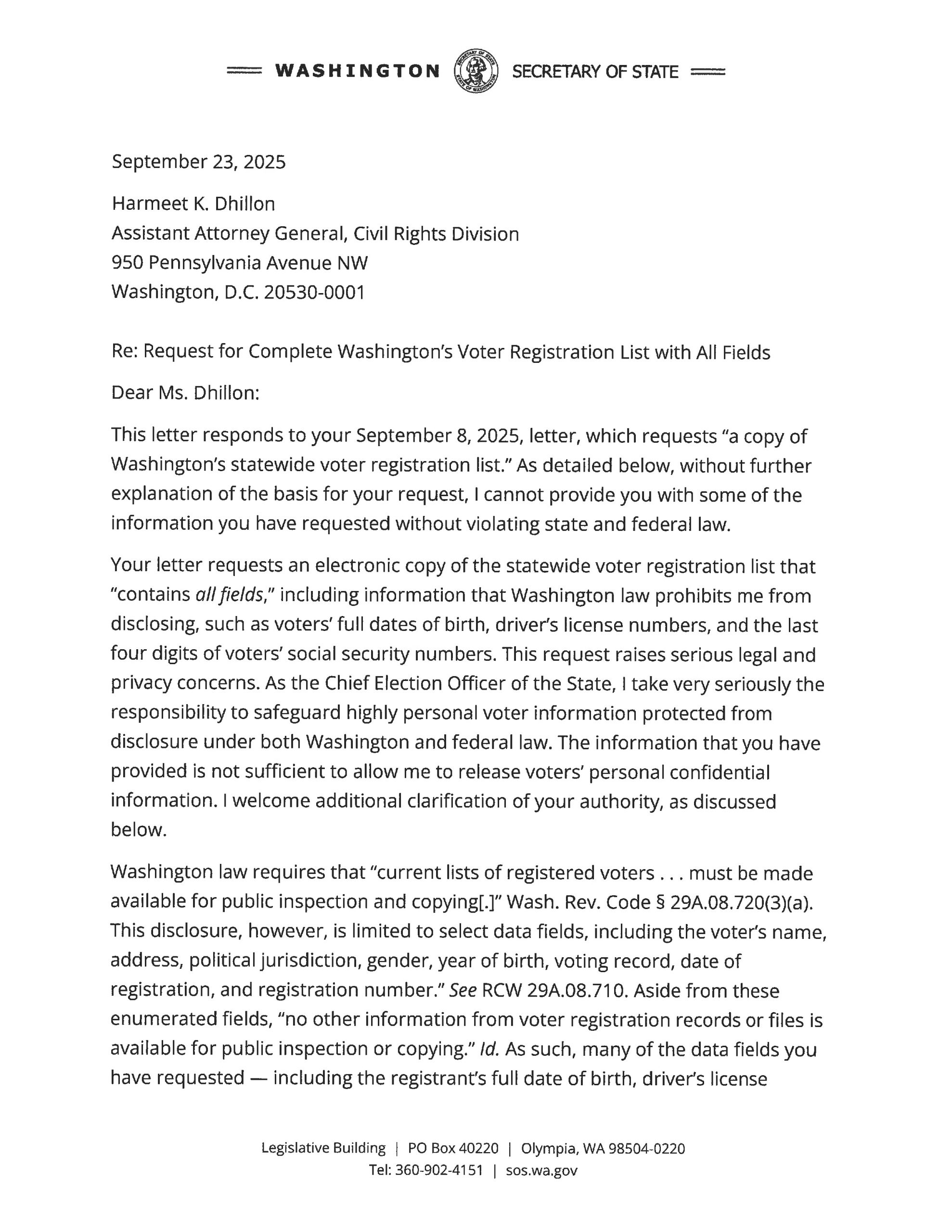
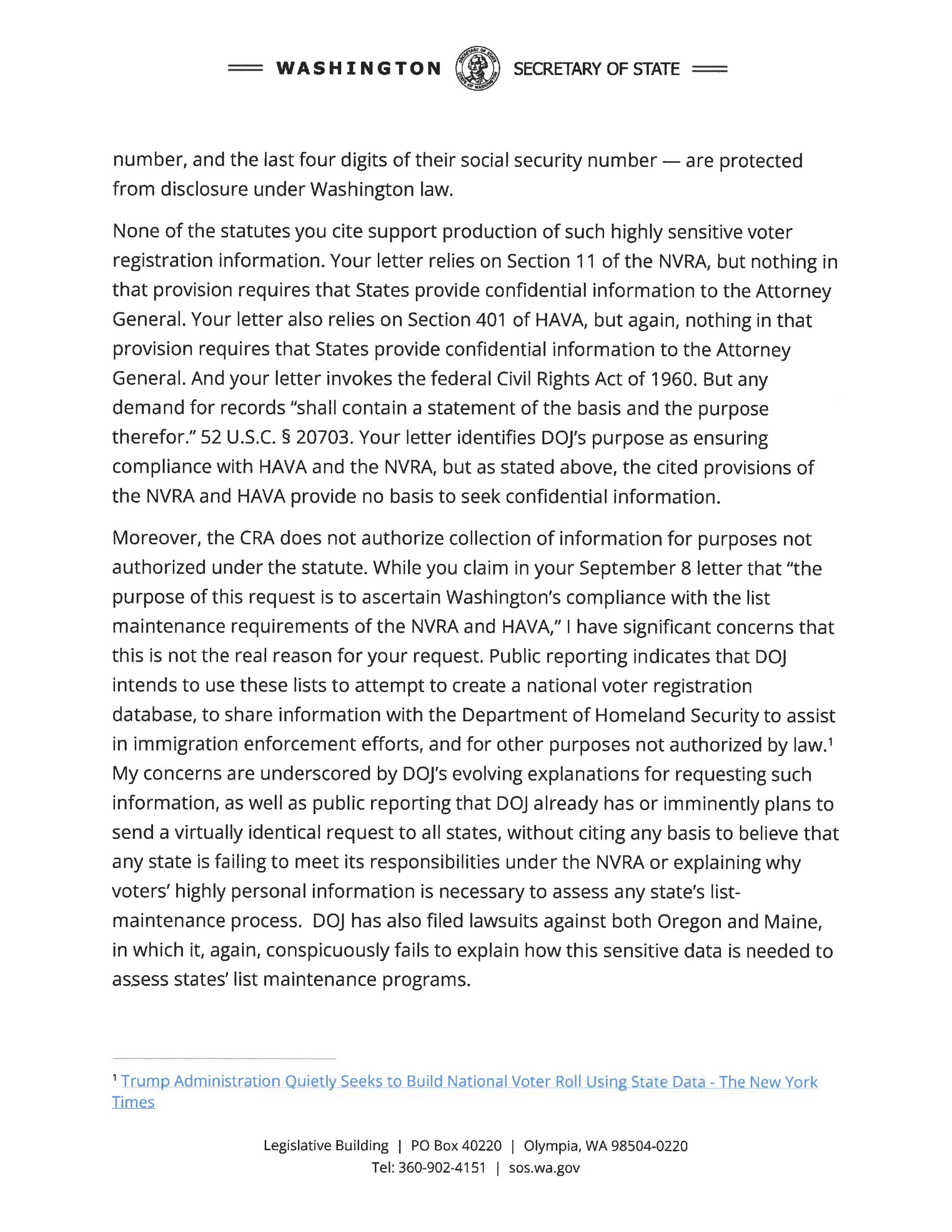
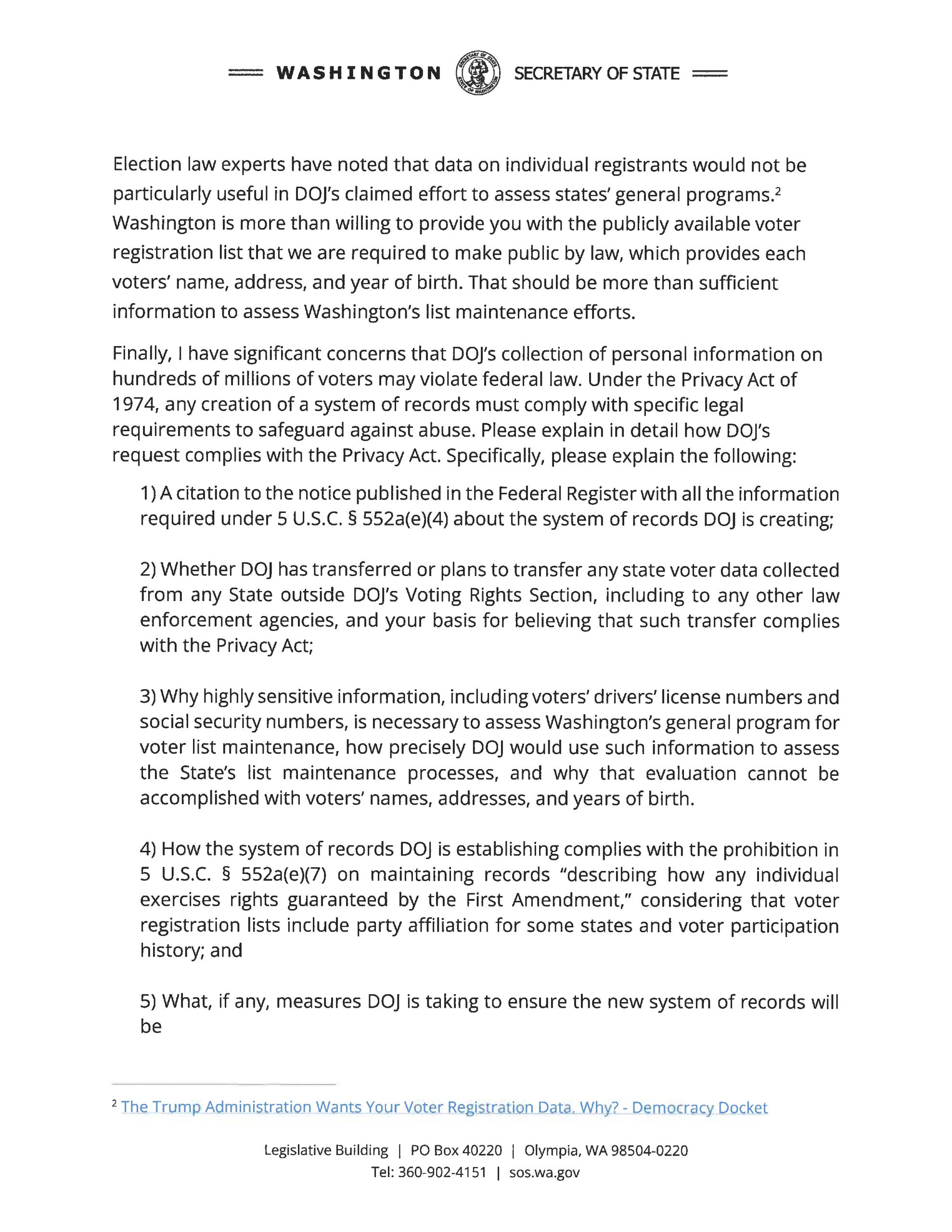
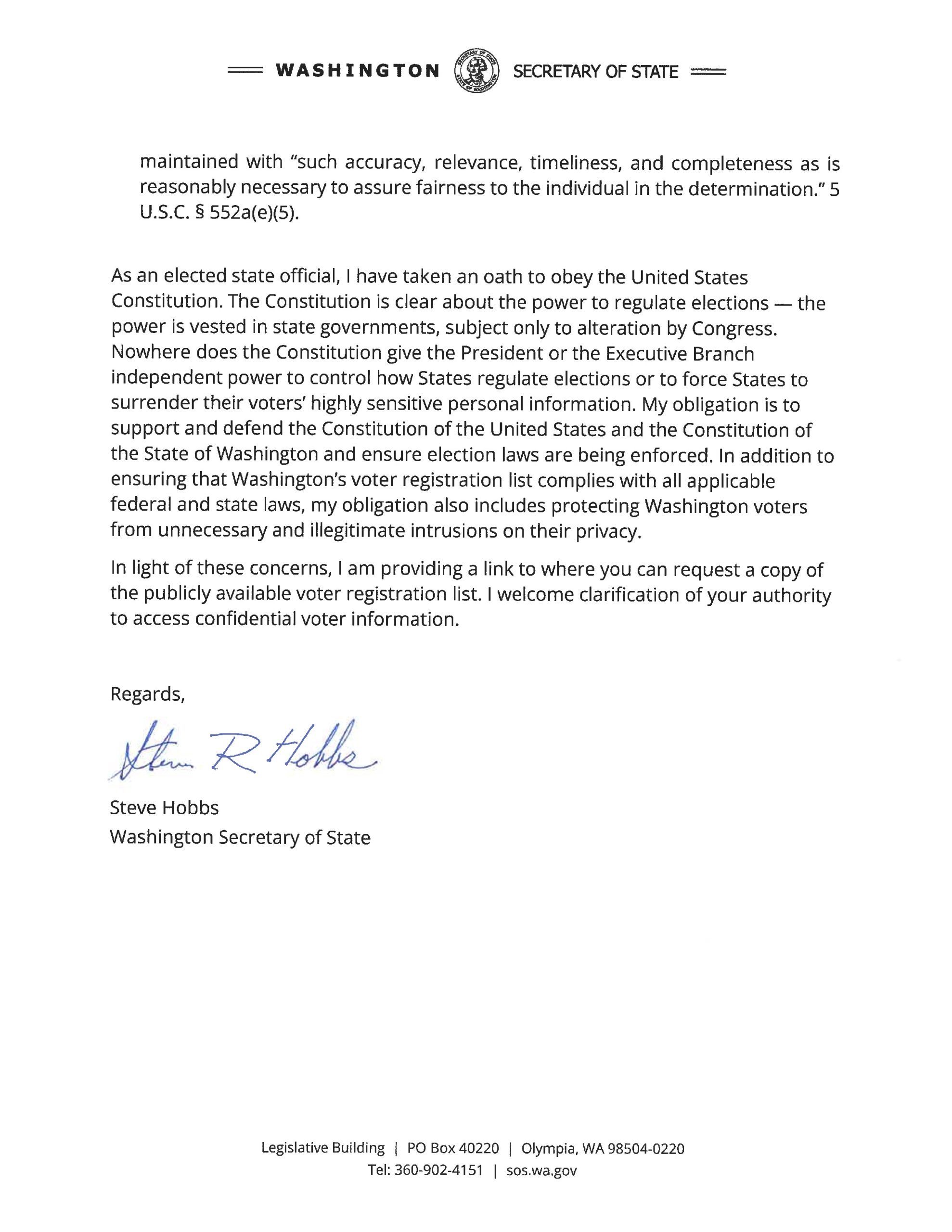
In his formal response, Hobbs wrote to Assistant Attorney General Harmeet K. Dhillon that the DOJ hadn’t offered enough legal justification for its request. Under state law, he reminded the department, only certain details—such as a voter’s name, address, year of birth and voting history—can be made public. “Aside from these enumerated fields, ‘no other information from voter registration records or files is available for public inspection or copying,’” he noted, quoting Washington statute.
Hobbs also questioned the DOJ’s citations of the National Voter Registration Act, the Help America Vote Act and the Civil Rights Act of 1960. He said none of those laws require states to hand over confidential data. The Civil Rights Act requires the DOJ to explain why it needs requested records, he said, but the department hasn’t made that case.