



By Grace Louie
Seattle has long prided itself on being the “cool” city of the Pacific Northwest. Cool in its thrift-store, indie-music, artisan-coffee way, or in its laid-back culture that sets it apart from other major cities. Historically, Seattle has also relied on another kind of cool, the literal kind. Mild summers shaped how we built our homes, transportation systems, and public infrastructure. Climate change is rewriting that identity. As heat waves grow more frequent, the Pacific Northwest is warming faster than we are adapting. The myth of Seattle’s year-round “climate haven” is no longer accurate, and it is putting vulnerable residents, including Asian American elders, in danger.
Heat inequality in Seattle
The 2021 heat dome was the region’s first undeniable wake-up call. Seattle felt a record-breaking 108°F, astonishing for a place that had only exceeded 100°F three times in the previous 126 years. City officials called the heat dome “unprecedented,” yet extreme heat has returned almost every summer since. And while the whole city feels this newfound heat, not everyone feels it equally.
While neighborhoods like Seward Park and Wedgwood benefit from dense tree canopy and better-insulated homes that stay cooler during heat events, communities with less tree cover and older housing, such as the Chinatown-International District, Beacon Hill, and Rainier Beach, experience surface temperatures that can be 10 to 20 degrees hotter. These hotter neighborhoods are also more likely to be home to renters, immigrants, elders, and low-income families living in buildings with limited air conditioning, and they include some of the largest Asian American populations in the city.
Asian American elders face greater risk
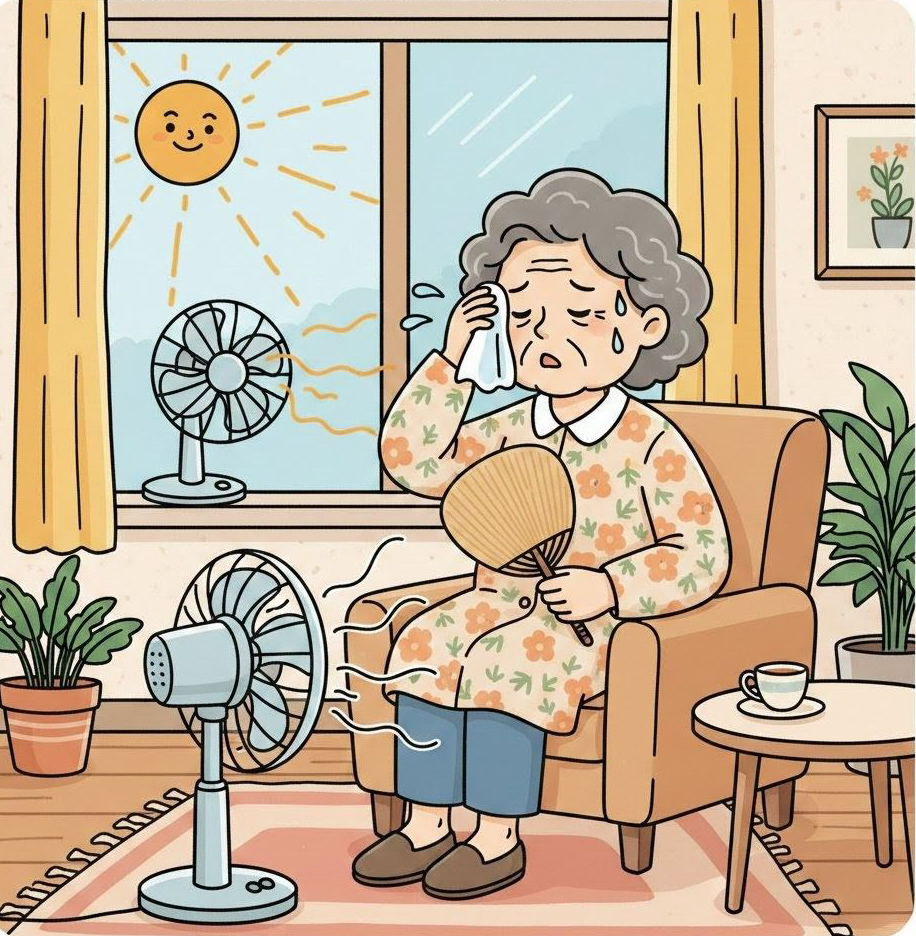
Within this crisis, Seattle’s Asian American elders face a heightened risk of developing heat-related illness due to their age, combined with environmental, economic, and linguistic barriers. With only 53% of Seattle homes having air conditioning in 2021, many elders live without reliable cooling or limit AC use because of electricity costs. Some leave doors and windows open to cool their homes, a method that can actually trap heat inside during extreme temperatures. Others hesitate to seek medical help because of language barriers, stigma around illness, fear of financial consequences, or limited access to transportation.
At the same time, many of Seattle’s current prevention strategies, including heat alerts and cooling centers, are not always linguistically accessible. When public safety messaging is not multilingual, Asian American elders are far less likely to receive timely warnings or know where to go for help.
This is why heat safety cannot be framed as an individual responsibility alone. Culturally specific education is essential. Asian American elders must know that extreme heat is dangerous, not just uncomfortable. They must know the warning signs, where to seek help, and that using cooling resources is not shameful. Clinics, community centers, and cultural organizations play a critical role in delivering this information in trusted and accessible ways.
Working as a community
As extreme heat becomes more common, what we do at the community level matters just as much as city policy. Checking in on elders before and during heat waves, sharing heat alerts and health information in-language, and helping with simple cooling measures like fans, air conditioning, and utility costs can directly reduce risk. Offering rides to cooling centers or clinics removes one of the biggest barriers to safety. Just as importantly, we should normalize seeking medical help by reminding elders that protection is not weakness and that early symptoms like dizziness, confusion, or nausea are signals to act.
In a city growing hotter every year, protecting Asian American elders cannot be left to chance.
Grace is an undergraduate student at the University of Washington studying public health.