
By Stacy Nguyen
NORTHWEST ASIAN WEEKLY
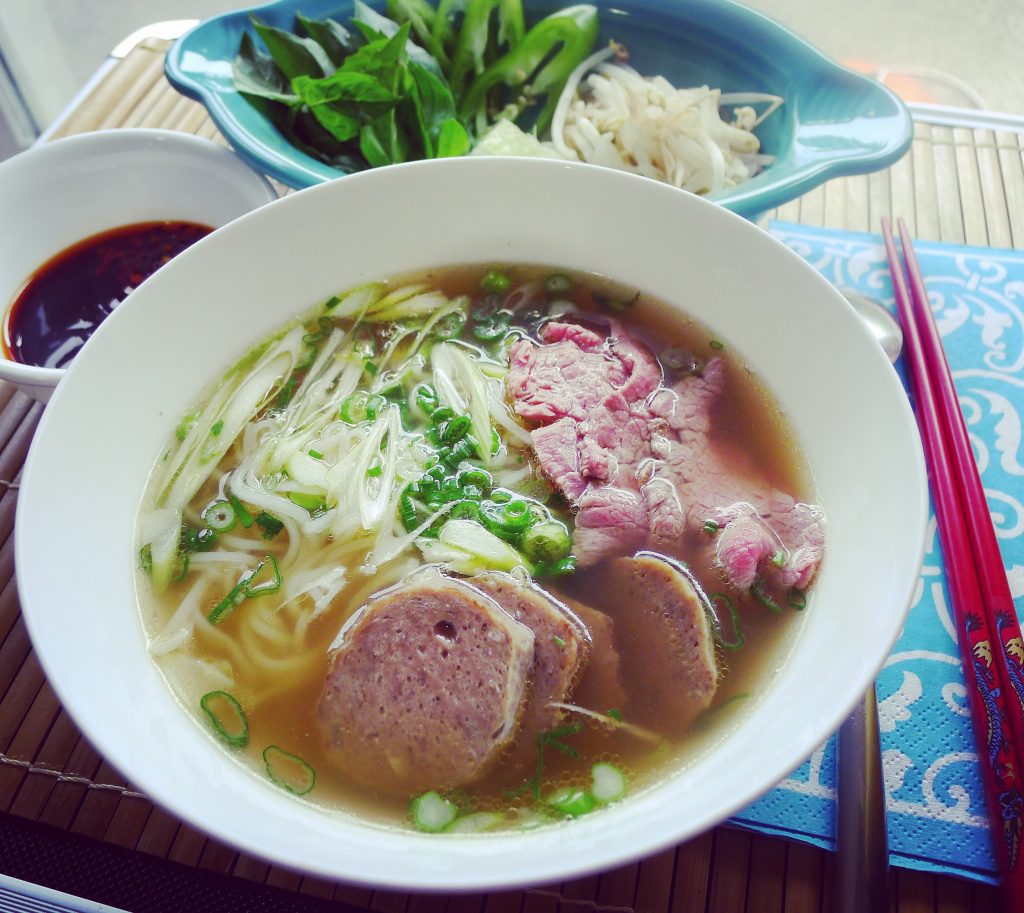
Phở (Photo by Han Bui/NWAW)
Every year, National Phở Day on Dec. 12 gives us the perfect excuse to celebrate one of Vietnam’s most iconic comfort foods. Phở isn’t just a bowl of noodles and broth—it’s family kitchens, busy street corners, and generations of tradition wrapped up in something warm and lingering. Whether you’re slurping it in a tiny hẻm in Saigon or at Phở Bắc in Seattle, phở has this way of bridging cultures and making us feel connected to one another.
Origins
Believe it or not, phở is a relatively recent creation. It was developed and became popular in Northern Vietnam during the end of the 19th century, with the French occupation and colonization of Vietnam. Prior to that, beef wasn’t really a meat that was widely consumed in the country—the ubiquitous buffalos in the fields were used more as work animals than for consumption.
However, the French that came to Vietnam came with a taste for beef, and so the local traditions of making hearty hot soups merged with French tastes, resulting in an early version of what we know as phở.
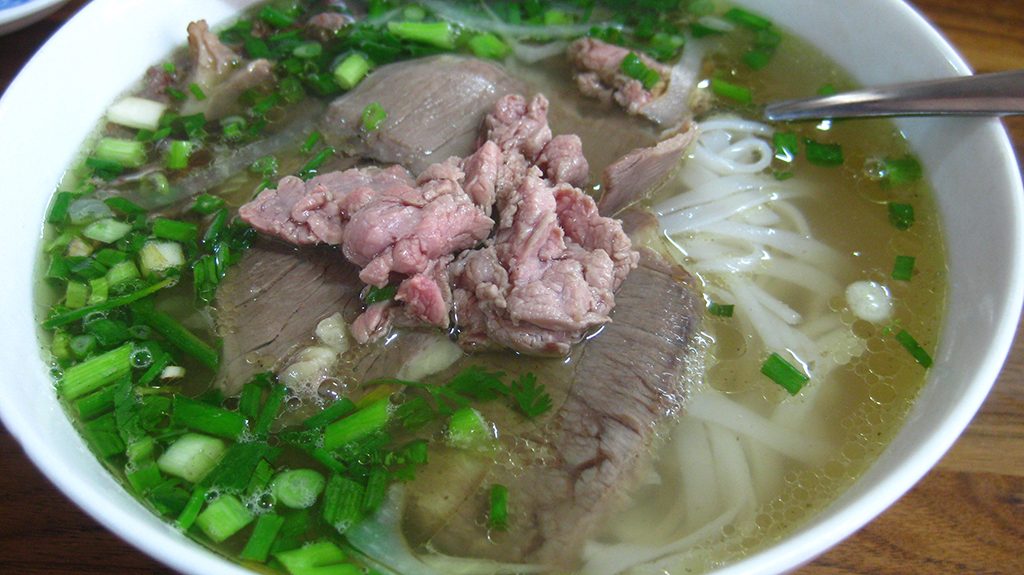
Hà Nội-style phở (Photo by Stacy Nguyen)
From there, phở adapted and changed over time, each bowl reflecting the traditions, customs, locations, and historical events of the time. For instance, according to Ẩm Thực Hiện Đại, it became more streamlined and simplified when it reached the capital of Hà Nội (Hanoi). In the early 20th century, in the face of a cattle shortage and post-World War II famine, a chicken version that we still eat today (phở gà) took hold. And when French colonization ended in 1954, hundreds of thousands of people from the north moved south, taking their knowledge of this soup with them.
In the South, phở was further iterated upon—became ‘extra’—and became the dish that much of the Vietnamese diaspora know today (as most of the refugees that escaped Vietnam, post-Vietnam War in the late 1970s and 1980s, are Southerners).
In Seattle, at any of the many restaurants, we encounter steaming bowls of this type of phở: richer, sweeter broth, with many types of meat, topping, and sauce options—but also with its own very American adaptations.
Phở in the United States
Following the large waves of Vietnamese refugees settling in the United States—particularly in the Pacific Northwest, Bay Area, Southern California, Texas, and East Coast cities—many families opened restaurants, serving affordable bowls that preserved a sense of home for them while introducing phở to non-Vietnamese diners.
While beef was ubiquitous and available here in the United States, certain other ingredients were not, and so Vietnamese Americans further adapted and remixed phở: sliced coins of jalapenos and bottles of sriracha started adorning every table in every Vietnamese restaurant.
Phở’s popularity kept building—and then skyrocketed. Throughout the 1990s and 2000s, it popped up everywhere in American media—TV shows, food blogs, social media, newspapers, and magazines. Today, it’s hands down the most recognized Vietnamese dish in the U.S.
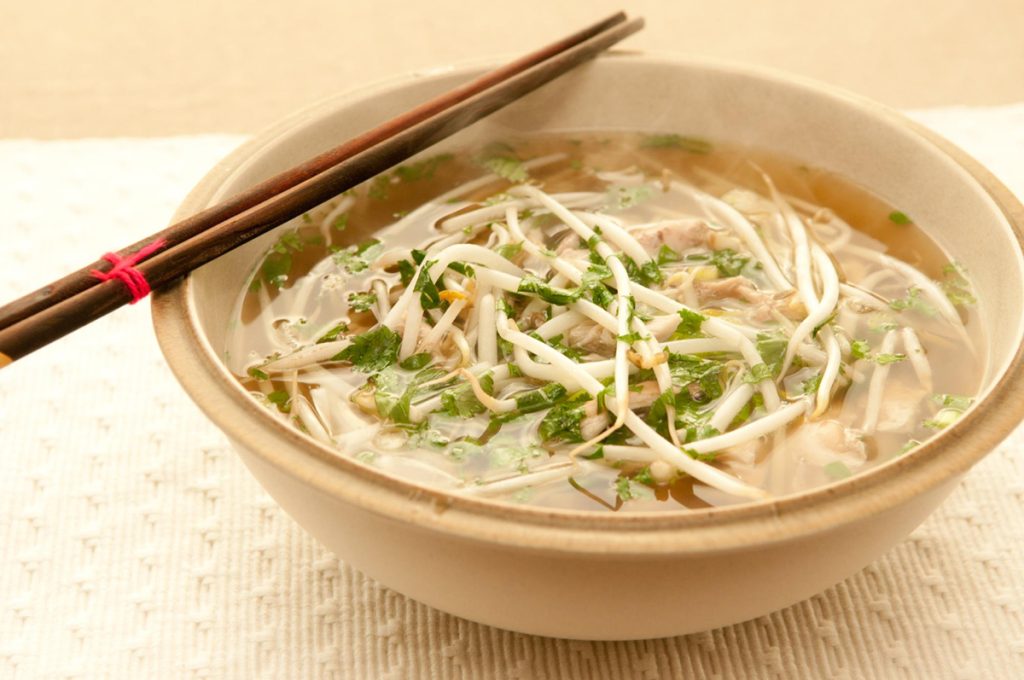
Why we’re still into it
Felix Tran grew up eating phở in San Jose, California, which has one of the largest Little Saigons in the world. Every Saturday, after figure skating classes, he and his dad would spend time together at a restaurant, over a steaming bowl of phở tái chín (phở with brisket and eye-round steak). Phở was a notable part of Tran’s life, beyond of the figure skating. He has memories of his aunt hand-making beef meatballs for the soup, and of his mom making their family’s own version—because she is vegetarian.
“I [remember] practicing my Vietnamese by ordering my own phở,” said Tran, who is now an artist, illustration, and the Arts & Culture Program Specialist at Friends of Little Sài Gòn here in Seattle. “[Phở] is so nostalgic and also so delicious and comforting for me.”
Julie Pham, PhD, founder of the 7 Forms of Respect and the CEO of CuriosityBased, grew up in Seattle’s Vietnamese community. Her parents founded Người Việt Tây Bắc (NW Vietnamese News), where Pham worked for many years as its managing editor for years before starting her own company. Many of the newspaper’s advertisers are local Vietnamese restaurants.
“I think actually the fact that phở is so popular gives us a really big sense of pride,” she said. “You know, the fact that it’s so common and people know what it is—the fact that non-Vietnamese people like it so much … I mean I think there’s even a Campbell’s soup version of phở!”
Mytoan Nguyen-Akbar, PhD, principal and founder of Community and Cultural Impact Partners and a Friends of Little Sài Gòn board member, speculates that phở became a staple ‘American food’ because of its comforting features (warming noodle soup on cold Pacific Northwest days) as well as the familiarity of its ingredients to everyone.
“I feel like pho is a gateway dish to the rest of the Vietnamese palate,” she said. “You can’t go wrong with a broth, a very savory broth, with noodles, vegetables, and some sort of protein on top. It’s accessible and it’s intuitive to eat—you can’t go wrong with how you eat it or when you eat it.”
Tran agrees that phở is an accessible dish. “I don’t think you necessarily need anything from a Vietnamese market. If you wanted to, you could make pho by buying ingredients from an ‘American’ (non-Asian) market. I think [it’s so popular] for our parents’ generation, who came over, was that it was a dish from home in Vietnam that they could make here in America.”
“I think with phở, with the time it takes to eat it and enjoy it with someone, that’s sort of a reflection of the work that is also put into making it,” said Nguyen-Akbar. “Like all of the herbs, the time, just all of the emotions and history [coming together] so that people can have community. It’s a special dish.”
Stacy Nguyen can be reached at newstips@nwasianweekly.com.