


By Nina Huang
NORTHWEST ASIAN WEEKLY
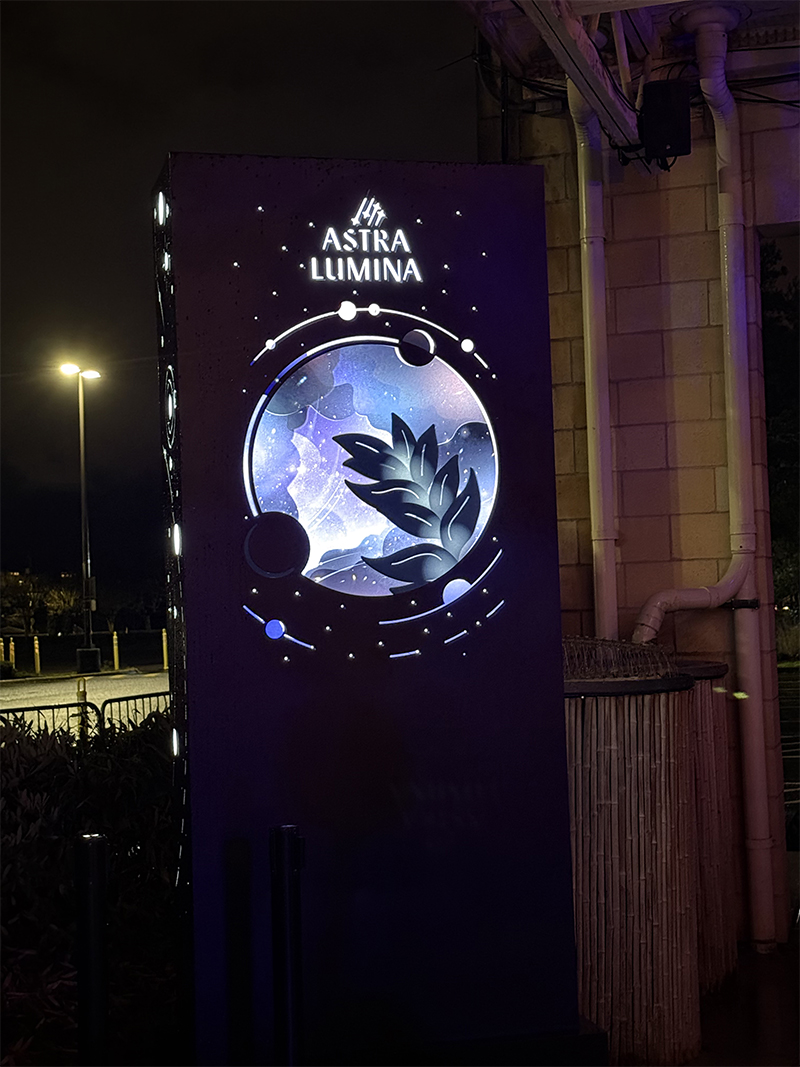
Photo by Nina Huang
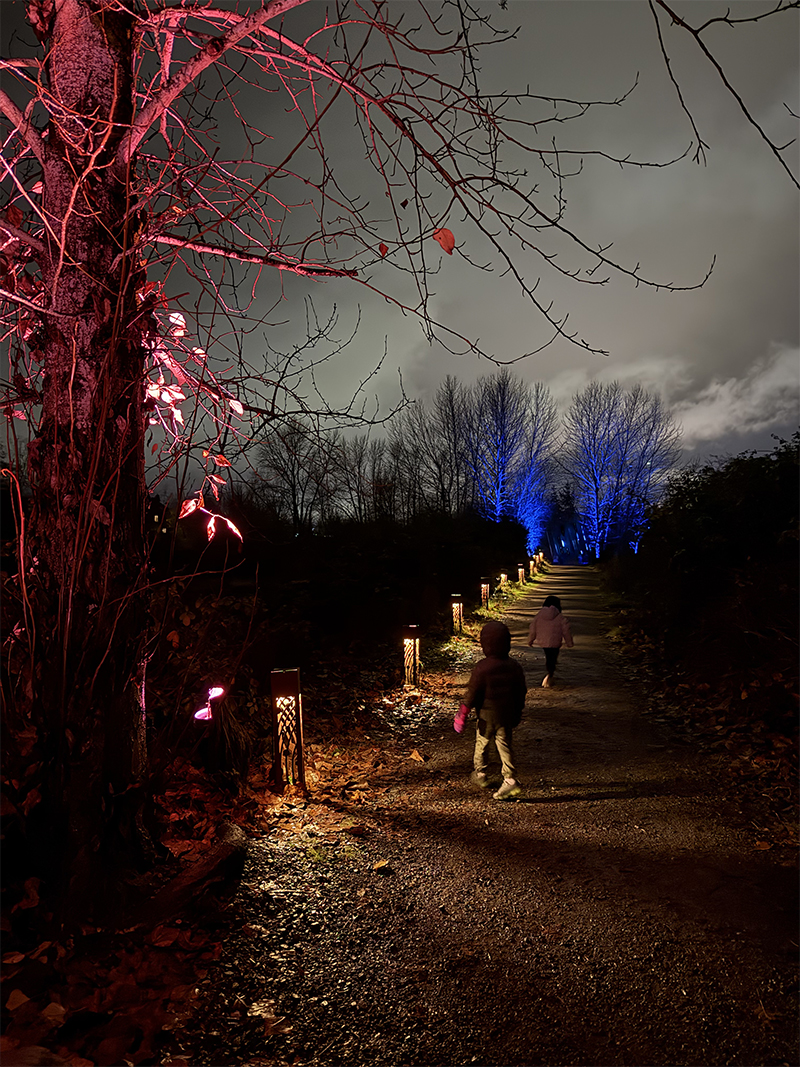
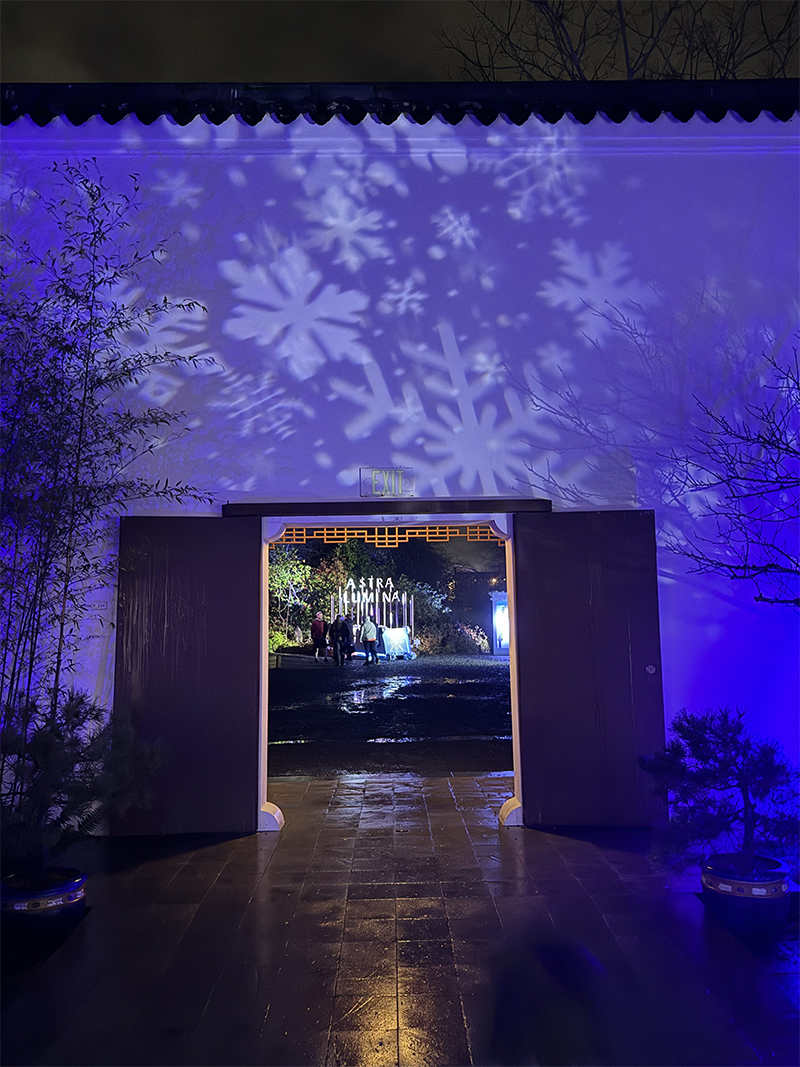
On a cold, rainy winter evening, the Seattle Chinese Garden at South Seattle College transforms into something quietly otherworldly. Lantern-lit pathways glow beneath towering trees, celestial music drifts through the air, and families, couples, and friends move slowly through the darkness—phones raised, eyes wide. This is Astra Lumina, a nighttime installation that turns the garden into a contemplative walk through light, sound, and space.
I visited with my husband, our children, and my father, making it a rare multigenerational outing. Not knowing what to expect, what struck me first was how unhurried the experience felt. From the moment we stepped inside, it was clear this wasn’t just a walk through decorative lights—it was an invitation to pause, wander, and pay attention.
-

- Photo by Nina Huang
-
- Photo by Nina Huang
-
- Photo by Nina Huang
-
- Photo by Nina Huang
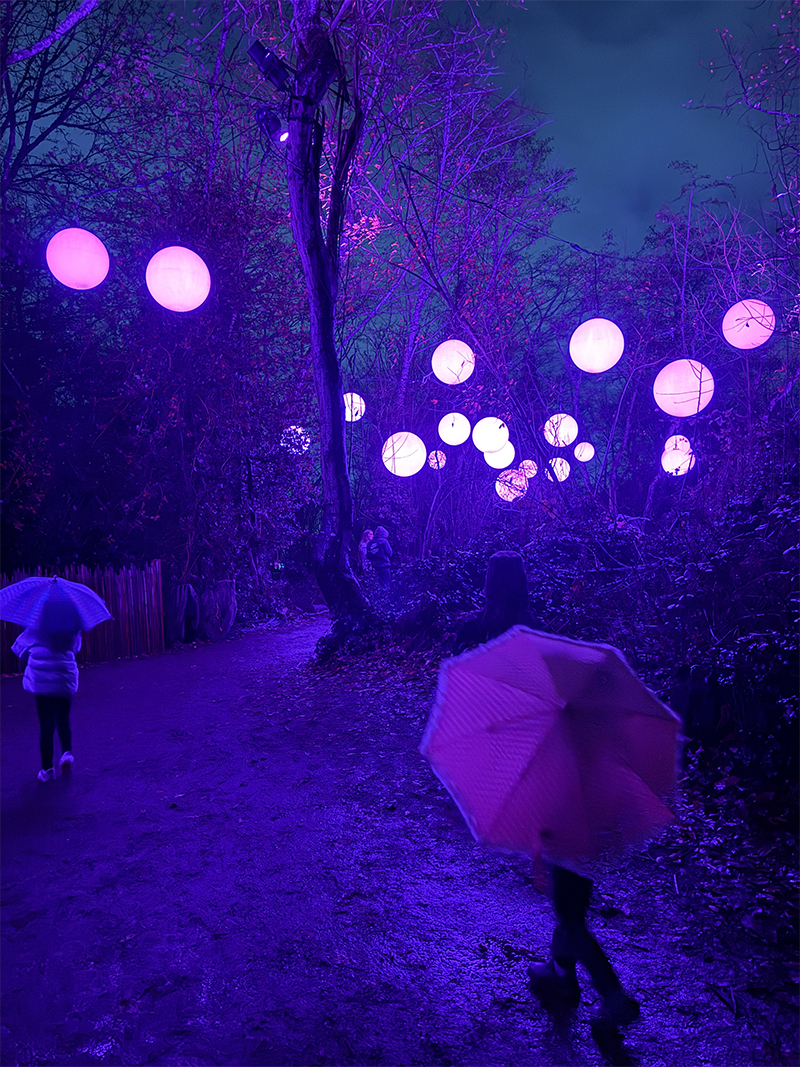
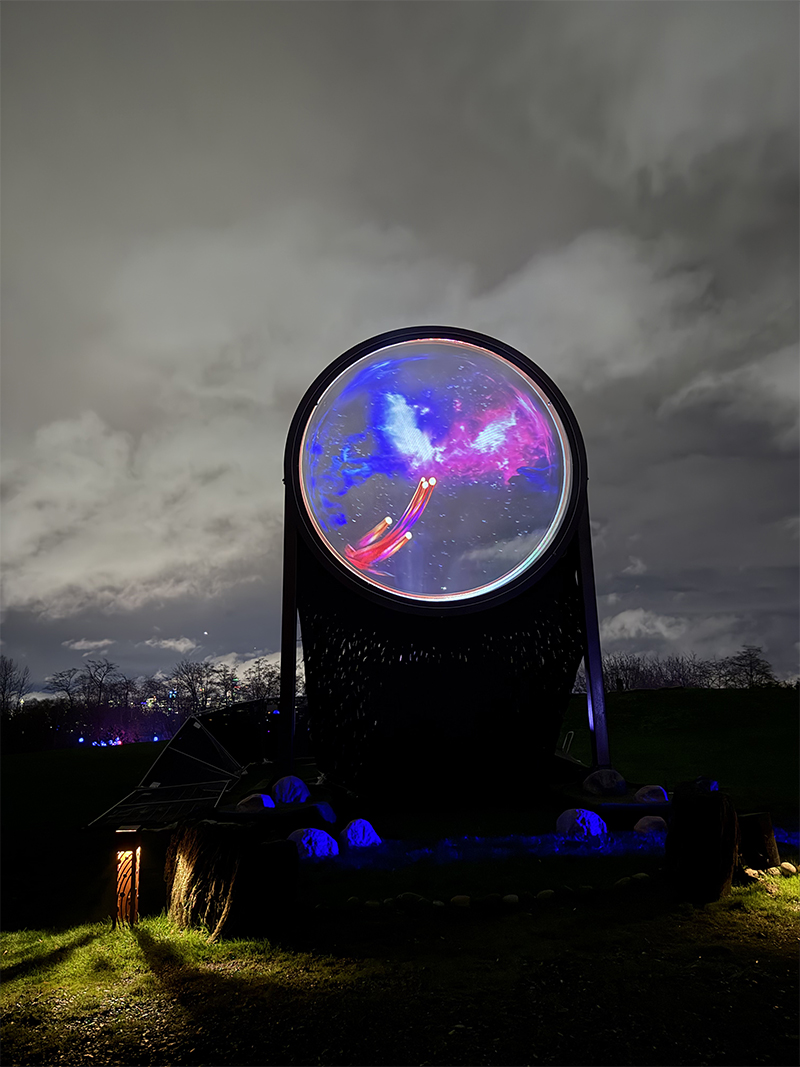
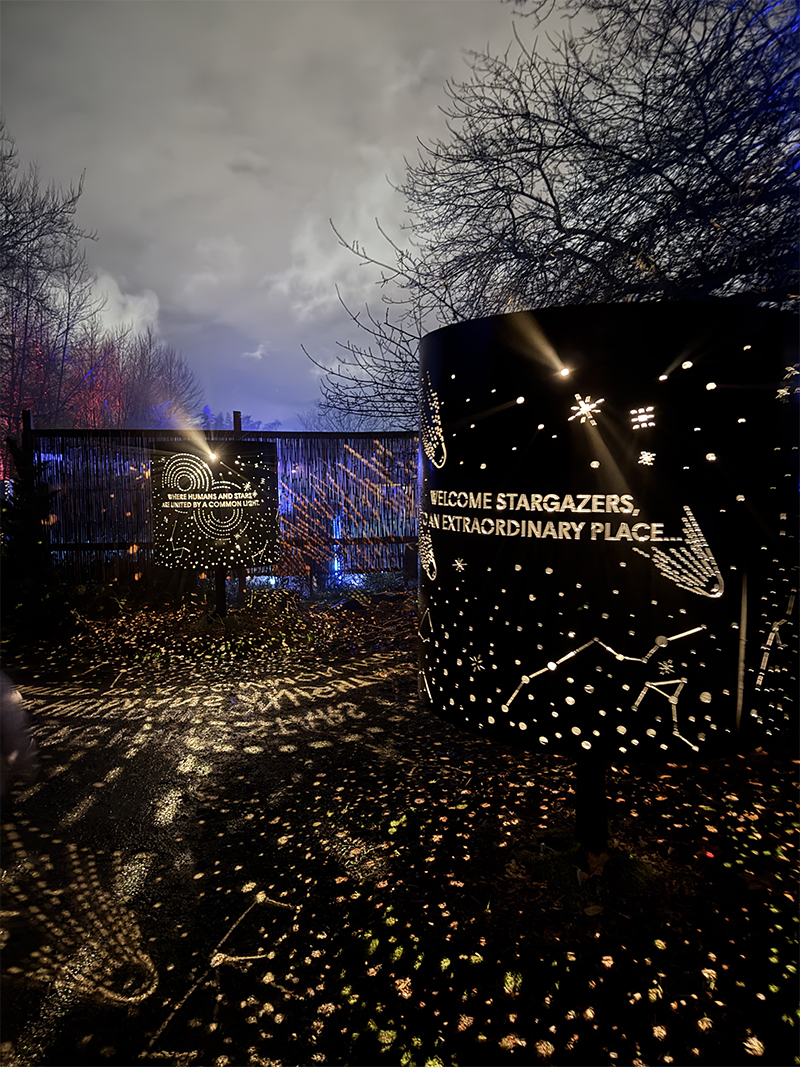
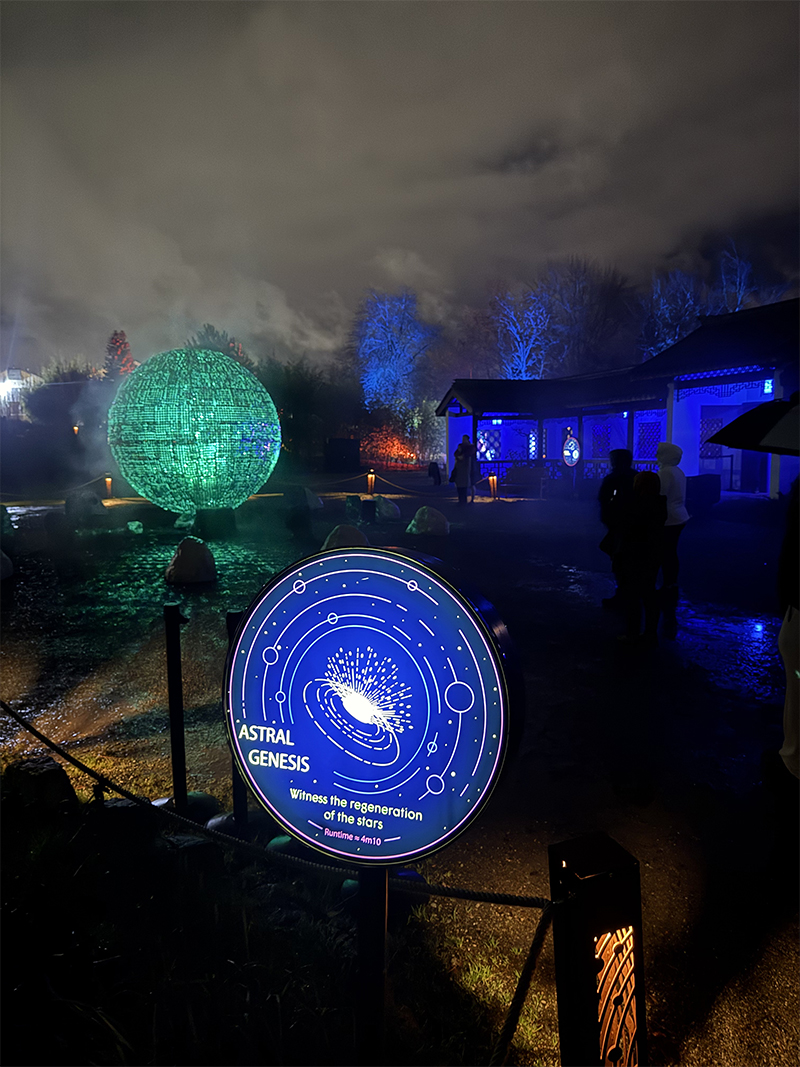
Created by Moment Factory, the multimedia studio behind similar installations around the world, Astra Lumina unfolds along a mile-long walking trail through the Seattle Chinese Garden’s forests and open spaces. The experience is divided into nine sections, each presenting a new “chapter” using projections, lasers, glowing constellations, and ambient soundscapes. Themes of stars, seasons, and cosmic connection emerge gradually, with suggested time markers that gently encourage visitors to slow down rather than rush ahead.
Some sections are more visually striking than others, but overall, the tone is subtle and immersive. The installation feels accessible for children while still offering moments of wonder and reflection for adults. My kids moved instinctively, darting ahead and calling attention to shifting lights or new shapes, while the adults in our group lingered, watching how beams moved through branches or reflected on wet ground.
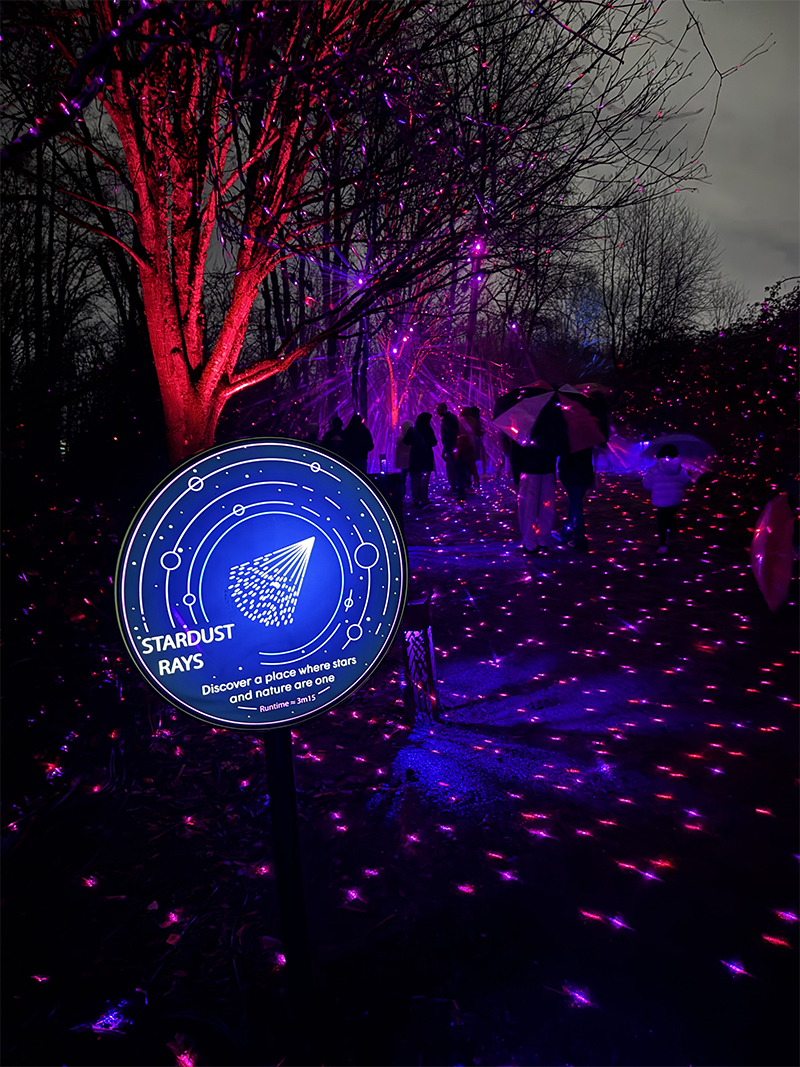
Photo by Nina Huang
The Seattle Chinese Garden itself plays an essential role in the experience. Already rooted in principles of harmony and balance, the garden becomes an ideal canvas for this kind of immersive art. Instead of overpowering the space, the installation works with it, allowing natural elements—trees, paths, and open sky—to remain central.
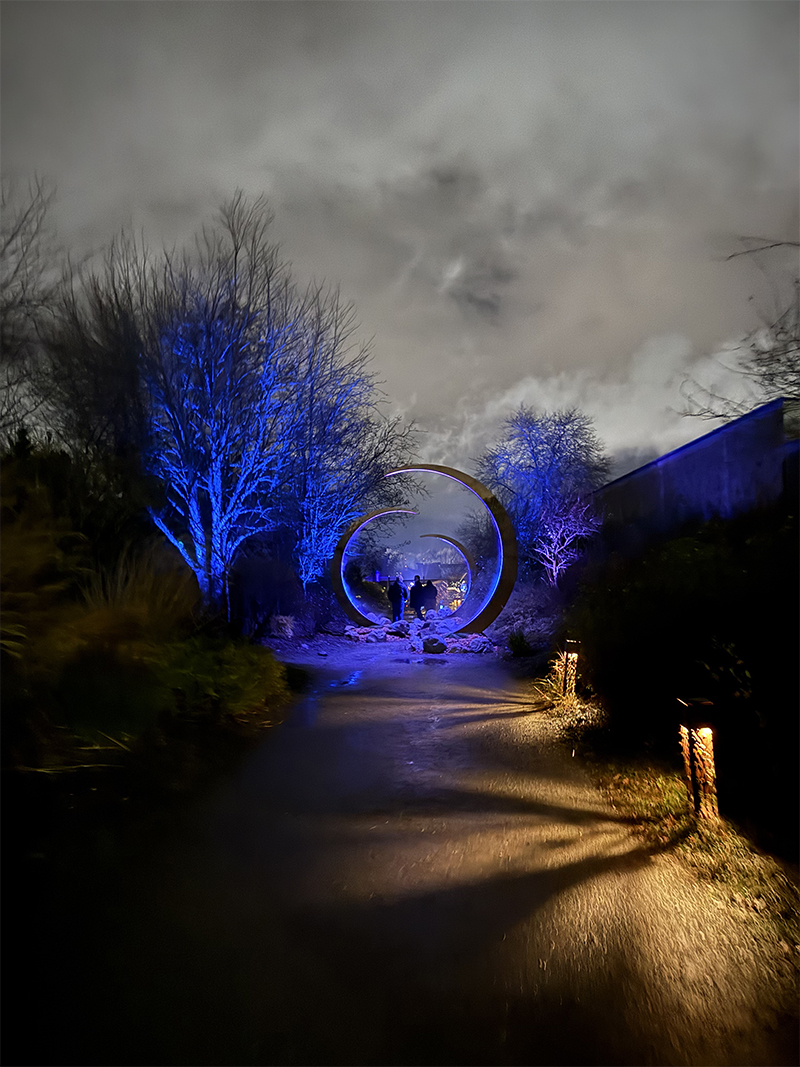
The walk takes about an hour, depending on pace and how long one lingers at each station. Along the way, visitors encounter scenes that feel intentionally open to interpretation. In one area, lights scatter across the ground like fallen stars. In another, beams move rhythmically through the trees, suggesting motion without a clear source. There is no single narrative to follow, only a shared sense of curiosity.
The experience also reveals how people use public spaces differently at night. I noticed couples holding hands and speaking quietly, families clustering together, and individuals walking alone, content to move through the path in silence. There was a sense of shared presence without forced interaction—a reminder that communal experiences don’t always require participation, only proximity.
For my family, the walk offered something increasingly rare: time without distraction. Phones were out, but mostly for photos rather than scrolling. My father, who is usually less enthusiastic about large-scale light displays—especially in the rain—commented on how beautiful the installations were. My children, meanwhile, were focused on what might appear next.
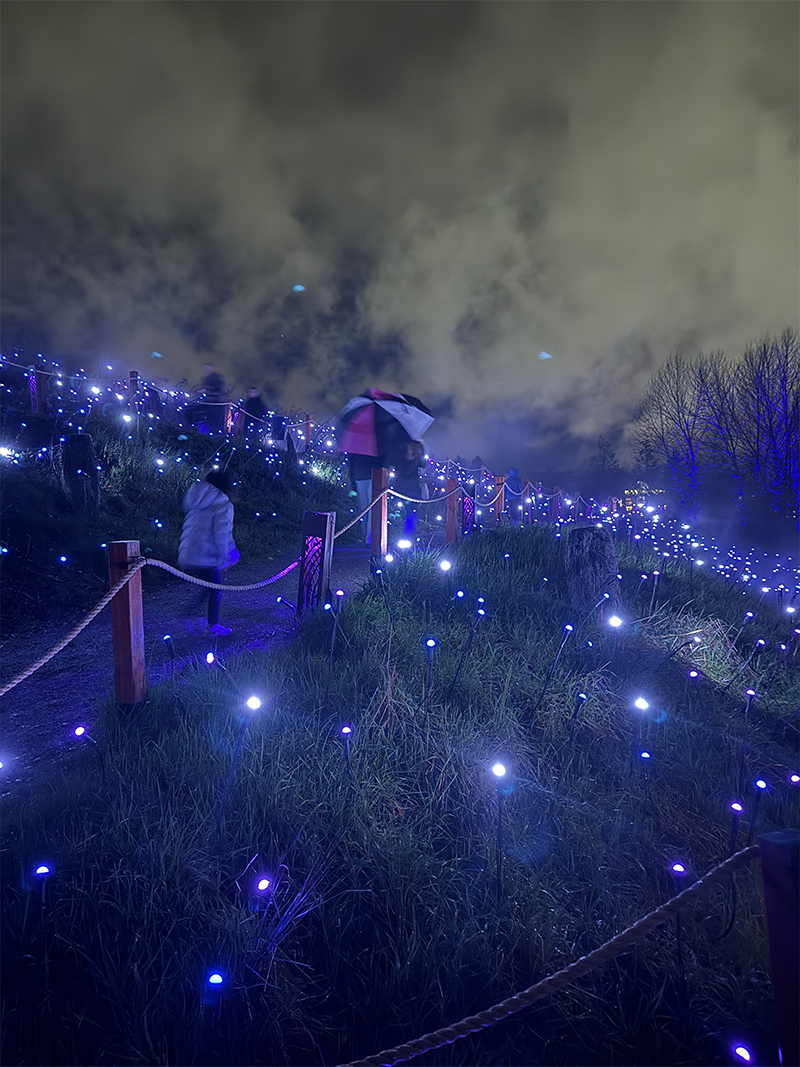
Astra Lumina is undeniably visually appealing and well-suited for photography. Silhouetted trees, illuminated pathways, and softly glowing structures create striking backdrops, particularly during the winter months. While I initially expected a more traditional holiday light display, the experience feels seasonal rather than celebratory, drawing inspiration from stars and space rather than specific holidays.
In a city where winter can feel depressing and long, Astra Lumina offers a reason to be outside after dark without demanding much energy or endurance. Even in the rain, the walk is manageable, the pace flexible, and the atmosphere forgiving. Timed entry keeps crowds comfortable, and the clearly marked path allows visitors to explore at their own rhythm.
-
- Photo by Nina Huang
-
- Photo by Nina Huang
-
- Photo by Nina Huang
-
- Photo by Nina Huang
Running through the end of January 2026, Astra Lumina offers a reflective pause during the darker months of the year. It is festive without being commercial, immersive without being overwhelming, and grounded in a space that celebrates culture, nature, and community.
For those looking to spend an evening outdoors with loved ones—or simply experience the garden in a new way—Astra Lumina is a reminder that beauty doesn’t have to be loud to be memorable.
Astra Lumina runs through the end of January 2026 at the Seattle Chinese Garden. Advance tickets are recommended.
For more information, visit astralumina.com/seattle.
Nina can be reached at newstips@nwasianweekly.com.